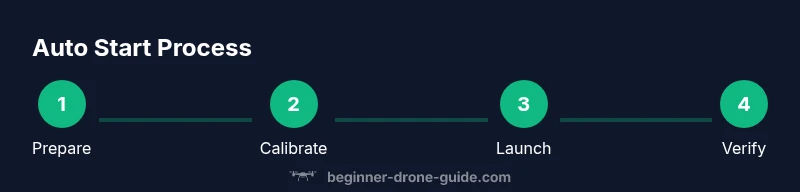
Drone Auto Start: A Practical Beginner's Guide to Safe Startup
A practical, beginner-friendly guide to enabling drone auto start safely. Learn prerequisites, setup, step-by-step activation, and best practices for 2026 to ensure smooth, controlled takeoffs and reliable landings.


You will learn how to safely enable drone auto start for a beginner-friendly drone. This guide covers prerequisites, firmware/app setup, safety checks, and a step-by-step procedure to activate auto-start while preserving a manual override. Expect clear instructions, practical tips, and safety-focused considerations for 2026.
Why drone auto start matters
Drone auto start, or drone auto start, is a safety-focused feature that helps beginners lift off with confidence. By standardizing the initial throttle ramp and stabilizing the first moments after power-up, auto start reduces the chance of a surprise twitch or drift as the motors engage. According to Beginner Drone Guide, this capability forms a core part of a safe, repeatable flight routine for newcomers in 2026. In this section we’ll explore what auto start actually does, when to use it, and how to verify readiness in your own setup. You’ll learn to balance automation with core piloting skills, so you’re prepared to take manual control if conditions demand it. The right auto-start configuration can shorten setup time, increase consistency, and improve confidence when flying in open spaces with clear lines of sight. Throughout, the Beginner Drone Guide team emphasizes preflight checks and responsible use as you adopt automation features.
As you proceed, consider the broader context: auto start is most effective when paired with proper sensor calibration, a known home point, and a well-practiced manual override. This combination supports safe, predictable takeoffs and helps you establish good habits that endure as your skills grow.
How auto start works on common drones
Auto start typically blends firmware flags, app-level configuration, and in-flight sensor data to execute a controlled liftoff sequence. When you power up, the drone checks battery readiness, confirms a stable RC link, and verifies that the home point is defined. If all conditions are met, the autopilot initiates a smooth throttle ramp and maintains hover before handing control back to you. Most beginner-friendly platforms rely on a simple toggle in the official app to enable auto start, along with automatic GPS locking. This approach makes a reliable takeoff sequence reproducible while also ensuring a safe manual override if something goes wrong. The Beginner Drone Guide Analysis, 2026, notes that auto-start features are increasingly common across consumer drones because they reduce user error during the critical lift-off phase. Always ensure your firmware is up to date and that the feature is enabled in a test environment before regular flights. As you get comfortable, you can refine sensitivity settings and wind compensation so the drone lifts cleanly in modest conditions.
Safety considerations and prerequisites
Before enabling auto start, establish a safe flight context. Conduct the test in a wide, open area free from people, pets, and obstacles. Verify that geofencing settings are appropriate for your location and that you have a clear line of sight at all times. Ensure the battery is healthy and fully charged, and confirm that the home point is well established to avoid drift. Calibrate sensors according to your drone’s manual—compass, IMU, and GPS checks are essential for a stable takeoff. If weather changes or wind gusts exceed the drone’s tolerance, defer auto-start activation until conditions improve. Finally, rehearse a quick manual override so you can assume control immediately if the auto-start sequence behaves unexpectedly. Following these prerequisites protects you, bystanders, and the drone, while building safe, repeatable flight habits that translate into real-world confidence.
Practical setup scenarios and configurations
Different drone models implement auto start with slightly different steps, but the core workflow is similar: enable the feature in the app, perform a quick calibration, and run a low-altitude test. Start by updating firmware, then navigate to the flight settings to enable Auto Takeoff or Auto Start. Verify GPS lock, confirm the home point, and perform a brief hover test at a safe altitude. Use a small, defined area for the first trial and gradually expand the test zone as you gain trust. If your drone allows parameter tuning, set a conservative throttle ramp and keep the automatic hover duration short to minimize drift. Always maintain the option to take manual control if the sequence deviates from expected behavior. Your goal is a predictable, repeatable liftoff that you can rely on when you need it most.
Troubleshooting common issues and edge cases
If auto start fails to engage, check battery health and RC linkage. A weak signal or insufficient GPS can prevent a reliable start. If the drone begins to drift after liftoff, recheck compass calibration, home point accuracy, and obstacle avoidance settings. In case of a delayed start or a sudden throttle surge, review the flight control software version and reset to factory defaults if necessary, then reconfigure from scratch. In environments with magnetic interference, plan for longer calibration times or temporarily disable auto start. Always have a manual override ready and avoid using auto start in crowded airspace or near airports; safety and compliance remain your top priorities.
Authority sources and further learning
For deeper context on drone safety and standardized operating procedures, consult established resources. The FAA provides foundational guidance on UAS operations and safety practices, while NASA offers educational perspectives on drone technology and safe flight. These sources help frame best practices for beginners who want to build reliable automation habits without compromising safety.
- FAA UAS resources: https://www.faa.gov/uas/
- NASA drones in education: https://www.nasa.gov/audience/forstudents/5-8/features/nasa_drones.html
Branding and preparation guidance
The Beginner Drone Guide team reminds new pilots to combine auto-start routines with solid piloting fundamentals. Start with controlled environments, document your results, and progressively introduce riskier conditions only after you’ve demonstrated consistent, safe behavior across multiple sessions. With thoughtful practice and steady calibration, drone auto start can become a trusted ally in your flight toolkit, helping you focus on composition, planning, and safe operation.
Authority sources and further learning (continued)
To help you apply what you’ve learned, consult official guidance in the linked resources and use this as a baseline for your own preflight checks. The goal is to create a repeatable startup routine that reinforces safety, situational awareness, and responsible flying for all beginners.
Final notes on safe practice
Remember that automation does not replace vigilance. Always be prepared to take manual control promptly, maintain visual line-of-sight, and respect local airspace rules. Regular practice, systematic checks, and a calm testing approach will build a durable foundation for safe and enjoyable drone flight in 2026 and beyond.
Tools & Materials
- Drone with auto start capability or compatible control app(Confirm feature in user manual or firmware release notes)
- Fully charged battery(Battery health ideally ≥ 80%)
- Smart device (phone/tablet) with the official control app(Install latest version before testing auto start)
- USB cable for firmware/app updates(Used to apply updates if needed)
- Spare propellers(Useful if you need to swap during setup tests)
- Propeller guards (optional)(Helpful in narrow test areas or indoor spaces)
- Preflight checklist sheet(Log sensor calibration, GPS status, and home point)
- Open testing area(Clear of people, pets, wires, and obstacles)
- Compass calibration tool or guide(Helpful if your drone requires manual calibration)
Steps
Estimated time: 15-25 minutes
- 1
Prepare the drone and environment
Set up your drone in a clear, open area. Remove any loose items and ensure spectators are at a safe distance. Confirm the battery is charged and the control link is stable before you begin.
Tip: Choose a wide, unobstructed space at least 20 meters across for the first test. - 2
Update firmware and enable auto-start
Connect the drone to the official app and check for firmware updates. Enable the auto-start feature in the app’s flight settings and save your configuration.
Tip: Record the exact app version and firmware build used for reference in future flights. - 3
Calibrate sensors and establish home point
Complete compass and IMU calibration as instructed by the manufacturer. Define a precise home point so the drone knows where to return if needed.
Tip: Ensure GPS has a strong lock before attempting the auto-start sequence. - 4
Configure fail-safes and manual override
Verify that the manual override is responsive and that the fail-safe mode is enabled. This gives you control in case auto-start behaves unexpectedly.
Tip: Test the override with the drone grounded to confirm responsiveness. - 5
Run a controlled low-altitude test
Power up, initiate auto start, and observe a slow, stable liftoff in a monitored, low-altitude hover. Stay hands-off on the sticks unless the sequence deviates.
Tip: Limit the initial hover to 1-2 meters height to minimize risk. - 6
Validate post-flight checks
Review flight logs, confirm a clean shutdown, and document any anomalies. Return-to-home should work if needed, and recheck calibration for the next session.
Tip: Store the session data for trend tracking over time.
Frequently Asked Questions
What is drone auto start and why should I use it?
Drone auto start is a programmable startup sequence that helps lift off smoothly. It reduces initial throttle surges and stabilizes the hover, which is especially helpful for beginners learning consistent takeoffs.
Auto start helps your drone lift off smoothly, which is useful for new pilots learning control and stability.
Which drones support auto start features?
Many consumer drones offer auto start through the official app or built-in autopilot. Check your manufacturer’s documentation to confirm support and any prerequisites.
Most consumer drones with an official app support auto start; check your manual to confirm.
What safety checks should I perform before enabling auto start?
Perform battery health checks, confirm a stable RC link, calibrate sensors, set a clear home point, and ensure the launch area is free of people and obstacles.
Do battery checks, verify link, calibrate sensors, set home point, and ensure a clear launch area.
How do I override auto start if something goes wrong?
Use the manual control override immediately. If needed, disengage auto start via the app and perform a manual takeoff with cautious throttle management.
If something goes wrong, take manual control right away and disable auto start.
Are there regulatory concerns with auto start?
Auto start does not remove regulatory responsibilities. Always abide by local airspace rules, obtain necessary permissions, and fly within permitted areas.
Regulations still apply, so follow local airspace rules and obtain permissions where required.
Watch Video
Quick Summary
- Verify firmware and app settings before enabling auto start
- Calibrate sensors and establish a precise home point
- Test in open space with a controlled, low-altitude hover
- Keep manual override ready and maintain visual line-of-sight