How to Make Money with a Drone: A Beginner's Guide
Learn practical, beginner-friendly ways to monetize a drone. This guide covers service ideas, client outreach, licensing basics, and real-world tips for building steady income.


Goal: monetize a drone with practical, beginner-friendly methods. You’ll explore service ideas, client outreach, and a simple startup plan. Key requirements include a compliant drone, solid basic piloting skills, basic liability understanding, and awareness of your local licensing or registration rules.
How to monetize a drone: an overview
Turning flight time into income starts with choosing markets you can reliably serve and delivering professional results. If you’re wondering how to make money with a drone, you’ll align your flying skills with real client needs, build credibility, and start small before expanding. This guide lays out practical pathways for beginners, from photography to inspections, plus the workflows that keep projects on time, on budget, and compliant with local rules. You’ll learn how to transform hobby flights into repeatable gigs and a growing portfolio that attracts higher-paying work. Throughout, the emphasis is on practicality, safety, and clear communication with clients to establish trust from day one.
Identify your first viable niches and test demand
For beginners, the fastest path to income is to pick 2–3 niches where early demand is highest and you can differentiate quickly. Real estate photography often offers repeat opportunities in property markets; roof and solar inspections can provide recurring work for property managers; event and wedding shoots can generate steady bookings in peak seasons. Start by surveying local markets: which industries regularly hire aerial services, who the typical clients are, and what deliverables they expect. With your choice of niches, you’ll tailor your portfolio, pricing, and outreach strategy to match client pain points and project scopes.
Building credibility: portfolios, samples, and case studies
Clients buy confidence as much as they buy footage. Begin by compiling a simple portfolio that showcases your best work in each niche, even if you’ve shot a few practice projects. Create short highlight reels with clean edits, stable footage, and varied shot angles. If you don’t yet have paid work, offer discounted or pro-bono projects to a few local clients in exchange for permission to feature the results. Documentation matters: include client briefs, shot lists, and a clear description of deliverables. A well-structured portfolio and a concise case study sheet will help you win bids and justify pricing.
Pricing strategies and project scope without overpricing
Pricing for drone work should reflect time, deliverables, equipment wear, and travel. For beginners, focus on transparent, easy-to-understand packages rather than bespoke quotes for every job. Start with tiered offerings (e.g., basic footage, enhanced editing, and a package with mapping or inspections) and specify inclusions like number of retakes, turnaround times, and file formats. When you draft proposals, tie pricing to measurable outcomes (reach, coverage area, resolution, and delivery format). Remember that prices vary by market and client size; you’ll refine your ranges as you gather data from actual gigs.
Licensing, insurance, and safety basics for newcomers
A solid understanding of licensing and safety is essential to protect you and your clients. Check whether your locale requires a pilot certificate or business license for commercial flights and ensure you comply before accepting paid work. Liability insurance or drone insurance is a prudent investment to cover property damage or personal injury. Implement a basic flight safety protocol: pre-flight checks, weather evaluation, airspace awareness, and a clear plan for emergency procedures. Having documented safety policies reassures clients and reduces risk for both sides.
Portfolio optimization, client outreach, and repeat business
Beyond a strong portfolio, your outreach approach determines early success. Build a simple website or portfolio page, optimize for local searches, and collect client testimonials as soon as you can. Reach out to real estate agents, construction firms, event planners, and small business owners with concise pitches that describe how your service saves time, adds value, or enhances marketing. Use social proof: show before/after footage, highlight your reliability, and deliver robust deliverables on time. A steady cadence of outreach and a small pool of trusted clients can scale into recurring revenue streams.
Scaling responsibly: growing services while maintaining quality
As you gain momentum, expand carefully to avoid quality drops. Add complementary services like basic mapping, video editing, or season-specific packages (e.g., post-event footage, seasonal inspections). Invest in workflow software to manage quotes, contracts, and deliverables, and consider hiring a trusted assistant or subcontractor as demand grows. Always maintain safety and compliance as you scale, updating client agreements to reflect expanded capabilities and any regulatory changes. A disciplined growth plan reduces risk and sustains profitability.
Tools & Materials
- Drone (commercial-capable)(Ensure it meets local regulations and can shoot at required resolutions)
- Extra batteries and charger(At least 2–3 batteries for longer sessions)
- ND filters for video(Useful for sunny days to maintain shutter speed)
- Memory cards (SD/CFexpress)(High-speed cards with backup storage)
- Transport bag or case(Protects gear during travel)
- Laptop with editing software(For quick previews and client-ready edits)
- Liability insurance or drone insurance(Protects against property damage and injuries)
- Whistle/visible safety markers(Useful for public shoots and crowded areas)
Steps
Estimated time: 4-6 weeks
- 1
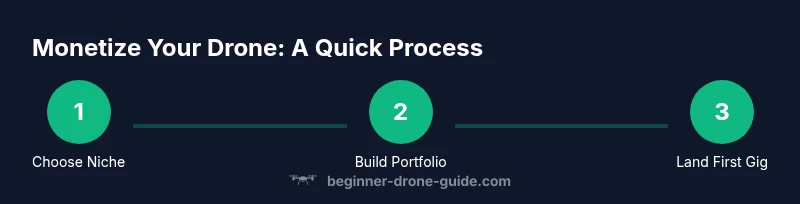
Define your services and niche
Clarify 2–3 core offerings you will deliver (e.g., real estate footage, inspections, event coverage). Write a simple one-page service brief and decide which markets you’ll pursue first. This focus makes marketing and pricing consistent.
Tip: Choose niches with clear demand and repeatable shot lists to speed up bidding and delivery. - 2
Check licensing, insurance, and safety basics
Research local licensing requirements, airline restrictions, and whether you need a commercial certification. Obtain basic liability insurance and review your safety protocol for pre-flight checks and post-flight data handling.
Tip: Document your safety procedures so clients feel confident about working with you. - 3
Build a starter portfolio
Assemble 6–8 samples across your chosen niches. If needed, shoot practice projects and ask for consent to feature the footage. Edit to highlight your best storytelling and technical quality.
Tip: Include a short caption describing the client need and the deliverables in each sample. - 4
Create simple pricing and proposals
Develop tiered packages with clear deliverables, turnaround times, and usage rights. Prepare a lightweight contract or terms of service that covers revisions, payment terms, and cancellation policies.
Tip: Avoid overly complex pricing; predictable packages help win bids faster. - 5
Launch outreach and land your first gig
Identify potential clients (agents, managers, small businesses). Send targeted pitches with 1–2 ready-to-view samples and a concrete value proposition. Follow up after 1–2 weeks.
Tip: Start with warm introductions and offer a discounted first project to build testimonials. - 6
Deliver professionally and collect feedback
Complete the project on time, provide high-quality files, and share a client-ready recap. Request a testimonial and use the project as a case study for future bids.
Tip: Ask for permission to feature the project in your portfolio and on social channels.
Frequently Asked Questions
What are the essential licenses to make money with a drone in 2026?
Licensing requirements vary by country. In many places, commercial drone work requires some form of pilot certification or business registration. Always verify local airspace rules and obtain any required permits before bidding on paid gigs.
Licensing depends on your country. Check local airspace rules and obtain the necessary certification before taking paid drone jobs.
Which niches work best for beginners with limited equipment?
Real estate and event coverage are popular starting points because they often require minimal specialized gear and deliverable formats that clients understand easily. As you gain clips and testimonials, you can broaden into inspections or agricultural imaging.
Real estate and events are great starting niches for beginners; they translate well into client-ready deliverables.
How should I price my first drone job?
Start with simple packages based on deliverables, turnaround time, and usage rights. Avoid custom quotes for every job initially; as you gain data, refine your ranges based on time, complexity, and your costs.
Begin with straightforward packages and adjust pricing as you collect experience and client feedback.
Do I need insurance to fly commercially?
Having liability or drone insurance protects you and your clients from property damage or injuries. Many clients expect proof of insurance before approving a project, so include this in your toolkit.
Yes. Insurance protects you and your clients and is often expected in commercial gigs.
What is a realistic timeline to land my first paid gig?
A practical timeline is 1–3 months for a determined beginner who actively markets services, builds a portfolio, and pitches to a targeted list of potential clients. Persistence and quality matter more than speed.
Typically 1–3 months with consistent outreach and a solid portfolio.
How can I protect client data and privacy?
Establish clear data handling policies, obtain written permissions for footage use, and store client footage securely. Respect privacy and comply with any applicable data protection laws in your area.
Set clear data handling rules and get permission for footage usage.
Watch Video
Quick Summary
- Identify 2–3 profitable niches to start.
- Build a credible portfolio before scaling.
- Price with simple packages and clear deliverables.
- Get licensed and insured to reduce risk and gain trust.
- Pursue client testimonials to fuel growth.