How Long Do Drones Fly? A Beginner’s Guide to Flight Time
Discover how long a drone can fly, the main factors that affect flight time, and practical tips to maximize endurance for beginner drones. Learn battery care, payload impact, weather effects, and how to choose models with reliable battery life.


The typical flight time for a consumer drone ranges from 15 to 30 minutes per battery charge, with higher-end models occasionally hitting 35–45 minutes under ideal conditions. Real-world time varies by payload, wind, temperature, and flying style, with aggressive maneuvers or added cameras typically shortening the battery life. To maximize time, pilots can carry lighter payloads, plan efficient routes, and keep batteries within their optimal temperature range.
How flight time is determined
Flight time is the result of a balance between battery capacity, drone weight, propulsion efficiency, and aerodynamics. Battery capacity, typically measured in milliamp-hours (mAh) and/or watt-hours (Wh), tells you how much stored energy is available. Heavier drones or those with powerful motors require more energy per minute, which reduces how long you can stay airborne. Efficiency losses from drivetrain friction, LED signals, sensors, and video transmission also eat into the available energy. When you read manufacturer specs, look for both the stated battery capacity and the reported flight time under test conditions. Remember that real-world flights rarely match ideal lab tests exactly, so use manufacturer ratings as a baseline rather than a guaranteed duration.
For beginners, the takeaway is simple: bigger isn’t always better if it adds weight without meaningful gains in capability. A drone with a modest weight and a well-matched battery often achieves the best practical endurance. The Beginner Drone Guide team emphasizes reading real-world flight tests and user reviews to gauge how long a drone actually flies in typical weather and with common payloads.
Real-world factors that shorten flight time
Several everyday factors shrink flight time well below the manufacturer’s maximum. Wind is a major culprit: flying into a 15–25 mph breeze can dramatically increase motor load and drain the battery faster. Payload adds straight-line energy demand; cameras, gimbals, or sensors increase weight and energy draw. Temperature also matters: cold conditions reduce battery efficiency and chemical reactions inside the cells, while extreme heat can degrade performance and shorten cycles. Flight behavior matters too—rapid climbs, aggressive maneuvering, and frequent quick stops burn energy more quickly than steady, level flight. Finally, the drone’s flight mode and auxiliary features (like obstacle avoidance and high-resolution video) draw extra power.
To get a realistic sense of endurance, perform controlled test flights in a safe area with a light payload and similar weather to your typical flying sessions. Use those results to calibrate expectations and plan safety margins for important missions.
Maximizing flight time: practical strategies
Maximizing flight time starts before takeoff. Start with fresh, healthy batteries and store them at proper charge levels when not in use. Pre-flight checks should include battery health, connection integrity, and calibration of sensors to avoid wasted energy during flight. Plan routes that minimize sharp turns and excessive altitude changes; long, smooth arcs and gradual climbs are more efficient. Whenever possible, fly in moderate weather and avoid pushing for max range when battery health or wind conditions are uncertain. Consider flying with a lighter payload and disabling non-essential features (e.g., secondary sensors) if endurance is a priority.
During flight, maintain stable, economical throttle input and use waypoints or pre-programmed routes to reduce frequent manual corrections. Finally, monitor battery voltage and estimated remaining flight time on-screen and have a safe return plan in case you approach the low-battery threshold.
Estimating flight time for your setup
A practical way to estimate flight time is to use the drone’s published battery capacity and relate it to your expected average power draw. Most pilots think in terms of minutes per battery cycle, not the absolute energy content. Start with the manufacturer’s rating for a baseline, then perform a handful of controlled test flights with your typical payload and wind conditions to build a personal endurance profile. Account for battery aging: a battery that is 20–30% through its life may deliver noticeably less runtime than a brand-new cell. Maintaining a log of test flights helps you project future endurance as gear ages.
If you’re planning a longer flight, consider carrying an extra charged battery and scheduling a swap rather than pushing a single battery to the limit. Pre-charging in cooler environments and avoiding prolonged hovering can also help your final endurance numbers stay closer to your expectations.
Battery care and lifecycle for longer endurance
Battery health is the single biggest limiter on flight time. Store LiPo or Li-ion cells at partial charge and in a cool, dry place when not in use. Regularly inspect for swelling, puffing, or signs of damage; never fly with a compromised pack. Cycle your batteries according to the manufacturer’s recommendations rather than only charging to 100% every time, as this can extend long-term capacity. When charging, use a quality charger and avoid excessive heat; heat shortens battery life and reduces peak performance. As batteries age, plan for shorter endurance and replace packs proactively to maintain consistent flight performance. A simple habit like keeping a log of charge-discharge cycles can help you predict when a battery needs replacement and prevent surprises mid-flight.
Flight time ranges by drone category
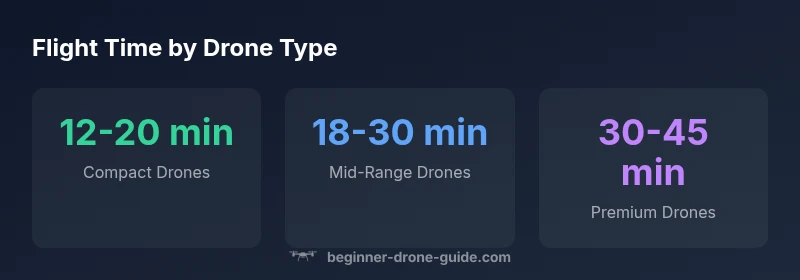
| Drone Type | Typical Flight Time | Notes |
|---|---|---|
| Compact drone | 12-20 minutes | Summer wind, light payload |
| Mid-range drone | 18-30 minutes | Balanced performance for hobbyists |
| Premium drone | 30-45 minutes | Best-in-class motors and larger batteries |
Frequently Asked Questions
How does wind affect flight time?
Wind increases energy demand and reduces efficiency, cutting flight time. Flying in calm conditions yields the most accurate endurance estimates. Planning missions on windy days should include a larger safety margin.
Wind makes drones work harder, which shortens flight time. Fly in calm conditions when you can and always plan with extra battery time.
Do bigger drones always fly longer?
Not necessarily. Larger drones can carry more payload and use bigger motors, which may require more power. Endurance depends on overall efficiency, battery capacity, and how the drone is designed.
Larger isn’t always longer lasting; it depends on the whole system, including weight and efficiency.
How accurate are manufacturer flight-time ratings?
Manufacturer ratings are tested under controlled conditions and with specific payloads. Real-world results usually run a bit lower due to wind, temperature, and battery age. Use ratings as a baseline.
Ratings give you a baseline, but real flights can be shorter depending on conditions.
Can low-power modes extend flight time?
Yes, many drones offer flight modes that optimize energy use by reducing motor demand or limiting top speed. These can extend time but may reduce performance. Try them in safe areas first.
Low-power modes can stretch time, but test them to see how they feel in real flights.
Does adding a camera impact flight time?
Cameras add weight and draw energy through video transmission and processing. The impact varies by camera type and stabilization. Expect somewhat shorter endurance with heavier, high-resolution gear.
A camera adds weight and power draw, so you’ll typically see a bit less flight time.
“Battery life is the limiting factor for most beginner drones; understanding it helps you plan safer, longer flights.”
Quick Summary
- Understand that manufacturer flight times are benchmarks, not guarantees
- Wind, payload, and temperature are major real-world time killers
- Plan with extra batteries and safe margins for longer sessions
- Maximize efficiency with smooth flight and light payloads
- Keep batteries healthy to preserve long-term endurance