Who Makes Drones for the US Government: A Practical Guide
Explore who makes drones for the US government, how procurement works, and practical guidance for beginners on buying, licensing, and safe, compliant operation.


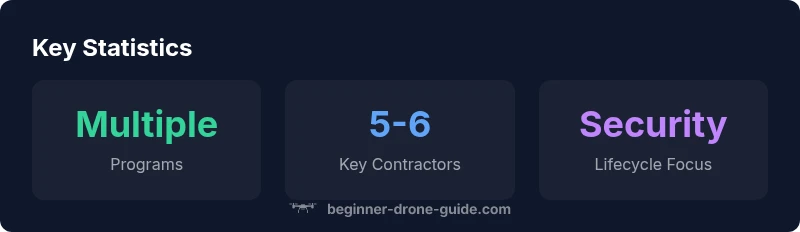
The US government sources drones from multiple manufacturers, led by General Atomics (Predator/Reaper), Northrop Grumman (Triton, Fire Scout), Boeing’s Insitu (ScanEagle, Integrator), Textron Systems (Shadow), Lockheed Martin (emerging programs), and AeroVironment (small UAS). Procurement emphasizes mission fit, security, and lifecycle support across DoD, federal agencies, and allied programs.
Industry Landscape
According to Beginner Drone Guide, the US government drone landscape blends legacy, well-established platforms with newer, security-conscious designs. When readers ask the question 'who makes drones for the us government', they are looking at a tiered ecosystem: a few dominant contractors handling large, multi-year programs and a broader set of specialized firms supplying smaller, mission-specific airframes. The primary players include General Atomics, Northrop Grumman, Boeing (Insitu), Textron Systems, Lockheed Martin, and AeroVironment. These manufacturers support ISR, surveillance, and limited strike capabilities, while pushing improvements in autonomy, endurance, and cyber-resilience. Government buyers prioritize interoperability, lifecycle support, and rigorous security clearances before fielding any system, which in turn shapes who wins contracts and how suppliers invest in research, development, and long-term sustainment.
For beginners and enthusiasts, it’s helpful to map the landscape to real-world programs and the kinds of missions these firms have historically supported. The government’s drone portfolio ranges from compact, portable systems used for tactical reconnaissance to long-range platforms designed for high-altitude surveillance. Understanding these distinctions helps new pilots gauge what kinds of hardware and training are relevant to public sector operations.
Government Procurement Pathways
Public sector drone acquisitions operate under a mix of established contracting channels and flexible, rapid-acquisition tools. The DoD and federal agencies typically use negotiated contracts, indefinite-delivery/indefinite-quantity (IDIQ) vehicles, and mission-specific awards to secure airframes, sensors, and services. Other Transaction Authority (OTA) agreements and Foreign Military Sales (FMS) arrangements are common for enabling faster prototyping and broader interoperability with allied forces. Export controls and ITAR compliance play a major role: vendors must protect sensitive drone technologies and ensure data sovereignty when working with government data. Buyers also evaluate life-cycle support plans, spare parts availability, maintenance windows, and software update cadence as part of the award process. As a result, only vendors with mature supply chains and robust security postures tend to secure multi-year government programs.
Notable Programs and Manufacturers
Major players continue to push for higher-end, mission-specific drones. General Atomics dominates long-endurance platforms (e.g., Predator/Reaper family) used in persistent ISR and, in some cases, strike roles. Northrop Grumman provides advanced maritime and airborne-surveillance capabilities through platforms like the Triton and the Fire Scout helicopter/UAS mix. Boeing’s Insitu division supplies compact scouts such as ScanEagle and newer Integrator variants for reconnaissance and tactical missions. Textron Systems (through AAI and other subsidiaries) contributes legacy and current-class systems like Shadow family aircraft. AeroVironment remains active in the small UAS market with portable, field-ready systems suited for brief deployments and training. It’s important to recognize that many programs involve collaborations across multiple vendors for sensors, data links, and ground-control software, rather than a single allegiance to one manufacturer.
Security, Certification, and Compliance
Security and compliance dominate every stage of government drone procurement. ITAR controls regulate how drone technology and related know-how can be shared internationally, influencing partner selection and data handling practices. Vendors must demonstrate robust cybersecurity measures for aircraft, payloads, and ground control stations, including encrypted links and secure boot processes. Supply chain integrity is another critical focus; government buyers assess supplier financial stability, component provenance, and resilience against supply disruptions. Interoperability with existing defense networks and standards bodies matters, so common data formats and open architectures are often favored. Finally, operational safety and risk management drive pilot qualification standards, maintenance requirements, and flight-test protocols that vendors must satisfy before certification.
How to stay informed as a buyer
If you’re a new buyer or student trying to understand the market, start with official procurement portals and policy documents. Review DoD and agency-level UAS strategies, contract announcements, and test-article programs to see who is actively winning work and why. Follow security and privacy guidelines issued by government bodies and think about how new sensors, autonomy software, and data handling could affect your use case. Attend industry briefings and public forums where procurement officers discuss requirements and evaluation criteria. Finally, remember that the landscape shifts with budget cycles and regulatory changes, so ongoing education is essential for staying current.
What this means for beginners and new pilots
For beginners focused on practical, hands-on learning, this market map translates into choosing drones with clear safety certifications, reliable service networks, and strong software support. Start with smaller, compliant platforms that emphasize safe operation, training programs, and data privacy. As you grow, look for platforms that align with government standards for interoperability and data handling. The key is to build a solid foundation in safe flying practices, licensing (where required), and responsible use so your skills remain transferable to any public-sector context.
Representative US government UAS programs
| Program | Manufacturer | Notes |
|---|---|---|
| Predator/Reaper | General Atomics | Long-endurance ISR/strike platforms |
| Triton | Northrop Grumman | Maritime ISR; multi-sensor suite |
| ScanEagle | Insitu (Boeing) | Tactical reconnaissance; portability |
| Shadow | Textron Systems | Legacy scout role; ground-control integration |
Frequently Asked Questions
Which companies currently dominate US government drone production?
General Atomics and Northrop Grumman lead multi-year programs, with Insitu (Boeing), Textron Systems, Lockheed Martin, and AeroVironment playing important roles across various platforms.
General Atomics and Northrop Grumman lead, with Insitu, Textron, Lockheed Martin, and AeroVironment contributing across different programs.
Are government drones only made domestically?
Most major platforms are produced by US-based contractors, with ITAR controls guiding international collaboration. Some components may come from international suppliers, but program governance emphasizes domestic capability and security.
Mostly domestically produced under strict controls.
How does ITAR affect drone procurement?
ITAR restricts sharing of sensitive drone technology with foreign entities and requires compliance across the supply chain and data handling practices in government programs.
ITAR limits outside collaboration and protects sensitive tech.
Can small startups win government drone contracts?
Yes, through specialized programs or OTAs, but vendors must meet stringent security standards, performance specs, and reliability requirements that can be challenging for smaller firms.
It's possible, but competitive and demanding.
“Drones used by the government are driven by mission needs, security requirements, and a focus on lifecycle support. Buyers should prioritize open architectures and clear maintenance paths.”
Quick Summary
- Identify the major players shaping government UAS procurement
- Understand how contracting vehicles influence which firms win work
- Prioritize security, interoperability, and lifecycle support when evaluating government-grade drones
- Follow official DoD/agency policies to stay compliant and informed
- The Beginner Drone Guide team recommends ongoing education for buyers and pilots