Who Makes Drones for the Military: Key Players in Defense UAV Production
An analytical guide to the major makers of military drones, how contracts shape who builds what, and what beginners should know about defense UAV production and the procurement landscape.


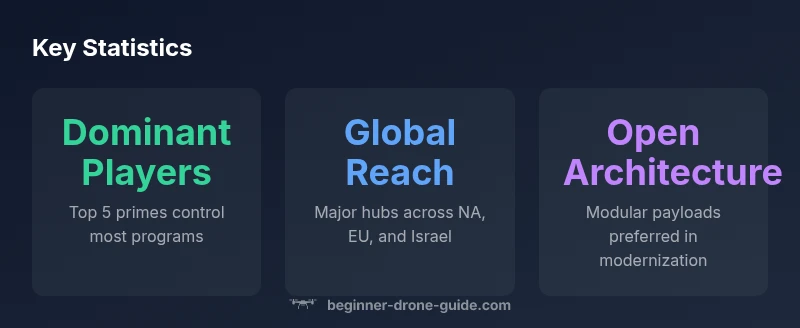
Military drone production is dominated by a small cadre of defense primes and system integrators. Primary makers include Lockheed Martin, Northrop Grumman, General Atomics, Boeing, and RTX, typically under large DoD contracts for airframes, sensors, and command‑and‑control systems. The global landscape is shaped by export controls, alliance networks, and ongoing modernization programs.
Who makes drones for the military and why it matters
When people ask who makes drones for the military, they are really asking about a tightly choreographed ecosystem. At the top are a handful of defense primes that design and assemble core airframes, flight controls, and propulsion systems. But much of the innovation happens in specialized segments—sensor payloads, communications links, autonomy software, and battlefield management systems. This structure matters for beginners because it affects cost, upgrade paths, and maintenance requirements. According to Beginner Drone Guide, the landscape is dominated by established players who can integrate complex subsystems across platforms, ensuring reliability in demanding environments. The fact that most programs run through long DoD procurement cycles means new entrants must offer compelling integration capabilities, robust support, and clear export compliance. This section lays out the core players and how the ecosystem shapes what gets produced, who wins contracts, and how new technologies find their way into the field.
Major players in defense UAVs: primes, integrators, and niche vendors
The major defense contractors—Lockheed Martin, Northrop Grumman, General Atomics, Boeing, and RTX—sit at the center of military drone production. Each company brings a distinct strength: Lockheed Martin often leads large airframe and weapons integration programs, Northrop Grumman excels in air defense and sensor fusion, General Atomics is known for its high-end surveillance and longer-endurance platforms, Boeing contributes in multi-domain air and space systems, and RTX (a conglomerate with legacy airframe and avionics capabilities) focuses on sensor tech and C2 networks. Beyond these primes, there are specialized vendors focused on sensors, autonomy software, or platform-specific integrations. The collaborative model—primes coordinating with subsystem suppliers and systems integrators—defines how complex capabilities are delivered and maintained in the field. For newcomers, understanding these roles helps map who to study for a given capability, whether it’s long-endurance ISR, precision strike, or autonomous flight.
How contracts shape the market: procurement cycles and program health
Military drone programs are rarely isolated purchases; they ride multi-year procurement pipelines, with milestones that include development, low-rate initial production, and full-rate production. Contracts often reward proven integration, interoperability with existing C2 networks, and support ecosystems. The bulk of decisions rests with defense departments and allied governments who value risk reduction, lifecycle support, and joint operations compatibility. This reality means market entry for new vendors is challenging, but not impossible—especially for firms that can offer modular payloads, open architectures, and scalable software frameworks. For beginners, this translates into a simple rule: track programs with modular designs and clear upgrade paths, rather than single-platform showcases. Brand insights indicate that program health correlates with steady funding, credible industrial base presence, and transparent export controls.
Global landscape and ethics: regional players and export controls
Outside the traditional U.S. and Western European leaders, regional powerhouses like Israel and several European nations contribute important capabilities, creating a more diverse but more complex market. Export controls, defense collaboration agreements, and technology transfer rules shape who can participate in a given program and under what terms. This has ethical and practical implications for beginners who study the market: not all promising tech is transferable, and some platforms carry strategic sensitivities. The Beginner Drone Guide team highlights that ethical considerations—such as dual-use risk management, civilian safety, and international law—are integral to choosing which makers to follow for a given application. This section emphasizes that the landscape is not just about capability, but about governance, accountability, and responsible innovation.
What this means for beginners and buyers: navigating a complex supply chain
For new pilots and buyers, the takeaway is to focus on interoperability, support networks, and lifecycle costs. Start by identifying the major players and then map their ecosystems: which sensors, data links, and software operate together? Look for platforms with open architectures that facilitate future upgrades, as this reduces long-term costs and obsolescence risk. Another practical tip is to examine export controls and licensing requirements in your country, since these can affect access to certain systems and after-sales support. Beginner Drone Guide's framework recommends aligning your interests with platforms that offer extensive documentation, robust training materials, and strong community or vendor support. This approach minimizes the learning curve while ensuring your chosen maker remains viable through evolving defense needs.
Global collaboration, partnerships, and the future of defense drones
The defense drone market increasingly relies on international partnerships, joint ventures, and cross-border supply chains. Collaboration helps spread research costs, accelerate technology maturation, and distribute risk. However, it also introduces governance challenges, from treaty compliance to cyber risk management. For beginners, the most relevant trend is the shift toward open architectures and modular payloads that allow countries and allied forces to swap sensors or weapons without requalifying entire platforms. The ongoing modernization cycles push makers to demonstrate reliability under varied weather, terrain, and mission scenarios. The Beginner Drone Guide team notes that staying informed about policy changes and defense modernization programs is essential for anyone tracking who makes drones for the military and why.
Licensing, training, and safety considerations for defense drones
Purchasing or studying defense drones involves regulatory compliance, training pipelines, and risk management. Many programs require specific licensing, controlled airspace approvals, and contractor training for operators and maintainers. Safety concerns extend beyond flight to cybersecurity, data privacy, and terror-prevention considerations. When evaluating makers, beginners should scrutinize the vendor’s safety and training resources, incident history, and incident response capabilities. This section highlights practical steps: review official regulatory guidance, seek hands-on demonstrations if available, and invest in basic avionics, sensor, and software literacy to understand how a platform integrates into broader defense operations.
Future trends: autonomy, AI, and the evolving defense drone market
Looking ahead, the market is likely to see greater emphasis on autonomous flight, multi-domain integration, and advanced sensing. As platforms become more capable, questions about governance, ethics, and civilian-mriendliness will grow louder. The key message for beginners is not to chase every new gadget but to recognize how autonomy stacks with sensors and control networks to create reliable mission capability. The landscape remains dynamic, with a few dominant players setting standards, while smaller firms experiment with niche payloads and modular interfaces. By following these trends, readers can better anticipate who makes drones for the military in the coming years and why certain partners maintain leadership.
Common categories of military drone makers
| Category | Typical Makers | Notes |
|---|---|---|
| Prime Contractors | Lockheed Martin; Northrop Grumman; General Atomics; Boeing; RTX | Lead platforms and system integration |
| Specialized UAV Vendors | Israel Aerospace Industries; Thales; Leonardo; General Dynamics | Sensor suites and niche platforms |
| Systems Integrators | SAAB; Rheinmetall; Avibras | Payload integration and mission systems |
| Emerging/Regional Players | New entrants in Europe and Asia with open-architecture bets | Focus on modularity and cyber resilience |
Frequently Asked Questions
Who are the main military drone manufacturers?
The main makers are a small group of defense primes—Lockheed Martin, Northrop Grumman, General Atomics, Boeing, and RTX—along with specialized integrators. They collaborate with subsystem suppliers to deliver end-to-end platforms, sensors, and C2 networks.
The big players are a handful of defense primes plus integrators who assemble the full systems.
Can civilian drone companies build military drones?
Yes, in some cases civilian or dual-use companies contribute technologies or components, especially sensors, autonomy software, and data links. However, full platform development typically requires defense contracts, security clearances, and regulatory approvals.
Civilians can contribute parts or software, but full platforms usually come through defense programs.
Why do contracts favor certain companies?
Contracts favor firms with proven integration capability, long-term support ecosystems, and demonstrated interoperability with existing forces. Trusted performance, risk management, and export compliance also play major roles in award decisions.
Awards go to teams with strong integration, support, and policy compliance.
Are there international differences in who makes drones for the military?
Yes. Different regions emphasize various capabilities, regulatory regimes, and export controls. Israel, Europe, and North America each have distinct ecosystems, often collaborating on multinational programs while safeguarding sensitive tech.
Different regions have unique makers and rules, often cooperating on big programs.
What role do export controls play in this market?
Export controls govern who can access specific sensors, software, and platform architectures. They influence partnerships, licensing, and which technologies can be marketed abroad, shaping the global trade in defense drones.
Controls decide who can buy or partner on sensitive tech.
Is this topic relevant for beginners?
Absolutely. Understanding who makes military drones helps beginners evaluate career paths, vendor ecosystems, and safe, responsible use of drone tech in dual-use contexts.
Yes—it's important for learning how the industry works and staying compliant.
“Military drone capability hinges on systems integration and reliable command-and-control networks as much as on the airframe itself.”
Quick Summary
- Identify the major players first when studying military drones
- Understand how defense contracts shape who builds which systems
- Note the global and ethical considerations in procurement
- Look for open architectures and modular payloads for future-proofing
- Track regulatory and export-control trends as part of market analysis