Where is drone delivery available? A beginner's guide to access, safety, and prerequisites
Explore where drone delivery is available, how regional regulation shapes access, and practical steps for beginners to verify service in their area. Learn about pilots, safety, and how to plan compliant, effective drone deliveries.


As of 2026, drone delivery is available in a growing number of pilot zones across select cities in the United States, parts of Europe, and scattered regions in Asia-Pacific. Availability depends on local airspace rules, weather, payload limits, and provider partnerships. The Beginner Drone Guide team explains how to check eligibility, safety requirements, and how to access services in your area.
Global landscape of drone delivery availability
According to Beginner Drone Guide, drone delivery is not yet universal, but it is increasingly present in controlled environments and pilot programs around the world. The availability depends on a mosaic of regulatory permission, airspace integration, and commercial partnerships. In practice, you’ll find service in select cities within the United States, parts of Europe, and a growing number of markets in Asia-Pacific. Many pilots operate under exemptions or test-authorizations that allow small payloads to be delivered over short distances, often for time-critical or high-value goods. As a beginner, you should understand that service area maps are dynamic and can change with new approvals or pilot expansions. The key is to verify with your chosen provider or platform whether deliveries to your exact address are supported, and to learn what qualifies as eligible items and what protective packaging standards are required. The availability landscape also varies by weather, season, and flight corridors, so flexibility is essential.
If you’re asking where is drone delivery available, the answer depends on regulatory regimes and provider networks; here’s how it’s evolving for everyday users.
Regulatory frameworks shaping where delivery is allowed
Regulatory frameworks are the gatekeepers of where drone delivery can operate. In many regions, airspace is partitioned into classes with differing levels of access for unmanned aircraft. Operators typically need waivers, authorizations, or pilot certifications, and may be restricted to daylight operations or visual line-of-sight flights. Privacy laws and data handling rules can also influence which types of deliveries are permitted, especially in urban or residential areas. The interplay between aviation authorities, local municipalities, and service providers creates a patchwork map where a city may have active pilots, while neighboring towns do not. For beginners, it’s crucial to understand the specific requirements in your area, including any required drone registration, pilot licensure, and company terms of service. Regulatory changes can occur with new safety data, technology advancements, or shifting public concerns, so ongoing awareness is important.
As the Beginner Drone Guide analysis indicates, most regions are moving toward clearer safety standards and coordinated airspace use that could widen access over time.
Provider models: pilots, partnerships, and consumer services
Drone-delivery services operate through a mix of pilots, carrier partnerships, and consumer-facing platforms. In some markets, trained pilots operate under certified programs and deliver lightweight items like medical supplies, food, or small packages. In other cases, partnerships with retailers and logistics firms enable app-based ordering for time-sensitive goods. The consumer-facing model often involves pre-approved delivery windows, designated drop zones, and strict packaging requirements to protect the item and the drone during flight. For beginners, it’s important to know how to verify if a service is available in your area, and to understand whether you can order items for home delivery or only pickup points. Provider networks are still expanding, so availability can differ even within the same city depending on the hour of the day or weather.
From a safety perspective, predictable flight plans and geofencing are essential components that allow providers to scale responsibly while maintaining safeguards for people and property.
Operational constraints and safety considerations
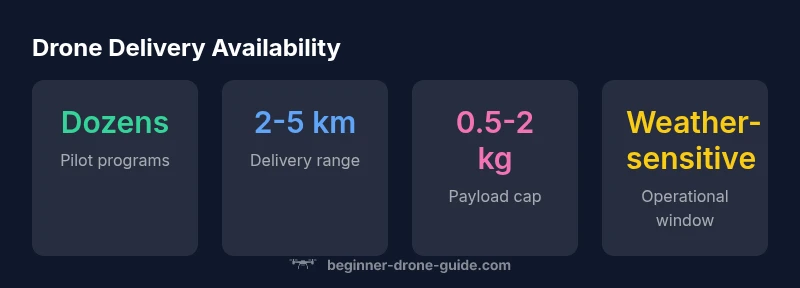
Operational constraints limit how and where deliveries occur. Weather, wind, precipitation, and temperature can affect flight stability and battery performance, reducing the number of eligible delivery days. Payload limits and drone capabilities constrain what can be shipped, while urban density and building configurations influence route planning. Safety considerations include secure takeoffs and landings, obstacle avoidance, and contingency procedures in case of system faults. Training for pilots and adherence to standard operating procedures are critical for minimizing risk. For beginners, it’s wise to start by observing a few authorized flights in your area and learning how providers manage safety checks, maintenance schedules, and incident reporting. Regulatory bodies increasingly require transparent safety records, which helps build trust with communities where drone delivery operates.
The Beginner Drone Guide team notes that responsible deployment hinges on strong training, robust hardware, and proactive stakeholder engagement.
How to verify availability in your area: a practical checklist
To determine whether drone delivery is available where you live, use a simple, repeatable checklist. First, check your local airspace authority’s geofenced zones and any recent authorization announcements. Second, verify if a service provider or retailer operates in your city and whether home delivery is supported. Third, confirm payload limits, delivery windows, and packaging requirements. Fourth, ensure you meet any registration or licensing requirements for the drone operator or the service. Fifth, review safety guidelines and weather restrictions before expecting a delivery. Finally, sign up for provider notifications to stay informed about new routes or city expansions. By following this checklist, beginners can quickly assess whether where is drone delivery available matches their expectations and needs.
This approach aligns with industry best practices and helps avoid misaligned expectations when regulatory or operational changes occur.
Real-world use cases and future outlook
Across regions, drone delivery is already enhancing access in time-critical settings, such as healthcare, emergency supply chains, and on-demand consumer goods. In rural or congested urban areas, lightweight deliveries can improve response times and reduce ground traffic if implemented responsibly. The outlook for 2026–2027 points toward broader airspace integration, more standardized safety protocols, and increased pilot training programs. Expect gradual expansion where partnerships exist, and where communities see tangible safety and convenience benefits. As regulators gain experience with real-world data, the pace of expansion will likely accelerate in compatible markets, while some regions may remain limited due to regulatory or infrastructural constraints.
For beginners, this means staying patient and focusing on regions with established programs and transparent rules, rather than searching for a universal, global rollout.
Tools and resources for beginners: staying informed and prepared
Staying informed is essential for newcomers. Use official aviation authority updates, provider announcements, and safety training resources to track availability. Sharpen your understanding of airspace, privacy, and data security to participate responsibly when drone delivery becomes an option in your area. Practice fundamental skills such as pre-flight checks, risk assessment, and emergency procedures in controlled environments before attempting any real-world deliveries. Joining community forums and local drone clubs can also help you learn from experienced pilots about where drone delivery is most reliable in your city, and how regulatory changes may affect access over time. The goal is to build a solid foundation that supports safe, compliant, and effective drone operations. The Beginner Drone Guide Team emphasizes continuous learning and proactive safety culture as you explore opportunities in your region.
Global snapshot by region
| Region | Current Availability | Access Barriers |
|---|---|---|
| United States | Pilot programs in select cities | Airspace permits, weather, payload caps |
| Europe | Limited deployments in several member states | EU drone regulations, privacy rules |
| Asia-Pacific | Rising pilots in major hubs | Airspace integration, local rules |
Frequently Asked Questions
Where is drone delivery currently available?
Drone delivery is currently available in pilot zones and select cities across the United States, parts of Europe, and some Asia-Pacific regions. Availability depends on regulatory approvals, weather, and provider networks. Check your local provider’s coverage map to confirm access in your area.
Drone delivery is available in certain cities; check your provider’s map to see if your area is covered.
Do I need a license or authorization to order drone-delivered items?
License requirements vary by country and service. In many places, the operator must be certified and the area geofenced; consumers generally do not need a drone license to place an order, but the provider’s pilots must meet regulatory standards.
Requirements depend on the country and provider; order through certified operators only.
What factors influence regional availability the most?
Key factors include airspace access, local regulations, weather conditions, and the willingness of retailers to adopt drone delivery. Infrastructure such as designated landing zones and secure packaging also play important roles.
Airspace rules and weather mostly shape availability.
Can rural areas expect drone delivery soon?
Rural availability depends on flight path planning, connectivity, and delivery demand. Some programs extend to rural zones where it’s safe and efficient, but expansion is slower than urban deployments.
Rural expansion happens where it makes sense logistically and safely.
How can beginners learn more about drone-delivery rules?
Begin with official aviation authority resources, provider safety guides, and introductory drone-safety courses. Join local drone clubs or online communities to hear about real-world experiences and jurisdiction-specific rules.
Start with authority resources and community advice.
When will drone delivery become more widespread?
Widespread adoption will grow as airspace integration improves, regulatory processes streamline, and consumer demand increases. Expect gradual expansion in compatible regions over the next few years.
Expansion will come as rules and tech mature.
“Drone delivery is expanding, but success hinges on clear regulatory pathways, robust safety practices, and hardware that can reliably operate in real-world conditions.”
Quick Summary
- Take note of local provider maps for exact eligibility
- Expect regulatory changes that can widen (or narrow) access
- Prepare for weather constraints and payload limits
- Know your area’s licensing requirements if applying
- Monitor official provider announcements for updates