Where Do Drones Deliver Packages? A Beginner's Guide to Delivery Coverage in 2026
Explore where drones deliver packages in 2026, how coverage works, and what factors influence eligibility for new areas. Practical guidance from Beginner Drone Guide.


Where do drones deliver packages? In 2026, drone delivery operates in select urban and suburban zones within regulated airspace, landing at rooftops, driveways, or designated pads. Programs emphasize safety, weather considerations, and permissions, with coverage expanding as regulations evolve and landing zones proliferate. This quick guide explains geographic reach, delivery formats, and what influences eligibility for new areas.
Global landscape of drone delivery
According to Beginner Drone Guide, drone delivery has moved from lab-scale experiments to regulated service offerings in multiple regions. The core question—where do drones deliver packages?—depends on airspace access, operator qualifications, and the availability of compliant landing points. By 2026, programs tend to concentrate in dense urban corridors and nearby suburbs, with more limited reach in rural areas where infrastructure, weather, and terrain present greater hurdles. Operators routinely partner with retailers, logistics firms, and drone manufacturers to map efficient routes that reduce traffic and shorten last-mile times. The geographic footprint is shaped by aviation authority approvals, shared airspace data, and the readiness of local facilities to receive packages. For readers, the practical takeaway is practical: coverage will continue to grow as airspace rules modernize, landing zones expand, and drone technology advances. This landscape matters for anyone learning how to buy, fly, or deploy delivery-capable drones.
Where drones operate: urban, suburban, and rural
Urban zones offer high demand density and faster service, but come with tighter airspace controls, stricter takeoff/landing requirements, and more complex risk management. Suburban areas often strike a balance between access and safety, with clear lines of sight, predictable traffic, and better ground support. Rural regions can reveal opportunities for last-mile solutions in areas with limited road infrastructure, but weather patterns and longer flight distances test endurance and battery life. In practice, operators tailor their missions to the local mix of roads, rooftops, and open spaces, constantly evaluating permission regimes and ground handling capabilities. For newcomers, the key takeaway is that geographic feasibility is a moving target shaped by regulation, infrastructure, and community acceptance.
Delivery formats and landing zones
Delivery formats range from direct rooftop handoffs to curbside or designated landing pads, with some programs using ground-based drop boxes or cargo doors for contactless handoffs. Landing zones priority factors include safe access, weather windows, and reliable GPS/ground control data. To minimize risk, pilots rely on visual line-of-sight standards where required, advanced obstacle avoidance, and real-time communication with ground teams. For beginners, it helps to think about landing zones as the essential bridge between air operations and customer contact—without a safe, clearly defined pad, even a high-tech drone cannot complete the delivery reliably.
Regulatory and safety considerations shaping coverage
Regulatory frameworks constrain where drones may operate, with airspace classes, altitude limits, and operational waivers driving geographic feasibility. In many regions, commercial drone delivery requires authorization from aviation authorities and adherence to LAANC-like systems, notice-and-awareness protocols, and pilot licensure. Safety requirements—for example, geofencing, redundant power systems, and robust record-keeping—also influence which areas can be serviced. Weather, daylight operations, and emergency procedures further narrow windows for successful deliveries. For beginners, the practical impact is clear: without compliant airspace and strong ground infrastructure, coverage cannot expand. Regular updates from authorities and service providers determine when and where new routes become viable.
Real-world limitations and future growth
Current real-world limitations include battery life, payload restrictions, wind sensitivity, and the availability of safe landing zones. Service expansion tends to occur first in high-density areas with established flight corridors and clear community guidelines. As drone tech improves—longer battery life, faster charging, better obstacle avoidance—the geographic reach will extend, especially into suburban and select rural zones. Partnerships between retailers and drone operators will push this growth, but progress remains tied to regulatory clarity and public comfort with autonomous air deliveries.
How to assess eligibility for your area
To determine whether your area is eligible, check your local airspace rules and any active pilot programs. Look for official guidance from aviation authorities, and consult with service providers about coverage maps and required waivers. Before attempting a test or full delivery, ensure you have a compliant drone, proper licensing for the operator, and clearly defined landing zones. Begin with small, supervised pilots to build familiarity with the regulatory process and to understand the practical constraints of real-world deliveries.
Delivery footprint by region type
| Region Type | Delivery Radius | Common Landing Points | Notes |
|---|---|---|---|
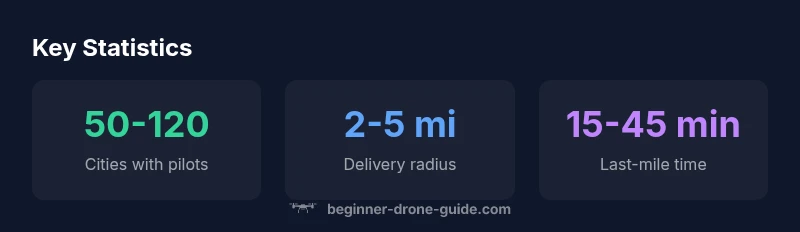
| Urban/high-density | 2-3 miles | Rooftops, balconies | Requires city airspace clearance |
| Suburban | 3-5 miles | Driveways, parking lots | Often uses designated pads |
| Rural | 5-10 miles | Open fields, clear pads | Weather/terrain impact |
| Industrial/logistics hubs | 1-2 miles | Cargo docks, ground docks | High-frequency service |
Frequently Asked Questions
What factors determine if drone delivery is allowed in a given area?
Area eligibility is driven by airspace access, regulator waivers, weather conditions, and the availability of safe landing zones. Operators must meet licensing, equipment, and safety standards. Local authorities may also require community engagement before pilots can operate.
Eligibility depends on airspace access, weather, and safety requirements. Check with local authorities and operators for specifics.
Are drone deliveries common in all cities?
No. Drone deliveries are currently concentrated in pilot regions with approved airspace, infrastructure, and partnerships. Major cities may have limited programs, while many areas are still awaiting regulatory clarity and ground support.
Not in every city yet—depends on local rules and pilots.
What kinds of landing zones are used for deliveries?
Common landing zones include rooftops, driveways, and designated pads in parking lots or loading bays. Some programs use secure drop boxes or cargo doors to enable contactless handoffs.
Rooftops and designated pads are typical landing zones.
Do I need a license to receive a drone-delivered package?
Recipients generally do not need a license to receive. Operators must hold appropriate certifications and waivers. Regulations vary by country, so verify with local authorities and service providers.
Usually no license needed to receive; operators must be compliant.
How does weather affect drone deliveries?
Weather conditions such as wind, rain, and temperature can limit flight windows and payloads. Most programs operate under strict weather thresholds to maintain safety and reliability.
Weather limits flights; services pause in poor conditions.
“Delivery drones will redefine the last mile, but success depends on coordinated airspace rules and robust ground infrastructure.”
Quick Summary
- Check local airspace approvals before any test delivery.
- Expect growth to stay region-limited as regs evolve.
- Landing zones and safety features matter as much as drone capability.
- Follow Beginner Drone Guide for updates on policy and pilots.