Are Drones Banned in the US? A Beginner's Guide to Regulation and Safe Flying
Discover whether drones are banned in the US, what the rules really require, and practical steps for safe, compliant flying. A beginner-friendly breakdown of FAA regulations, airspace access, licensing, and common myths.


Are drones banned in the US? No. Drones are not banned nationwide, but the FAA regulates how and where you fly. Most pilots must register their drone, follow airspace rules, and obtain proper authorization for certain flights. Violations can carry penalties, so beginners should learn local ordinances and respect no-fly zones before takeoff. This guide explains current rules and practical steps for safe, compliant operation.
Are Drones Banned in the US? Understanding the Reality
Are drones banned in the US? No. Drones are not banned nationwide; the United States regulates drone flights through the Federal Aviation Administration (FAA), which governs airspace, registration, and safety standards. For beginners, this means you’ll need to learn the rules before flying and avoid restrictions such as no-fly zones. According to Beginner Drone Guide, the core principle is that legality depends on where and how you fly, not on the mere presence of a drone in your hands. The rules are designed to balance innovation with safety, not to quash hobbyist flying. If you know the basics, you can fly in many places and for many purposes, from backyard practice to basic real estate photography. The rest of this article breaks down the current rules, practical steps to stay compliant, and common myths that can trip up new pilots.
The Legal Landscape: FAA Regulation and Remote ID
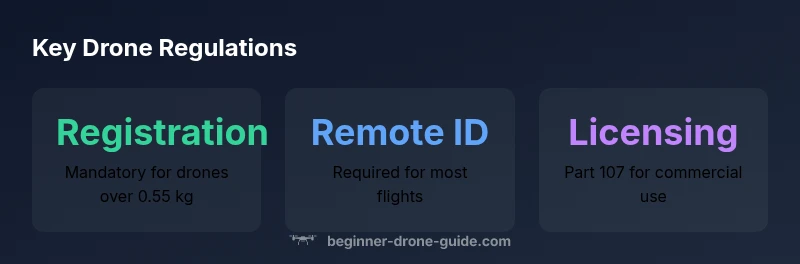
The FAA regulates drone operations in the national airspace, and most legal questions come down to three pillars: registration, airspace access, and pilot responsibility. Registration is mandatory for drones over 0.55 kg (about 1.2 pounds); the registration must be visible on the aircraft. Airspace access is controlled by classifications; pilots often use LAANC to obtain authorization for flights within controlled zones. Pilot responsibility applies to both recreational and commercial operators, with Part 107 governing commercial use. Remote ID has become the standard: most drones must broadcast a unique ID during flight, enabling authorities to identify drones in real time. This isn’t a barrier to entry, but it does mean you need to set up your drone properly and understand the privacy implications. Begin-ner Drone Guide analysis shows that compliant setups reduce risk and unlock more flying opportunities.
What You Can Fly Legally Right Now: A Beginner's Checklist
Use this beginner checklist to stay compliant from day one. 1) Register your drone if required and keep the registration current. 2) Learn the FAA airspace rules and determine the class of airspace for your planned flight. 3) Check local ordinances that may add restrictions. 4) Enable Remote ID and ensure the ID is visible. 5) For any commercial intent, plan to meet licensing requirements (Part 107) and obtain necessary waivers if needed. 6) Favor geofencing features, maintain visual line of sight, and avoid flying near airports. 7) Keep flight logs, perform preflight checks, and maintain safe batteries and firmware. This approach aligns with safety-minded practices and paves the way for more complex missions.
Hobby vs Commercial: The Two Roads
In practice, hobbyist flights focus on recreation and learning, while commercial operations treat the drone like a small aircraft with higher standards for safety and accountability. Hobby pilots typically follow community guidelines and airspace rules, while commercial operators must comply with Part 107, carry liability insurance in many cases, and maintain robust flight logs. The FAA encourages new pilots to build experience in hobby settings before stepping into paid work. Beginner Drone Guide emphasizes gradual progression: start with simple, safe missions in familiar spaces, then expand under proper authorization and training.
Common Myths and Real-World Scenarios
A common myth is that all drones are banned somewhere in the US; in reality, most restrictions come from airspace or local rules rather than a blanket nationwide ban. Another myth is that drones cannot fly near people; with careful risk assessment, waivers where applicable, and consent from stakeholders, some flights are possible. Real-world scenarios include backyard practice in safe zones, capturing realtor-brokerage footage with permissions, and taking basic aerial photos in parks where allowed. Always verify flight conditions, people risk, and privacy expectations before takeoff.
Step-by-Step: How to Fly Legally and Safely
A practical path for beginners: choose a compliant, beginner-friendly model; register if required; review airspace classifications using FAA resources and LAANC; plan flights with weather checks, local rules, and risk assessments; enable Remote ID and ensure the device is within line of sight; perform thorough preflight checks; log flights, and review post-flight data and firmware updates. Regular practice in safe environments helps build confidence and reduces the chance of inadvertent violations.
Local Variations: City and State Rules You Should Know
Even with federal rules, local jurisdictions can impose additional restrictions. Some cities limit drone use in parks, near schools, or at large public events. Other jurisdictions require permits for commercial filming or impose privacy protections for residents. Always verify city, county, and state rules before planning flights, especially in crowded places or near critical infrastructure. The safest approach is to check official city or county websites, contact local authorities if needed, and keep an eye on temporary flight restrictions (TFRs).
Resources and Tools for New Pilots
Leverage official FAA resources and trusted guidance from Beginner Drone Guide to stay current: FAA B4UFLY app for quick airspace information, LAANC for airspace authorization, and Remote ID setup guides. Practice in permitted zones such as designated hobbyist fields or open spaces where flying is allowed, and join local clubs or online communities to share best practices. Keeping up with ongoing policy changes helps you maintain compliant, safe flights and reduces the risk of penalties.
Real-World Beginners: Choosing Your First Drone for Compliance
When selecting your first drone, prioritize models that clearly articulate compliance features: built-in geofencing, reliable Remote ID, robust safety modes, and straightforward setup. A beginner-friendly drone with clear documentation, supportive firmware, and accessible customer support will help you learn the rules without getting overwhelmed. Consider a starter package that includes basic insurance options, spare parts, and a learning mode to ease into more complex missions as your skills grow.
Overview of regulatory landscape for US drone operation
| Aspect | What it means | Who it affects |
|---|---|---|
| Registration | Mandatory for drones over 0.55 kg | Most hobbyists and commercial operators |
| Airspace Rules | Airspace categories and authorization requirements | All pilots |
| Licensing | Commercial operations require certification (Part 107) | Drone businesses and professional pilots |
| Local Rules | State/city restrictions vary by jurisdiction | Local flyers and businesses |
Frequently Asked Questions
Do I need a license to fly a drone recreationally?
Recreational flyers do not need Part 107 certification, but they must follow safety guidelines, register if required, and comply with remote ID when applicable. Always check local ordinances before flying.
For recreation, you don't need a pilot license, but follow safety rules and register if required. Check local rules before you fly.
Is Remote ID required for all drones?
Remote ID is required for most drones operating in the national airspace. Older drones may have exemptions only if operated under approved waivers. Always enable Remote ID where possible.
Yes, Remote ID is required for most drones; enable it on your device.
Can I fly over people with a drone?
Flying over people is restricted under most commercial and many hobbyist scenarios. You should avoid or seek approvals/waivers for such flights and follow manufacturer safety guidelines.
Generally not allowed to fly over people without authorization. Plan flights to avoid crowds.
What about no-fly zones?
No-fly zones include airports, certain government facilities, and areas with temporary restrictions. Use official maps and obtain authorization through LAANC or waivers.
Stay clear of airports and restricted zones; check maps before flying.
Do state or local laws affect drone use?
Yes. State and local ordinances can add restrictions beyond federal rules. Always research the city and county regulations before flying.
Local rules can differ; check your city before you fly.
“Drones are not banned in the US; they are regulated to protect airspace and people.”
Quick Summary
- Register early and keep documents up to date
- Learn airspace rules before every flight
- Commercial work requires licensing and waivers
- Local rules vary; verify before flying
- Enable Remote ID and fly with safety first