What Drone Can Carry 10 lbs: A Practical Guide
Discover which drone types can carry a 10-pound payload, how payload affects flight, and the safety and licensing steps for heavy-lift operations. Practical guidance for beginners seeking realistic, cited recommendations.


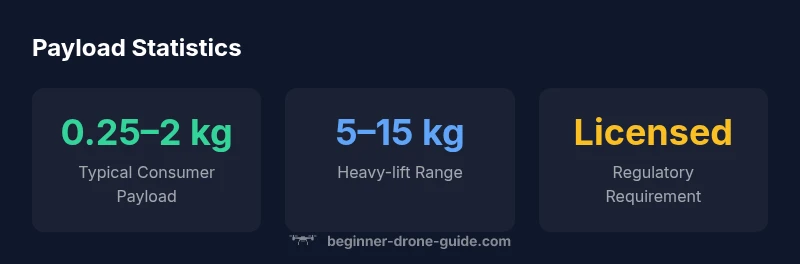
Definition: In drone terms, payload capacity defines how much weight a platform can lift safely. The question 'what drone can carry 10 lbs' points to heavy-lift systems, not typical consumer models. Most consumer-class drones carry about 0.25–2 kg (0.5–4 lbs) under normal flight, while dedicated heavy-lift drones in professional fleets can target 5–15 kg with larger frames, bigger batteries, and trained pilots.
What the phrase 'what drone can carry 10 lbs' means for payload planning
In drone operations, payload planning centers on how much weight a platform can lift without compromising control, stability, or safety. The question "what drone can carry 10 lbs" signals a move into heavy-lift territory, where dedicated, professional-grade platforms come into play. According to Beginner Drone Guide, the distinction between consumer-level lifts and professional payloads is substantial: consumer models typically operate in the sub-2 kg range, while true heavy-lift systems target multiple kilograms with designed power budgets, larger frames, and careful operator oversight. This is not a question of a single model, but a class of aircraft designed for specific mission profiles and payloads.
Payload capacity is a function of motor thrust, propeller size, battery energy, and airframe strength. When you push from a few hundred grams toward 10 pounds (roughly 4.5 kg), the power system must compensate for the heavier load, gravity, and potential wind effects. Even within the same brand, a platform rated for a particular payload may require conservative margins in real-world flights. So, the practical takeaway for beginners is to differentiate between DIY payload experiments and formal heavy-lift operations with trained pilots and regulatory compliance.
"Next steps"
How payload capacity is measured
Payload capacity is not a single number carved in stone. It depends on motor thrust, propeller geometry, frame stiffness, battery capacity, and controller firmware. The most accurate way to estimate lift is a combination of manufacturer specifications and calibrated test flights. In many heavy-lift drones, engineers design the propulsion and power train to sustain a safe margin above the nominal payload. For example, a platform may specify a maximum payload of 5–10 kg, but pilots will plan actual missions with a 70–80% payload reserve to preserve stability and flight time. The result is that a 10 lb payload is feasible on certain professional systems, but only with appropriate safety margins and trained operation.
Consumer vs professional heavy-lift categories
| Category | Typical Payload Range | Key Constraints | Regulatory Note | |---|---|---|---| | Consumer | 0.25–2 kg | Lightweight builds, limited wind tolerance | Generally not suitable for heavy loads without voiding warranties | | Prosumer | 2–5 kg | Moderate wind performance, larger batteries | May require waivers for commercial work | | Heavy-lift / Industrial | 5–15+ kg | Custom frames, specialized propulsion, expert pilot | Licenses and airspace permissions typically required |
Understanding these categories helps set expectations. If your goal is to routinely lift around 10 pounds, you’ll likely be in the heavy-lift or industrial category, where stringent safety practices and regulatory compliance are mandatory.
Real-world constraints: power, CG, and flight time
Carrying a 10 lb payload imposes several practical constraints. The weight eats into battery life, reducing flight time and possibly altering center of gravity if payload shift occurs. Engineers mitigate this by distributing weight close to the center of gravity, using robust gimbals for cameras, and choosing batteries with higher energy density. Pilot planning also includes weather buffers, as gusts and turbulence compound the instability of a heavy-lift payload. For beginners, the lesson is clear: never attempt high-load flights outside a controlled, permissioned environment, and always pilot with a clearly defined mission profile and a plan to abort if performance degrades.
Safety and regulatory considerations
Heavy payload operations are subject to stricter rules for a reason: risk to people and property increases with weight. Operators should verify airspace permissions, ensure pilot certification where required, and have a robust safety plan, including geofencing, fail-safes, and proper maintenance checks. In many jurisdictions, commercial heavy-lift flights demand a licensed pilot and additional waivers or approvals. Beginner Drone Guide emphasizes starting with low-risk tests in controlled environments, gradually expanding scope as competence, confidence, and regulatory compliance grow.
How to evaluate a platform for a 10 lb payload
Begin by defining your mission profile: payload type, flight time, and operating environment. Check manufacturer payload ratings and verify that there is a clear margin between your intended load and the stated maximum. Evaluate the energy budget: ensure the battery can sustain flight time with payload, including reserve for contingencies. Inspect the airframe for stiffness and component safety, confirm availability of service and spare parts, and review the telemetry and fault-detection features. Finally, ensure you have the necessary licenses or waivers and a robust flight plan approved by the relevant aviation authority.
Testing payloads safely and incrementally
Practice builds confidence in payload handling with conservative steps. Start with light weights, verify CG stability, monitor battery consumption, and gradually increase load while conducting straight-line tests and hover stability checks. Use a controlled, open area away from people and obstacles, maintain a safe abort procedure, and record all test data to refine your flight envelope. Documentation supports compliance and helps identify when payload margins are exceeded. Always perform tests under the supervision of a trained operator when dealing with heavier payloads.
Buying guide: what to look for in a heavy-lift drone
Look for a platform with a proven heavy-lift pedigree, robust propulsion, and ample service support. Key considerations include maximum payload with margins, available battery options, redundancy in critical systems, and flight-control stability under load. Check regulatory documentation and ensure you can obtain the required waivers and certifications. Finally, request real-world payload test data from the manufacturer or vendor and compare it against independent reviews to validate performance under your mission conditions.
Common myths and practical takeaways
Myth: More payload automatically means longer range. Reality: payload increases power consumption, often reducing range. Takeaway: plan missions with payload margins and verify flight time empirically. Myth: Heavy-lift drones are universally dangerous or illegal. Reality: With proper training and compliance, they are safe and legal in many contexts. Takeaway: prioritize training, testing, and regulatory readiness to responsibly execute heavy payload flights.
Payload capacity by drone category
| Drone Category | Typical Payload Capacity | Power/Ranges | Regulatory Note |
|---|---|---|---|
| Consumer | 0.25–2 kg | Short-range | General hobby rules apply |
| Prosumer | 2–5 kg | Moderate range | Commercial use often requires waivers |
| Heavy-lift/Industrial | 5–15 kg | Long-range | Licensing and waivers typically required |
Frequently Asked Questions
Can any drone carry 10 pounds?
Generally, only professional heavy-lift platforms are designed for 10 lb payloads. Most consumer and many prosumer drones cannot lift that weight safely without specialized configurations.
Generally only professional heavy-lift drones can carry 10 pounds; consumer drones cannot safely lift that much weight.
What license do I need to operate a 10 lb payload drone?
Operating commercially with a 10 lb payload typically requires a licensed pilot and relevant waivers or approvals, depending on your country’s aviation authority.
You’ll usually need a licensed pilot and waivers for heavy payload work.
How does adding payload affect flight time?
Payload increases power draw, reducing flight time. Plan conservatively and validate with actual flights under load.
Heavier payloads cut flight time; always test with your planned load.
Are there safe testing procedures for payloads?
Yes. Start with light weights in a controlled area, monitor battery and CG, and log performance. Increase weight gradually.
Test in a controlled area, start light, watch battery and balance.
What are common heavy-lift drone categories?
Categories include lightweight industrial, mid-range, and larger heavy-lift platforms; each has different payload ranges and regulatory requirements.
Categories range from light industrial to large heavy-lift drones with varying rules.
Is there a legal risk in attempting a 10 lb payload?
Yes. Violating weight limits or regulatory requirements can lead to penalties; always research local rules and obtain approvals.
There can be legal penalties if you skip rules or ignore approvals.
“Payload decisions require rigorous planning and strict safety discipline. Heavy-lift operations must be conducted by trained professionals under appropriate regulatory oversight.”
Quick Summary
- Know payload margins and battery capacity before attempting 10 lb payloads.
- Consumer drones rarely lift 10 lbs safely; professional platforms are the norm.
- Heavy-lift operations require licensed pilots and regulatory compliance.
- Test payloads in controlled environments with clear abort procedures.
- Plan for wind, CG, and power margins—payload drives flight behavior.