How Much Weight Can a Drone Carry? A Practical Guide
Explore payload basics, safety, and real-world limits for what a drone can carry weight. Learn how weight affects flight, licensing, and choosing the right drone for your payload needs.


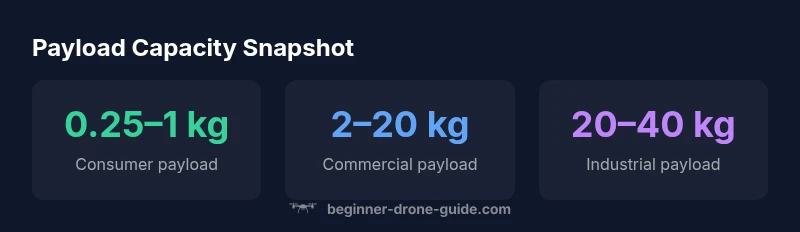
Generally, a drone can carry weight only up to its design payload. In practice, consumer models typically lift about 0.25–1 kg, while many commercial platforms handle several kilograms, and some heavy-lift drones reach tens of kilograms in specialized tests. Always verify manufacturer payload specs and follow local regulations before attempting any payload.
Payload Fundamentals
A payload is the extra mass a drone can lift beyond its own frame and electronics. For beginners, understanding payload fundamentals is essential because it determines what you can legally and safely do with a particular model. The phrase "drone can carry weight" helps frame the concept, but the real limit is the combination of motor thrust, propeller efficiency, battery capacity, and airframe strength. When evaluating a drone, you should compare its maximum takeoff weight (MTOW) with the expected payload to ensure the aircraft can still climb, maneuver, and land safely. Always start with the manufacturer’s stated payload capacity and never exceed it, even if a heavier payload seems tempting for a quick test.
In practice, most entry-level drones are designed for light payloads. You’ll often find a practical payload range around a quarter to one kilogram. Higher-end commercial platforms may lift multiple kilograms, and specialized heavy-lift drones can handle tens of kilograms under controlled testing conditions. This distribution reflects the balance between powertrain capability and airframe stability, not just raw thrust.
How Payload Affects Flight Time and Stability
Payload directly competes with battery energy as the limiting factor for flight time. Heavier payload increases power demand, reduces climb rate, and changes the drone’s center of gravity (CG). Even a few hundred grams shift can alter pitch, roll, and yaw behavior, especially in gusty conditions. As payload increases, the drone’s thrust-to-weight ratio declines, leading to shortened flight times. The takeaway for beginners is simple: weight matters, but the impact varies by model. Always run controlled hover tests with incremental payloads to map out how endurance and handling change. A drone can carry weight, but the practical flight envelope shrinks as you add mass.
Real-World Payload Scenarios
In real-world operations, payload choices are driven by the mission. For aerial photography, small payloads like lightweight cameras or sensors are common, typically within consumer or prosumer classifications. Surveying and inspection tasks may add lightweight equipment such as LiDAR sensors or environmental monitors. Delivery demos—precisely the kind of scenario many industries are exploring—require reliable multi-kilogram payloads on capable platforms. It’s important to note that not all drones are designed for these loads; payload selection should align with MTOW limits, thrust margins, and the manufacturer’s guidance. When a drone can carry weight safely, it expands the range of practical applications without compromising control or safety.
Choosing the Right Drone Based on Payload Needs
Start by defining your payload needs in practical terms: mass, size, and CG location. Then identify a drone family that matches those requirements. Consumer quadcopters are suitable for small cameras and light sensors, while commercial platforms offer higher payload capacities and more robust flight control to maintain stability with heavier loads. For heavier-lift scenarios, consider platforms designed for professional use, and always verify compatibility with your payload’s mounting hardware. Finally, ensure the drone’s power system (battery, ESCs, motors) has adequate headroom for the planned payload so you don’t push the limits during demanding flights.
Safety, Regulations, and Best Practices
Safety should guide every payload decision. Check regional drone regulations to understand MTOW thresholds and any permitting requirements. Balanced payload placement is critical; uneven loads can cause instability or dangerous oscillations. Secure payloads with purpose-built mounts, verify CG alignment, and perform gradual test flights in controlled environments. Keep a conservative margin between payload weight and the drone’s maximum thrust to avoid surprising performance degradation, especially during takeoff and landing. Regularly inspect the airframe for any signs of stress after payload flights, and retire equipment that shows wear.
Measuring Payload and Testing Safely
A practical method to gauge payload capability is to start with a light payload and perform incremental tests. Record ascent rate, hover stability, and battery consumption at each step. Use GPS-based telemetry to monitor flight performance and ensure returns are consistent. Always choose a calm, open area, and have a safe landing zone planned. If you observe unusual vibration, excessive wobble, or noticeable battery swelling, terminate testing and inspect the airframe and mountings. This methodical approach helps ensure the drone can carry weight safely and predictably in real-world use.
Common Mistakes and How to Avoid Them
Rushing payload tests without a plan is a common mistake. People often neglect precise CG, misjudge available power, or ignore regulatory limits. Another pitfall is underestimating the impact of wind and temperature on heavier payloads. Finally, using incompatible or improvised mounting solutions can create unsafe vibration. Avoid these by documenting payload specs, using manufacturer-approved mounts, testing in light winds, and keeping a margin to MTOW. With careful planning, you can confidently explore what a drone can carry weight for your projects.
Payload capacity by drone type
| Drone Type | Typical Payload Range | Primary Use |
|---|---|---|
| Consumer quadcopter | 0.25–1 kg | Aerial photography, light tasks |
| Commercial/Enterprise | 2–20 kg | Surveying, inspection, small payload delivery |
| Industrial/heavy-lift | 20–40 kg | Large-scale payloads, construction |
Frequently Asked Questions
What factors determine a drone's payload capacity?
Payload capacity depends on motor thrust, propeller efficiency, battery energy, airframe strength, and the drone’s center of gravity. The interaction of these elements defines how much mass the drone can lift and still maintain stable control.
Payload capacity is set by the motors, battery, frame, and balance. It’s not just weight—it's how all parts work together to keep you in control.
Is it safe to test payload at home?
Testing payload should only occur in open, unobstructed spaces with proper safety measures. Start with small increments and maintain a clear landing zone, using a low-risk environment to observe handling and power use.
Test in a wide open space with a lightweight payload first, and always have a safe landing area ready.
How does payload affect flight time?
Generally, heavier payload reduces flight time because it increases power demand. The exact impact varies by model but expect shorter endurance as payload rises, especially if approaching MTOW.
More weight means less flight time; test to see how much endurance you lose with each payload step.
Do payloads affect licensing requirements?
Payload itself doesn’t directly change licensing, but exceeding MTOW or performing commercial payload operations may trigger additional regulatory requirements in many jurisdictions. Always check local regulations and safety rules.
Payload doesn’t automatically change licenses, but heavier loads can push you into more stringent rules.
What are safe payload practices for beginners?
Use purpose-built payloads and mounts, maintain proper CG, secure the load, and test in calm conditions. Avoid improvised setups that can shift weight unexpectedly.
Stick to approved payloads, keep weight balanced, and test in light wind with a clear landing area.
“"Payload capacity is the first safety and performance constraint for any drone operation. Understanding the limits helps pilots fly smarter, safer, and with confidence."”
Quick Summary
- Understand payload relative to MTOW before flying
- Expect flight time to drop as payload increases
- Choose a drone that matches your payloads and mission goals
- Always test payloads in a controlled environment with safety margins
- Follow local regulations and manufacturer guidance