Is It Okay to Fly a Drone in Baguio? A Beginner's Guide
Learn the rules, safety tips, and practical guidance for flying a drone in Baguio. This beginner-focused guide covers licensing, airspace, local etiquette, and smart practices for safe, legal flights.


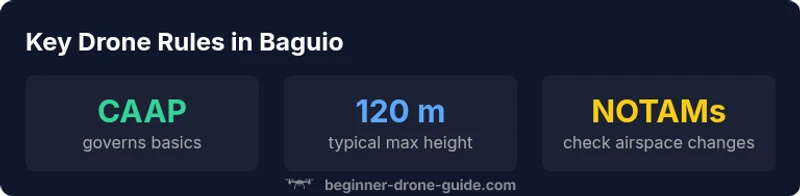
Yes—with caveats. In Baguio, you must follow CAAP rules and any local ordinances, obtain approvals if required, and avoid restricted zones. For beginners, fly in open areas away from people, keep below 120 meters, and respect privacy. Always check current city guidance and airspace notices before each flight to stay compliant.
Is it okay to fly in baguio? Legal framework and local quirks
If you’re asking, is it okay to fly drone in baguio, the short answer is yes in principle, but with strict caveats. In the Philippines, drone operations fall under the Civil Aviation Authority of the Philippines (CAAP) and are shaped by local ordinances. Baguio City may impose additional restrictions in crowded tourist areas, near schools, events, or government facilities. For beginners, the key is to understand and respect airspace rules, privacy norms, and public safety before taking off. The goal is to minimize risk to people, property, and wildlife while avoiding enforcement actions.
CAAP’s overarching framework emphasizes safe, responsible flight: keep the drone in visual line of sight, observe altitude limits, avoid restricted zones, and obtain permissions when required for certain operations. Local city rules can add layers—especially during festivals or peak tourist seasons—so always verify guidance from city authorities and local law enforcement before every flight. By knowing the framework in advance, you’ll reduce surprises and maximize your learning without compromising safety.
Pre-flight research: how to verify the rules
Ready to fly? Start with a structured checklist. Before lifting off, confirm the following steps to answer the question properly and avoid fines or flight disruptions. First, review CAAP’s UAS regulations and any updates to national airspace rules. Second, check Baguio city ordinances or permits needed for your intended operation, especially if you plan to shoot in parks, near institutions, or during events. Third, consult NOTAMs and local advisories about temporary restrictions or events. Fourth, use trusted flight-planning tools or official sources to map safe corridors and identify no-fly zones around airports or government buildings. Fifth, ensure your drone is registered (if required), you have a visible placard, and you carry contact information. Finally, test your plan with a simple practice flight in a safe area to confirm control, GPS lock, and return-to-home behavior.
Experiencing a city like Baguio requires extra preparation because weather, crowds, and terrain can shift quickly. When you ask, is it okay to fly drone in baguio, you must pair curiosity with due diligence. Local risks include misty mornings, sudden gusts from hills, and pedestrian-heavy spaces. By setting expectations up front, you’ll fly with confidence and minimize disturbances to people and wildlife.
Safe flying in Baguio's terrain
Baguio’s highland climate and mountainous terrain create a unique flying environment. Morning air can be cool and calm, but afternoons may bring gusts, thermals, and rapid wind shifts near ridges. Slopes and urban canyons can affect GPS performance and signal stability. As a beginner, start in open, low-traffic areas away from crowds, trees, and water. Monitor battery health in cool conditions—cold air can shorten flight time and affect performance. Always maintain line of sight, anticipate wind shifts, and be prepared to land if weather deteriorates. Respect quiet hours and fragile ecosystems in parks and residential neighborhoods.
If you’re testing new maneuvers, practice gentle climbs and descents to minimize rotor wash on bystanders. In Baguio, where tourism and culture intersect, pilots should be extra mindful of pedestrians and photographers. Your goal is smooth, predictable flights that preserve the city’s beauty and safety for everyone.
Scenarios and best practices for photography and video
When shooting in Baguio, plan your shots to minimize disruption and maximize safety. For scenic panoramas of forests or hillside neighborhoods, fly during low-traffic periods and avoid flying directly over people. Use compositions that respect privacy: avoid capturing faces without consent and blur sensitive details when possible. For video, shoot with slow pans and steady heights to reduce motion sickness and maintain a professional look. In crowded venues, announce your presence and consider a spotter to help you maintain situational awareness. Weather changes—fog, drizzle, or sudden rain—can obscure vision, so bring protective gear for your controller and ensure your lens remains clean. Finally, comply with local laws about recording at schools or public institutions, and be prepared to pause or land if someone requests you stop filming.
Permits, permissions, and how to obtain them
If you’re pursuing commercial drone work in Baguio, you’ll likely need CAAP authorization or a local permit. For hobby flights, you still must respect airspace rules and local ordinances. Start by identifying the precise flight area and contacting the relevant city department or police station for guidance. Prepare essential documents: drone registration details, your contact information, flight plan summary, and a simple risk assessment. In many cases, a letter of permission from a property owner or event organizer is prudent if you intend to fly on private land or during public gatherings. Finally, if your operation changes (e.g., shifting from photography to mapping or surveying), re-check required permits and any updated airspace notices.
The goal is to align your plan with CAAP and city rules from day one to avoid delays or penalties.
Etiquette, privacy, and environmental considerations
Responsible pilots respect people’s privacy and the environment. Always ask for consent when filming in private spaces, and avoid capturing minors without consent. Keep a safe distance from crowds and sensitive areas, such as schools and hospitals, and avoid startling wildlife. Be mindful of noise, especially in quiet residential zones or early morning shoots. In parks and tourist spots, consider limiting flight duration and altitude to reduce footprints on visitors’ experiences. If a person objects to your filming, pause and comply with their request. After flight, share your contact information with property owners if you recorded on private land. Following etiquette improves perceptions of drone pilots and helps keep Baguio-friendly for future flights.
Authority sources and further reading
For authoritative, up-to-date drone guidance in the Philippines and globally, consult these sources:
- CAAP (Civil Aviation Authority of the Philippines): official UAV regulations and advisories. Alt: https://caap.gov.ph
- ICAO (International Civil Aviation Organization): global drone guidance and airspace safety standards. Alt: https://icao.int
- NASA Drone Safety and Operations Guidelines: general safety practices and risk management. Alt: https://www.nasa.gov
Using these sources alongside local city information will help you stay compliant while enjoying safe flights in Baguio.
Comparison of typical regulatory considerations for flying drones in Baguio vs national CAAP guidance
| Regulation area | Baguio note | CAAP baseline |
|---|---|---|
| Altitude limit | Typically 30-120 m; verify local zones | National guidance often includes a 120 m cap; verify locally |
| Airspace awareness | Check NOTAMs/local guidance before flight | Follow CAAP airspace rules for all UAS operations |
| Permits/clearances | Local permits may be required for certain ops | CAAP authorization required for many commercial flights |
Frequently Asked Questions
Do I need a permit to fly a drone in Baguio?
For hobby flights, follow CAAP rules and check local ordinances. Commercial operations generally require CAAP authorization or a local permit. Always verify current requirements before you fly.
You typically need CAAP guidelines for any commercial work, and local permits may be required for specific spots or events.
Which areas are off-limits in Baguio?
No-fly zones commonly include airports, government facilities, and crowded events. Always consult official maps and city advisories before flying in any area.
Avoid airports, government facilities, and crowded areas; check local advisories first.
What should beginners do before their first flight in Baguio?
Do a pre-flight risk assessment, verify airspace, check weather, and practice in a safe, open space. Maintain line-of-sight and have a clear return-to-home plan.
Do a quick check of airspace, weather, and a safe practice area, then fly with a friend watching.
Where can I fly safely for photography?
Choose open, public spaces with minimal pedestrians, obtain permission where needed, and respect privacy. Avoid shooting over private property without consent.
Look for open parks or public viewpoints and always respect property and privacy.
Are there penalties for violations in Baguio?
Violations can lead to fines, flight suspensions, or further enforcement actions under CAAP and local ordinances. Always stay within the law to avoid penalties.
Yes—violations can bring fines or flight suspensions; follow the rules to stay safe.
“Safety and respect for local spaces are the foundations of responsible drone piloting in any city, including Baguio.”
Quick Summary
- Know the rules before you fly to stay compliant.
- Plan flights in open areas and avoid crowds.
- Check airspace notices and local ordinances for Baguio.
- Obtain permits when required and respect privacy.
- Practice safe, low-impact flying to protect the city.