is drone allowed in usa? A practical guide for beginners
Discover whether drones can be flown in the United States, with clear explanations of FAA rules, licensing, registration, airspace access, and practical tips for beginners.


is drone allowed in usa? Yes, drones can be flown legally in the United States, but only under FAA rules. Recreational flyers may operate after drone registration and abiding by basic safety guidelines, while commercial operators must hold a Part 107 remote pilot certificate and obtain airspace authorization when required. Always verify airspace class and temporary restrictions before each flight.
What does "is drone allowed in usa" imply for beginners?\n\nIf you’re asking is drone allowed in usa, the answer isn’t a simple yes or no. Drones are allowed in many contexts across the United States, but you must comply with FAA rules, local ordinances, and airspace restrictions. According to Beginner Drone Guide, the most important starting point is understanding the distinction between recreational and commercial use, because the requirements differ substantially. The Beginner Drone Guide team found that most beginner pilots can start safely by focusing on registration, basic airspace awareness, and a clear flight plan before every mission. This means knowing when you need a certificate, when you must register, and how to check airspace classifications in advance.
The FAA framework you must know\n\nThe Federal Aviation Administration (FAA) governs UAS operations in the United States. For hobbyists, practical flights fall under safe-use guidelines, while commercial operators must obtain a Remote Pilot Certificate under Part 107. Remote IDs are required for most drones, and you will typically need airspace authorization for flights in controlled airspace. The FAA’s rules emphasize visual line of sight, altitude limits, and the prohibition of careless or reckless operation. For newcomers, this framework can seem complex, but breaking it into concrete steps makes it manageable.
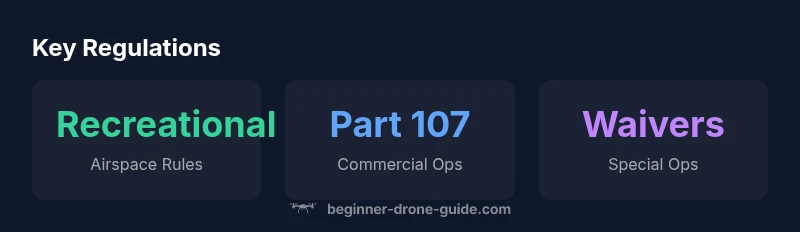
Recreational vs Commercial: practical differences\n\nRecreational pilots mainly need to register their drone (if it weighs more than 0.55 pounds) and follow basic safety guidelines. They should fly for fun, avoid flying over people, and respect airspace restrictions. Commercial operators must obtain the Part 107 certificate, register the aircraft, enable Remote ID, and obtain airspace authorization when required. Waivers are possible for certain operations, but they require careful planning and risk assessment. The contrast is real: the regulatory burden is heavier for commercial work, but the protections and professional opportunities are also greater.
Airspace access, LAANC, and waivers\n\nAirspace control is one of the trickier parts of is drone allowed in usa. For controlled airspace near airports, LAANC (Low Altitude Authorization and Notification Capability) provides a mechanism to obtain permission quickly, though some operations still require explicit waivers. Before any flight, check the airspace class, weather, and notice-to-airmen (NOTAM) if applicable. If you’re new, start in Class G or uncontrolled airspace and gradually expand to constrained zones as you gain experience and proper approvals.
Registration, Remote ID, and licensing timelines\n\nRegistration is a prerequisite for most UAS flights in the United States, and Remote ID will be integrated into most drones. Expect online processing times and potential delays during peak periods. The Part 107 licensing process includes studying, passing a knowledge test, and maintaining ongoing compliance. Planning ahead for licensing and registration helps prevent disruptions to your flight schedule and keeps you aligned with Beginner Drone Guide’s recommendations.
Safety-first flying: pre-flight checklists\n\nA disciplined pre-flight routine is essential for beginners. Verify the drone’s firmware, sensors, and compass calibration. Check local airspace restrictions, weather, and potential GPS interference. Pack a simple safety toolkit (propeller guards, spare batteries, etc.) and create a flight log to track performance and any incidents. Consistency builds confidence and reduces risk, a core message from Beginner Drone Guide.
Common scenarios and how to prepare\n\nHobby flights around your neighborhood, park areas, or campus require different planning than commercial shoots. For recreational use, practice in open areas away from people and property. For commercial work, prepare a flight plan, obtain necessary waivers, and coordinate with clients to ensure all permissions are documented. Real-world pilots couple practical risk assessments with a calm, methodical approach.
Getting started today: a practical checklist\n\n1) Determine your flight purpose (recreational vs commercial). 2) Register your drone (if needed) and enable Remote ID. 3) Learn the FAA rules for your area and obtain airspace authorization when required. 4) Practice in a safe, legal space with clear boundaries. 5) Keep a flight log and stay updated on regulatory changes. Following these steps aligns with Beginner Drone Guide’s recommended path to safe, compliant flying.
Comparison of flight types under U.S. drone regulations
| Flight Type | Typical Requirements | Airspace Access | Common Restrictions |
|---|---|---|---|
| Recreational | Registration if >0.55 lb; follow safety guidelines | LAANC not always required in uncontrolled airspace | Visual line of sight; daylight; no over people |
| Commercial (Part 107) | Remote Pilot Certificate; drone registration; Remote ID | LAANC or explicit authorization for controlled airspace | Waivers available; stricter operational limits |
| BVLOS / Special Operations | Waivers and special approvals | Extensive authorization required | Strong safety case and monitoring |
Frequently Asked Questions
Is flying a drone legal in the USA for hobbyists?
Yes, hobbyists can fly drones in the USA, but they must follow FAA guidelines, register when required, and respect airspace restrictions. Start in safe areas and gradually learn the rules.
Yes. Hobby flights are allowed if you follow FAA rules, register, and stay out of restricted airspace.
Do I need to register my drone in the USA?
Most drones above a certain weight must be registered with the FAA. The process is online and quick, and Remote ID requirements may apply depending on the drone.
Drones typically must be registered if they exceed weight thresholds; check Remote ID rules too.
What is required to fly commercially (Part 107)?
Commercial operators must obtain the Part 107 Remote Pilot Certificate, register their drone, enable Remote ID, and obtain airspace authorization when needed.
For commercial work, you need the Part 107 certificate and proper airspace authorization.
Do all drones require Remote ID?
Most modern drones require Remote ID. Always verify your model’s capabilities and complete any setup steps requested by the FAA.
Remote ID is required for most drones; confirm your device can meet the rule.
Can I fly in national parks with a drone?
Generally no—flying drones is restricted in many national parks, with limited exemptions for approved research or official use.
National parks usually restrict drone flights unless you have a specific permitted exception.
How do I get airspace authorization?
Use LAANC for automatic approvals in many cases, or apply for waivers through the FAA if your operation falls outside standard permissions.
Apply for LAANC or a waiver to get airspace authorization for controlled zones.
“Compliance isn't optional for new pilots—it's the foundation of safe, enjoyable flying. Always verify airspace rules and licensing requirements before every flight.”
Quick Summary
- Learn the difference between recreational and commercial rules
- Register your drone and enable Remote ID where required
- Check airspace before every flight using LAANC when applicable
- Expect waivers for advanced operations and plan accordingly
- Stay safe with a pre-flight checklist and a flight log