How to Become a Drone Pilot: A Practical Beginner's Guide
A practical, step-by-step guide for beginners to become a drone pilot, covering path choices, licensing, training, safety, and real-world flying.


You’ll learn how to become a drone pilot by choosing your path (recreational or commercial), meeting licensing or registration requirements, and building real flying skills. This guide outlines the steps to pass knowledge tests, complete safety training, and log flight hours so you can fly legally and confidently.
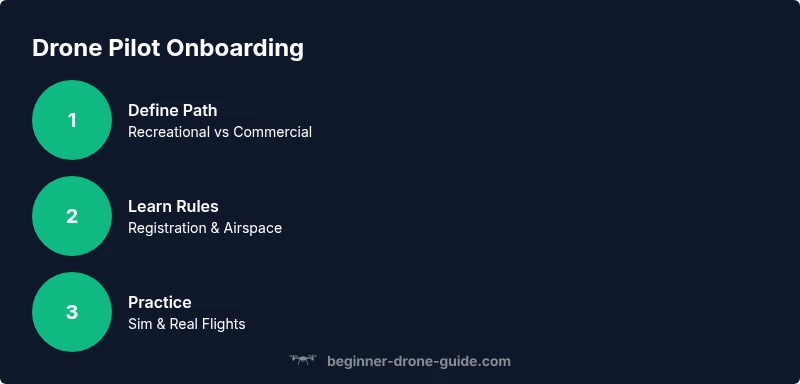
Define Your Piloting Path: Recreational vs Commercial
According to Beginner Drone Guide, aspiring pilots often start by deciding whether they want to fly for fun or for work. That choice shapes licensing, training, insurance, and ongoing skill development. If you’re asking how to become a drone pilot, begin with this decision: do you want simple hobby flights, a side gig, or a career? Your path affects permissions, required certifications, and where you’ll focus your practice. The more clearly you define your goal, the easier it is to pick the right training, join the right communities, and stay motivated as you progress.
Licensing and Regulation Essentials
Most countries require some form of registration or a pilot certificate for drone operations beyond strictly recreational use. Start by identifying whether your flights fall under “recreational,” “commercial,” or both categories in your jurisdiction. Then map out what licenses, permits, or registrations you’ll need. This typically includes drone registration with a national aviation body, and possibly a remote pilot certificate or similar credential. Understanding airspace classification, privacy rules, and mandatory safety checks early will save you time and trouble later. The Beginner Drone Guide Analysis in 2026 emphasizes starting with regulatory basics before heavy training.
Knowledge Tests, Certifications, and Where They Apply
A core component of becoming a competent drone pilot is passing a knowledge test or certification relevant to your region. Expect topics like airspace rules, weather considerations, emergency procedures, and privacy principles. Even if you begin as a recreational flyer, many clubs and insurers will require you to demonstrate understanding of safety fundamentals. Prepare by reviewing official study guides, taking practice exams, and using simulators to reinforce learning. Based on Beginner Drone Guide analysis, 2026, structured study helps newcomers avoid common pitfalls and speeds up credentialing.
Training Options for Beginners
Training choices range from free online modules to hands-on workshops. For new pilots, a blended approach often works best: start with a solid online foundation, then schedule in-person sessions to practice with a real drone. Look for beginner-friendly curricula that cover pre-flight checks, flight planning, emergencies, and ethical use. Join a local drone club or community college course if available. The right mix builds confidence without overwhelming you and helps you accumulate genuine flight experience quickly.
Building Practical Flight Skills: From Sim to Real
Flight practice is the bridge between theory and competence. Begin with a simulator to learn basic controls, then progress to controlled outdoor flights in calm weather. Maintain a flight log to track hours, missions, and lessons learned. Practice essential maneuvers—hovering stability, smooth ascents/descents, and precise waypoint navigation. Incrementally raise difficulty: different wind speeds, small targets, and varied lighting conditions. Consistency over intensity yields steady improvement.
Safety First: Airspace Rules, Weather, and Risk Management
Safety isn’t a feature; it’s a foundation. Learn to read airspace restrictions, NOTAMs, and local speed limits. Always perform a pre-flight risk assessment, check weather windows, and have a plan for abrupt weather changes. Establish a personal minimums checklist: weather thresholds, battery management, and emergency return procedures. Keeping safety front and center protects people and property and makes you a reliable pilot.
Practical Considerations: Costs, Time, and Realistic Expectations
Investing in a drone and training can vary widely by country and course length. Expect initial gear costs for a beginner-friendly drone, plus registration and course fees. Time wise, real progress comes from regular practice over weeks rather than long, sporadic sessions. Budget for ongoing updates, firmware checks, and occasional gear upgrades. The reality for new pilots is steady growth, not overnight mastery.
Step-by-Step Plan to Get Flying Within 30 Days
If you’re aiming for a fast start, follow a disciplined 4-week plan: Week 1 – decide your path, register if needed, and complete introductory safety training. Week 2 – pass a knowledge test or complete an accredited online course. Week 3 – obtain any required permits or certificates and start hands-on flight practice with a basic drone. Week 4 – log hours, refine core maneuvers, and prepare for your first official flight under supervision or within a club.
AUTHORITY SOURCES
- Federal Aviation Administration (FAA): https://www.faa.gov/
- Transport Canada: https://tc.canada.ca/en/transport-canada/doing-business/drone-safety
- European Union Aviation Safety Agency (EASA): https://www.easa.europa.eu/
These sources provide official guidance on licensing, airspace, and safety practices to help beginners approach flying with confidence.
Real-world Applications and Career Paths
As you grow from beginner to capable pilot, you’ll discover a range of real-world use cases: real estate photography, agricultural monitoring, infrastructure inspection, film and media production, and search-and-rescue support in communities. Each path has different credential needs and risk considerations, so re-evaluate your goals as you accumulate hours and experience. The key is to translate your practice into practical, legal, and safe flight that aligns with your chosen direction.
Tools & Materials
- Drone with camera(Entry-level model is fine; ensure it supports basic flight modes and has a stable GPS for beginners.)
- Remote controller(Keep it paired with your drone; learn manual vs stabilized modes.)
- Battery set(At least 2–3 batteries for extended practice; have a charger that supports fast charging.)
- Propeller set(Spare props in the correct size for your drone.)
- Micro SD card(Class 10 or higher, 32–128 GB depending on the drone’s video resolution.)
- Propeller wrench(Useful for quick replacements.)
- ND filters (optional)(Helps with bright daylight and video quality.)
- Toolkit and spare parts kit(Screwdrivers, battery connectors, and glue for minor repairs.)
- Registration documents (if required)(Carry any proof of registration or operator numbers as applicable.)
- Flight log app or notebook(Track flight hours, locations, maneuvers, and incidents.)
- Smartphone/tablet with flight app(Used for live view, telemetry, and flight planning.)
Steps
Estimated time: 6-12 weeks (varies by jurisdiction and study pace)
- 1
Define your piloting path
Decide if your initial flights are for recreation, as a hobby, or if you’re pursuing paid work. This choice will influence which licenses or registrations you need and what kind of training is most relevant for you.
Tip: Start with the simplest, lowest-cost option to build confidence. - 2
Check licensing and registration requirements
Consult your country’s aviation authority to identify exact licensing, registration, or permit requirements for drone flights. Create a checklist of documents and deadlines to stay compliant.
Tip: Document deadlines early to avoid late fees or missed tests. - 3
Complete required training or courses
Enroll in a beginner-friendly course that covers safety rules, airspace basics, and emergency procedures. Use simulators to practice before first outdoor flights.
Tip: Mix theory with hands-on practice in a safe environment. - 4
Pass the knowledge test (if applicable)
Study official handbooks and take practice exams to familiarize yourself with question formats and reserve testing slots early.
Tip: Take multiple practice tests to improve memory retention. - 5
Register your drone and obtain numbers
If registration is required, complete the process and display your registration numbers on your drone as mandated.
Tip: Keep a digital copy of registration receipts for reference. - 6
Log your first real flight
Plan a simple flight in an open area, perform preflight checks, and record battery usage, wind, and maneuver outcomes.
Tip: Have a safe landing plan and avoid crowded spaces. - 7
Progress to advanced skills and regulated operations
As you gain hours, pursue additional certifications or operator endorsements if your region requires them for specialized activities.
Tip: Keep learning and practice in varied environments.
Frequently Asked Questions
Do I need a license to fly drones commercially?
In many regions, commercial drone operations require a pilot certificate or authorization. Regulations vary by country, so check your national aviation authority for the exact requirement. Even if not required, having certification demonstrates competency and can improve insurance options.
Yes, most places require a pilot certificate or authorization for commercial work.
What is the difference between recreational and commercial drone flights?
Recreational flights are typically for hobby use and may require registration. Commercial flights involve earning money and typically require additional training, testing, and certificates. Always verify the rules for your location.
Recreational flying is for fun; commercial flying needs credentials and permits.
How long does training typically take?
Training duration varies by program and regulatory requirements. Expect weeks to months of study and hands-on practice, plus time to prepare for tests or certifications.
It can range from a few weeks to several months depending on your pace and local rules.
Where can I take the knowledge test?
Tests are usually administered by a national aviation authority or accredited testing centers. Many places offer online practice exams and in-person testing options.
You’ll take the test at an authorized testing location or online, depending on your country.
Is there a minimum age to become a drone pilot?
Age requirements vary by country and what type of operation you plan to conduct. Check your national rules for any age restrictions and consent requirements.
Age rules depend on your country and the type of operation.
Watch Video
Quick Summary
- Choose recreational or commercial path first
- Complete licensing and registration before flights
- Practice with simulators and real flights in safe environments
- Keep detailed flight logs and stay updated on rules