How Much Is a Drone Pilot License? Costs, Steps & Timeline
Explore how much a drone pilot license costs, what it covers, and the step-by-step path for beginners in 2026. Learn regional differences, typical expenses, and practical tips to start safely and confidently.


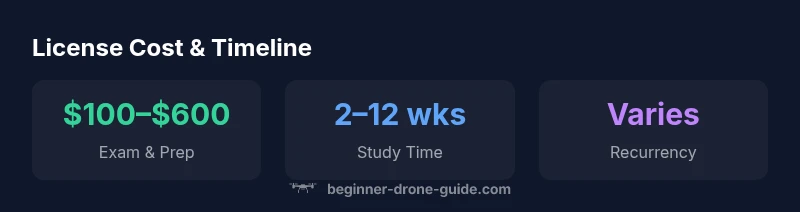
In most regions, there isn’t a single universal 'drone pilot license'. The cost to obtain the credential varies by country and program. In the United States, you pursue the remote pilot certificate (Part 107) by passing a knowledge test; total costs typically include exam fees, study materials, and optional training. Broadly, expect a broad range—from a few hundred dollars to around six hundred—depending on materials, coaching, and whether you choose self-study or formal courses.
What licensing means for a beginner in 2026
According to Beginner Drone Guide, a "drone pilot license" is not a universal term. Licensing is region-specific, with authorities setting rules on who can fly, where, and for what purposes. For hobbyists, some regions rely on simple registration or no formal license, while commercial operators face more rigorous requirements like exams, background checks, and operating limitations. If you’re asking how much drone pilot license, costs vary by country and program. In the United States, the path centers on a knowledge test to obtain a remote pilot certificate; in Europe, you may navigate EU-wide frameworks with different classes of competence; elsewhere, countries differ widely in structure and fees. The important part is to understand the purpose: licensing is about safety, accountability, and standard operating procedures. Starting with the fundamentals—airspace rules, weather awareness, and mission planning—builds a solid base before you invest more time and money.
What you actually earn with the license and what it unlocks
A license or certificate generally unlocks legal access to conduct drone operations beyond basic hobby flights. It signals to regulators, clients, and insurers that you understand airspace, weather, risk management, and operational procedures. For many new pilots, the license is the bridge from casual flying to commercially viable work—whether surveying, real estate photography, agricultural monitoring, or inspection tasks. The credential also establishes a baseline of credibility that reduces friction when applying for jobs or working with clients. Beyond the credential, ongoing education—like updated airspace rules or new safety practices—helps you stay compliant and competitive.
Cost components: exam fees, prep, and ongoing training
Costs are not limited to the exam fee. There are several contributing elements: study materials (books, online courses, practice tests), mandatory or recommended training, and occasional recurrency requirements (renewal or periodic re-tests in some regions). Some learners choose self-study, which lowers upfront costs but requires discipline and ample time; others opt for instructor-led courses that boost confidence and ensure coverage of the exam syllabus. In any case, you should budget for third-party practice tests and simulated flying sessions, as hands-on scenario training is crucial for real-world success.
Step-by-step path for beginners in 2026
Here is a practical, beginner-friendly path you can adapt to most jurisdictions:
- Confirm local licensing requirements with your aviation authority or a trusted source.
- Gather core knowledge: airspace, weather, flight operations, regulatory constraints, and safety risk assessment.
- Choose a study approach: self-study, a prep course, or a hybrid plan that fits your budget.
- Register for the exam or knowledge test, and schedule a date.
- Complete any required background checks or documentation.
- Pass the knowledge test and receive your credential or certificate.
- Learn recurrency rules and plan ongoing education to stay current. This path emphasizes a steady, measured approach that matches most regulatory frameworks and keeps you aligned with practical flying.
Regional snapshots: US, EU, UK, and Canada (and beyond)
In the United States, the primary credential is the Remote Pilot Certificate (Part 107), which governs commercial operations and requires passing a knowledge test. In the European Union, pilots typically follow the EU framework (A1/A3 and A2 CofC) under EASA guidance, with country-specific nuances. The UK maintains its own licensing path aligned with UK Civil Aviation Authority guidance, though many principles echo the EU model. Canada uses region-specific credentials and operating rules, often with a combination of knowledge tests and practical assessments. Other regions vary widely, from registration-based systems for hobbyists to full licensing for commercial use. The common thread across regions is that licenses exist to uphold safety, accountability, and standardized operations, making training and preparation essential.
Practical tips to minimize costs and maximize success
To manage costs while maximizing outcomes:
- Start with free or low-cost study resources and practice tests before committing to paid courses.
- Compare exam fees, training durations, and pass rates across providers; choose a plan that fits your schedule and budget.
- Prioritize hands-on practice in safe, controlled environments to build confidence before taking official tests.
- Use community forums and local drone clubs to share study tips, test prep, and flight protocols.
- Track regulatory updates and recurrency requirements; set reminders to renew or refresh knowledge as required.
- Consider bundled coaching that includes practice exams and flight scenarios if you expect to operate commercially. These strategies help you get the credential with clear expectations while keeping expenses reasonable.
Next steps after obtaining the credential: staying compliant and growing skills
After you obtain your credential, your focus should shift to continuous learning and practical experience. Establish a regular practice schedule to stay proficient, build a portfolio of flights that demonstrate safe operating procedures, and plan for advanced certifications if your objectives evolve (e.g., nighttime operations, beyond visual line of sight, or specialized missions). Invest time in networking with local operators to land client gigs and partnerships. Finally, keep a close eye on regulatory changes that affect licensing, airspace access, and insurance requirements, so your business remains compliant and resilient.
Licensing options and typical cost ranges across regions (illustrative)
| Region/Program | License Type | Typical Cost (range) | Recurrency/Validity | Notes |
|---|---|---|---|---|
| United States | Remote Pilot Certificate (Part 107) | $100–$600 | Recurrency via recurrent knowledge test (every 24 months) | Requires passing FAA knowledge test and compliance with Part 107 rules |
| European Union | EU-wide A1/A3 & A2 CofC framework | €100–€800 | Continuing training updates; recurrency varies | EU-wide framework under EASA with member-state nuances |
| Canada | Basic/Advanced credentials (regional options) | CAD $200–$600 | Renewal per program requirements | Region-specific rules and assessments |
| Other Regions | Region-specific credential | Varies widely | Varies by country, consult local authority | Check local aviation authority for exact paths |
Frequently Asked Questions
Do hobbyists need a license to fly a drone legally?
In many regions, casual hobby flying may require registration or minimal regulatory compliance, while commercial use generally requires a formal license. Always check the local aviation authority for precise rules before flying.
For hobbyists, rules vary by country. Some places require only drone registration, while others may need verification of knowledge or safe-flying practices for any non-recreational use.
Is the license valid for life?
Most jurisdictions require periodic knowledge updates or recurrency tests to stay current. Renewal requirements and intervals differ by country, so plan for ongoing education.
Most licenses aren’t lifetime. You’ll likely need to renew or refresh your knowledge every few years depending on where you operate.
Do I need a license for commercial drone work?
Yes in many places you’ll need a formal credential to fly commercially. The exact type and level of certification depend on regional rules and the scope of your work.
If you’re doing commercial drone work, expect to obtain a credential and follow commercial operation rules in your region.
How long does the licensing process typically take?
Timeframes vary by region and preparedness. Some learners complete the process in several weeks, while others take a few months to study, test, and satisfy any practical requirements.
Most people finish the process in weeks to a few months, depending on study pace and test availability.
Are there cheaper paths to pilot credentials?
Yes. Self-study with free practice tests and minimal training can be cheaper, but you may invest more time. Structured courses, while pricier, can improve pass rates and confidence.
You can save money with self-study, but more guided courses can speed up success and reduce re-tests.
What should I study first when aiming for a license?
Prioritize airspace knowledge, weather considerations, flight rules, and risk management. A solid theoretical foundation makes practical flying safer and easier.
Start with airspace, weather, and safety basics before diving into test prep.
Is there a single 'drone license' worldwide?
No. Licensing is managed by each country or region, with different names, requirements, and validity. Always verify the local credential you need for your intended operations.
There isn’t one global license; you’ll need the credential specific to your country or region.
“Licensing frameworks exist to ensure safe, predictable drone operations. Start with clear regulatory guidance, then build practical flying skills and compliance habits.”
Quick Summary
- Understand licensing is regional, not universal
- Budget broadly for exam fees, prep, and potential training
- Plan for recurrency tests or updated training
- Choose a learning path that fits your goals and timeline
- Stay current with regulatory changes to remain compliant