How to Get a Drone License: A Practical Guide
Learn how to get a drone license with a practical, beginner-friendly guide covering required training, exams, applications, fees, and renewals for safe, legal drone flights.


To stay compliant and fly confidently, you generally need to obtain a drone license by completing required training, passing a knowledge test, and submitting your application. The exact steps depend on your country, but the core process is similar. This guide outlines what to study, where to apply, typical fees, and expected timelines for how to get drone license.
What a drone license covers and why you need one
According to Beginner Drone Guide, a drone license demonstrates you understand airspace rules, privacy considerations, and safe operation. This is essential whether you fly for fun, teach others, or operate commercially. While requirements vary by country, most jurisdictions center licensing on a knowledge exam and a formal application. A license signals you can fly within established regulations, reducing risks for people on the ground and other airspace users. If you’re asking how to get drone license, start by identifying your local authority and the exact steps they require for applicants.
Beyond the certificate itself, a license often comes with responsibilities: keeping up with airspace changes, maintaining your drone in safe condition, and renewing credentials when required. The path to licensing is a structured process, but it’s very doable with solid study habits and careful planning. As you read, remember that the core goal is safer, more predictable flights for you and everyone nearby.
Who needs a license and when
Most countries require a license or registration if you fly in controlled airspace, carry goods, or operate commercially. Some regions also require pilots to hold a certificate for all drone flights above a certain weight, or for any drone used for work. Recreational pilots may escape formal licensing but still need registration and to follow rules about altitude, distance from people, and restricted zones. If your intended use involves money or sponsorship, plan to pursue the full licensing track for commercial operations. When deciding how to proceed, check your national aviation authority’s definitions of “license,” “certificate,” and “registration.” In many places, the threshold is weight or payload rather than purpose alone. How you get there depends on your local regulations, so start by confirming your jurisdiction’s requirements.
Training topics you'll study and how to prepare
A cornerstone of how to get drone license is completing required training that covers airspace rules, weather considerations, safe flight practices, and privacy laws. You’ll typically study concepts like visual line of sight, altitude limits, emergency procedures, and chart reading. Some programs include practical flight drills, simulated scenarios, and knowledge checks. The Beginner Drone Guide analysis shows most successful applicants allocate time to practice exams, review mistakes, and create a personal study plan. When you study, connect new material to real flights you’ve done or will do, so the concepts stick. If you’re wondering how to get drone license, your study approach matters as much as the test itself.
The licensing process at a glance
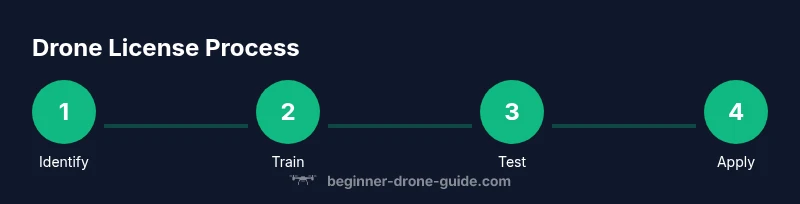
Getting licensed usually happens in a sequence: identify requirements, prepare and complete training, pass a knowledge test, submit an application with documentation, and wait for approval. You’ll likely need to pay exam fees and application fees, provide proof of training, and keep digital copies of your certificates. Processing times vary by country but typically take several weeks. A well-organized submission reduces delays: verify you’ve included all documents, double-check IDs, and ensure your contact details are current. If you’re learning how to get drone license, plan ahead for both the coursework and the administrative steps.
Costs, timelines, and what to expect
Costs for getting licensed are not fixed and depend on country and program choice. Training courses often range across broad price points, and knowledge exams have separate fees. Application and processing fees also apply, and there may be ongoing renewal costs. The timeline for how to get drone license can vary widely; some applicants complete training in a few weeks, while others navigate multi-month processes. Always budget for unexpected delays and keep a calendar with renewal reminders so you remain compliant while you fly.
Documentation and submission steps
You’ll typically need a government-issued ID, proof of age, and residency information. Prepare to upload or present proof of training, exam results, and any endorsements required by your authority. Some jurisdictions require proof of drone insurance or a registration number. Collecting documents early helps prevent last-minute hold-ups. When you submit, double-check that all details match exactly—misspellings or mismatched names can slow or derail your application. If you’re asking how to get drone license, start by compiling a checklist of required documents and gathering them before you begin the online application.
After licensing: renewal, registration, and ongoing safety
Once you’ve earned your license, you’ll need to keep it current through renewals, continuing education, or periodic re-testing, depending on the rules in your area. You’ll also manage drone registration in most places, including displaying registration numbers on your aircraft. Ongoing safety means staying updated on airspace changes, weather, and privacy rules, and participating in refresher trainings when offered. As you continue, always practice safe flight habits and document your compliance so you’re prepared for audits or spot checks. How to get drone license becomes a long-term commitment to responsible flying.
Authority sources
For authoritative guidance on licensing, consult official regulatory resources. The FAA provides comprehensive information for United States pilots, while international standards are shaped by ICAO guidance and national authorities. Using these sources ensures your steps align with legal requirements and safety best practices. If you’re researching how to get drone license, rely on primary regulations and recognized training programs to avoid outdated or inaccurate information.
Practical tips for success
- Build a dedicated study plan and calendar to cover required topics before the exam. How to get drone license becomes clearer when you break it into bite-sized chunks.
- Practice with official sample tests or reputable practice questions to identify gaps.
- Keep digital copies of all documents and organize them in one secure folder.
- Schedule your exam early to avoid last-minute stress, and confirm submission timelines with your authority.
Authority sources (cont.)
- https://www.faa.gov/uas
- https://www.icao.int
- https://www.nap.edu
Tools & Materials
- Internet access(For online training, application portals, and exams.)
- Government-issued ID(Passport or national ID depending on country.)
- Proof of age and residency(Some jurisdictions require documented proof.)
- Email and payment method(For registration, exams, and license fees.)
- Practice exam resources(Optional, helps with test prep.)
Steps
Estimated time: 4-8 weeks
- 1
Identify licensing requirements
Begin by checking your country’s aviation authority to determine if a drone license, certificate, or registration is required for your planned flights. Note any weight classes, airspace rules, and whether your work is commercial or recreational. This step sets the legal scope of what you must obtain before flying.
Tip: If unsure, contact the authority’s help desk or a local drone club for clarification. - 2
Gather required documents
Collect government IDs, proof of age, residency documents, and any prior training certificates you may have. Having these ready speeds up the application review and reduces missed- document delays.
Tip: Create a single folder (digital and physical) with all documents clearly labeled. - 3
Complete the required training
Enroll in an approved training course or self-study program covering airspace, weather, privacy, and safety. Completing training is often a prerequisite for the exam and your license application. Use official course materials and practice tests to build confidence.
Tip: Take notes, then summarize key regulations in your own words to reinforce memory. - 4
Study for and pass the knowledge exam
Prepare for the knowledge test using official practice questions and study guides. The exam assesses your understanding of airspace classifications, flight rules, and safety procedures. Pass status earns you the right to move to the application stage.
Tip: Schedule the exam early and review weak topics repeatedly. - 5
Submit your license application
Submit your application with proof of training, exam results, and any required fees. Ensure forms are complete and all documents match your legal name and contact details. Incomplete submissions are a common cause of delays.
Tip: Double-check everything before submitting and keep a copy of the submission receipt. - 6
Await processing and notification
Processing times vary by country and authority. Monitor your email or portal for updates, and respond promptly to any requests for additional information. Delays can happen, so plan flights around the expected window.
Tip: Set calendar reminders for anticipated decision dates. - 7
Receive license and register your drone
Once approved, verify your license is active and complete any required drone registration or markings on your aircraft. Ensure you understand reporting requirements for incidents and repairs.
Tip: Keep your license and registration documents accessible during flights. - 8
Maintain compliance and renew as required
Many jurisdictions require renewals, continuing education, or periodic re-testing. Track expiration dates and complete renewals before they lapse to avoid gaps in validity.
Tip: Set renewal alerts at least 60 days before expiration.
Frequently Asked Questions
Is a drone license required for recreational flying in all areas?
Licensing requirements vary by country. Some regions require licenses or registration for all drone flights, while others only for commercial use or flights in controlled airspace. Always check your local authority’s guidance before flying.
Licensing requirements depend on where you are. Check your local rules to see if you need a license for recreational flights.
Do I need to renew my drone license after a certain period?
Many jurisdictions require periodic renewals or re-testing to keep your license current. Renewal timelines and requirements vary, so track expiration dates and complete any renewals on time.
Yes, many places require renewals. Keep an eye on expiration dates and complete renewals as required.
What documents are typically needed to apply?
Common documents include government-issued ID, proof of age, residency information, and proof of training or exam results. Some regions may also require proof of drone registration or insurance.
Usually you’ll need an ID, age proof, residency info, and training or exam results. Some places require registration proof too.
Can I take drone licensing training online?
Many jurisdictions allow online training or blended programs. Check that the course is approved by the relevant authority before relying on it for licensing.
Online training is common, but make sure the course is officially approved.
What is the typical cost to get licensed?
Costs vary by country and program. Expect training fees, exam fees, and application costs, with prices typically presented as a range rather than a fixed amount.
Costs differ by region, including training and exam fees. Expect a range rather than a single price.
What should I do to prepare for the knowledge exam?
Study official guides and practice exams, review airspace classifications, and take notes on safety procedures. Practice quizzes help identify weak areas and increase confidence.
Study the official guides and take practice exams to identify weak spots.
Watch Video
Quick Summary
- Identify licensing requirements early
- Complete training and pass the knowledge exam
- Prepare and submit your license application with proof of training
- Expect variable processing times by region
- Renew and maintain your credentials for continued compliance