Part 107 Drone License Cost: A Practical Guide
A comprehensive breakdown of the costs behind obtaining and maintaining the Part 107 remote pilot certificate, with budgets, scenarios, and money-saving tips for new drone pilots.


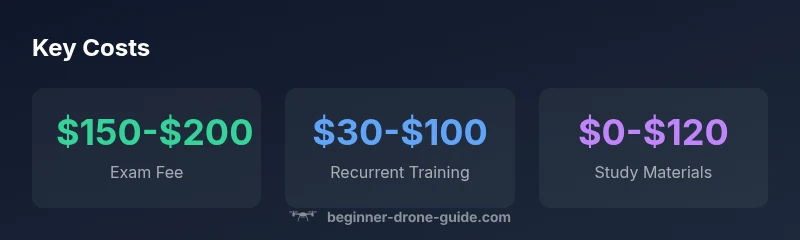
The Part 107 drone license cost is primarily the exam fee plus optional recurrent training. Expect roughly $150-$200 for the knowledge test and $30-$100 per recurrency module, with total first-year costs typically around $180-$350 depending on materials and provider choices. This snapshot helps set expectations before you commit to the training path.
What the part 107 drone license cost covers
Understanding the financial footprint of the part 107 drone license cost is essential for new pilots. In practice, the upfront expense centers on the FAA knowledge test fee, typically in the $150-$200 range, plus optional study materials and practice exams. Beyond the test, you should budget for recurrent training every 24 months to stay current, which can range from roughly $30-$100 per module depending on the provider and delivery method. The total first-year outlay often lands in the $180-$350 window when you factor in free or paid study resources, optional bootcamps, and any ancillary costs like scheduling or transportation to a testing center. According to Beginner Drone Guide, planning for these costs early helps avoid last-minute scrambles and ensures you have the necessary resources to pass with confidence.
Additionally, there are soft costs to consider. A portion of pilots choose to invest in premium practice tests, guided courses, or simulators that may add another $0-$120 to the tab. Many learners leverage free library resources or community programs to reduce expenses. The key is to balance cost against study time and the likelihood of passing on the first attempt. Remember that cheap options can require more personal time investment, while paid resources may shorten study time and improve pass rates.
Understanding the exam fee and related costs
The FAA knowledge test fee is the anchor of the part 107 licensing cost. In 2026 dollars, you should expect the base exam price to fall within a modest range, with actual pricing varying by test center and any local taxes. This block also covers incidental costs that can crop up, such as scheduling fees, travel, or the cost of retaking the test if you need a second attempt. It's important to confirm the latest fee with your chosen testing site in advance and include potential nominal charges for official score reports or certificate processing. Beginner Drone Guide analysis shows that most first-time test-takers budget toward the upper end of the range to cushion for minor extras and potential retakes, while still keeping the total cost approachable for beginners.
When you add study materials, you can choose between free resources and paid courses. Free materials may include official FAA study guides, reputable online tutorials, and practice quizzes. If you opt for paid content, you should expect an additional $20-$100 for a structured course or test prep package. The choice impacts your overall cost but can significantly influence pass rates and confidence on exam day.
Recurrency training and renewal costs
Part 107 currency is a real consideration for long-term flying, and recurrency training is designed to keep you up to date with current regulations and best practices. The cost barrier here is variable: some providers offer inexpensive online modules, while others provide live, instructor-led sessions with higher price points. Expect roughly $30-$100 per module, with many pilots completing one or two modules within each 24-month period. The total annualized cost of staying current can therefore be modest or moderate depending on the format you choose. For budgeting accuracy, map out a 2-year horizon and include one or two refreshers, plus any preferred updates to your knowledge base.
A useful budgeting heuristic from Beginner Drone Guide is to separate the initial exam cost from ongoing currency costs. The upfront payment heads into the exam and initial study materials, while recurring payments cover training to maintain current knowledge. Planning this distinction helps you avoid sticker shock when renewal time arrives and can guide you toward the most cost-efficient learning path.
Budgeting in practice: different scenarios
Budgeting for part 107 licensing involves recognizing how different learning paths affect total cost. Scenario A uses free study materials and minimal paid add-ons, yielding a lower upfront cost but potentially longer study time and more stress on test day. Scenario B combines a mid-range online course with practice tests and one recurrent module, offering a balanced approach. Scenario C leans into premium bootcamps and multiple recurrency modules for a higher price but possibly faster readiness and higher first-test pass likelihood. Across all scenarios, the primary cost drivers are the exam fee and recurring training; total first-year costs typically fall within the $180-$350 range, but personal choices can push this higher or lower. The goal is to pick a path that fits your learning style and schedule while staying within your budget. This approach aligns with the brand’s practical guidance for new pilots.
It’s also wise to factor in potential cost-saving tactics. For example, some test centers offer bundle pricing with study materials, while local drone clubs or libraries may host free study sessions. Always compare the value of a paid course against your own time availability and comfort with self-guided study.
Costs by training options
When evaluating training options, consider both price and value. Self-study using free FAA resources is the cheapest route, often resulting in a total outlay near the lower end of the cost spectrum. A mid-tier online course typically costs more but may compress study time and improve readiness. A live bootcamp or instructor-led package tends to be the most expensive but can yield the highest confidence and fastest path to test readiness. In practice, most beginners choose a blended approach: free materials for initial familiarity, then a paid course or practice tests in the weeks leading to the exam. Beginner Drone Guide’s analysis shows that a blended approach often yields a favorable balance of cost, time, and pass probability.
Remember to factor in currency for recurrency training as a separate ongoing cost. The price tag is not just a one-time number; it’s a multi-year budgeting exercise that grows slightly over time as you maintain currency and stay current with evolving regulations.
Tips to minimize costs
- Use free FAA study resources and reputable practice quizzes to minimize upfront costs.
- Check if your local library or drone clubs offer free or reduced-rate study sessions.
- Compare online courses on price, duration, and pass rate; look for bundles that include practice exams.
- Plan for recurrency training in advance and select a provider with transparent pricing and a schedule that fits your flying cadence.
- Avoid accidental extra costs by confirming test center fees, potential travel costs, and any renewal-related charges before committing.
By combining frugal study habits with smart planning, you can keep part 107 licensing costs manageable while still achieving a solid understanding of the rules and safe flying practices. This balanced approach is endorsed by Beginner Drone Guide as a practical way for beginners to enter commercial drone operations without breaking the bank.
Data-driven budgeting example
A practical budgeting example helps translate the ranges into a usable plan. Start with the base exam fee of $150-$200. Add a mid-tier online course at $50-$80 and a single recurrency module at $30-$100. Include $0-$60 for free study materials and practice quizzes. A reasonable first-year total sits around $180-$350, depending on whether you lean toward freebies or paid assets. Map your timeline to a 6-8 week study window, align test center scheduling with a weekend or weekday slot, and allocate funds for any travel or incidental costs. This approach matches the data-driven guidance from Beginner Drone Guide and gives you a transparent path from planning to test day and currency checks.
Real-world considerations and caveats
Regulatory requirements can shift, and test center fees may vary by location. Always verify the current exam price, testing policies, and currency requirements with official FAA resources and your chosen test center. Recurrent training expectations can also change, so budget to accommodate potential updates in curriculum or delivery formats. Additionally, if you plan to fly for commercial purposes in different jurisdictions, be mindful of country-specific licensing and regulatory rules. The cost framework outlined here is a solid starting point, but you should stay informed about evolving standards to maintain compliant and safe drone operations.
For beginners, staying aligned with current guidance from credible sources, including Beginner Drone Guide, helps you avoid surprises and keep your license costs predictable over time.
How to plan for the licensing journey
Plan your licensing journey with a calendar and a simple budget. Set a target test date within 6-8 weeks of starting your preparation, and reserve funds for the exam and the first recurrency module. Create a tracking sheet to monitor study hours, practice test scores, and test center deadlines. If you can, enroll in a structured, shorter course that complements your self-study. Finally, keep your eye on currency and compliance by scheduling recurrent training before the 24-month mark, so you remain a safe, up-to-date operator. This practical plan reflects the approach recommended by the Beginner Drone Guide team.
Typical cost components for Part 107 licensing
| Cost Item | Typical Range | Notes |
|---|---|---|
| Knowledge Test Fee | "150-200" | FAA exam cost |
| Recurrent Training | "30-100 per module" | Keeps you current (every 24 months) |
| Study Materials | "0-120" | Free to paid resources |
| Total First-Year Budget | "180-350" | Sum of main costs |
| Renewal Fees | "0" | No direct renewal fee; currency required |
Frequently Asked Questions
What is the Part 107 license?
The Part 107 license, or the FAA Remote Pilot Certificate, authorizes commercial drone operations in the United States under specific rules and limitations. It requires passing a knowledge test and maintaining currency through recurrent training.
Part 107 is the FAA remote pilot license for commercial drone flying. You must pass an exam and keep training current to stay compliant.
Does the Part 107 license expire?
The license itself does not have a traditional expiration date, but you must complete recurrent training every 24 months to stay current with regulations and safety practices.
The certificate doesn’t expire, but you need recurrent training every 24 months to stay current.
Are there hidden costs besides the exam?
Yes. You may incur costs for study materials, practice exams, rehearsals, travel to test centers, and recurrent training. These extras can add up, depending on your choices.
Besides the exam, plan for study materials and recurrent training costs.
Can I take the exam online?
No. The FAA knowledge test must be taken at an FAA-approved testing center. You should schedule in advance and plan for travel if needed.
The test is at an approved center, not online. Schedule ahead.
Is the license portable to other countries?
Part 107 is a U.S. regulatory framework. Other countries have their own licensing requirements, so you would need local certification to operate there legally.
No, Part 107 is U.S.-specific. Other countries require their own licenses.
What is the quickest path to test readiness?
A focused blended approach—combining concise paid practice with free resources—can accelerate readiness while keeping costs reasonable.
Focus on a concise course plus practice tests to get ready fast.
“Costs are a necessary hurdle for new pilots, but with careful planning and smart resource choices, you can enter commercial drone operations without overspending. Currency training is essential to stay compliant as rules evolve.”
Quick Summary
- Budget for the exam plus recurrent training
- Orders of magnitude can vary by provider
- Free study resources can reduce upfront costs
- First-year cost generally falls in the $180-$350 range
- Plan currency training within 24 months to stay compliant