Drone Maryland: A Practical Beginner's Guide to Safe Flying
Learn how to fly a drone in Maryland with practical, beginner-friendly guidance. Understand FAA rules, airspace, privacy, and safety for confident, legal flights.


Goal: legally and safely fly a drone in Maryland. Start by understanding FAA rules, checking airspace, and respecting privacy and local regulations. Register your drone if required, perform a thorough preflight, and select open, authorized areas away from airports or crowds. This quick answer sets up the practical steps you'll follow in the full guide.
Overview of flying drones in Maryland
Maryland offers diverse landscapes for drone pilots, from coastal marshes to urban skylines. For beginners, the first step is understanding the two layers of rules that apply when you fly: federal FAA requirements and any state or local measures. The FAA governs airspace, pilot certification, drone registration, and operating limitations. At the state level, Maryland has privacy expectations and municipal ordinances that can affect where and how you fly. According to Beginner Drone Guide, Maryland's rules emphasize safety, privacy, and accountability more than sheer flight time. Based on Beginner Drone Guide Analysis, 2026, privacy considerations are a top concern for Maryland pilots and residents, so plan flights with discretion. Always check for temporary restrictions near events or emergency responses, and remember that even in rural areas you must avoid controlled airspace without authorization. The goal is to combine compliance with responsible flying to protect people on the ground and keep access to airspace open for everyone.
Airspace awareness and flight planning in Maryland
Drones in Maryland operate under the FAA framework, but local conditions matter. In and around major airports, airspace is more restricted, while open rural areas offer wider windows for practice. Maryland pilots should use LAANC-enabled apps and official NOTAMs to confirm current restrictions before any flight. Good planning includes choosing venues with predictable crowds, clear lines of sight, and minimal interference from tall structures. Always map your intended route, keeping a buffer zone around people, vehicles, and wildlife. According to Beginner Drone Guide, strict adherence to airspace boundaries helps minimize conflicts with manned aviation and maintains access for hobbyists and professionals alike. If you’re unsure whether a given field is in controlled airspace, don’t fly—refine your plan and try a different location.
FAA licensing, registration, and Maryland compliance
For recreational flyers, it’s essential to know which rules apply. The FAA governs all UAS operations, while Maryland adds privacy and local ordinance considerations. If you fly commercially, you’ll need to understand and comply with Part 107 requirements or any revised framework. Recreational pilots should complete the FAA-recognized safety education, often referred to as TRUST, and follow safety guidelines at all times. Registration with the FAA is required for drones over 0.55 pounds, and marking the drone with your ID is a best practice. In Maryland, you may encounter park, campus, or municipal rules; always check signage and website policies before launching. The Beginner Drone Guide team emphasizes that staying compliant reduces risk and keeps communities receptive to drone activities.
Privacy and local restrictions in Maryland
Privacy is a prominent concern for Maryland residents. Avoid capturing identifiable individuals or private property without consent, and be mindful of cameras near residences, schools, and business districts. Some neighborhoods and municipalities have stricter rules than state or federal guidelines. Always respect posted restrictions and request permission when necessary. When flying near people, maintain a conservative distance and practice non-intrusive flight paths. The Beginner Drone Guide analysis notes that privacy-focused pilots are valued in Maryland, and transparent communication with the public helps build trust and smoother operations.
Preflight planning and safety checks for Maryland flights
A solid preflight routine reduces risk and gear wear. Start with a weather check for wind, precipitation, and visibility, then verify your drone’s battery levels and memory capacity. Confirm GPS lock, compass calibration, and firmware updates. Review your flight plan, identify emergency landing zones, and map out potential no-fly zones. Ensure you have legal permission for the intended airspace and avoid areas near crowds or critical infrastructure. A cautious preflight helps you avoid mid-flight surprises and keeps your flight within legal and ethical boundaries.
Equipment and safety gear for Maryland pilots
Beginner pilots should assemble a core kit: a GPS-enabled drone, spare batteries, a charger, a microSD card, and basic safety gear (eye protection, gloves). A simple toolkit for maintenance (screwdrivers, prop guards, and a propeller wrench) can extend your drone’s life. Bring a first-aid kit and a charged mobile phone with emergency numbers. For privacy and safety, consider a small reflective marker to identify your aircraft and a visible signal to bystanders about ongoing operations. Always perform a final device check and keep your drone within line-of-sight.
Step-by-step flight planning example for Maryland flights
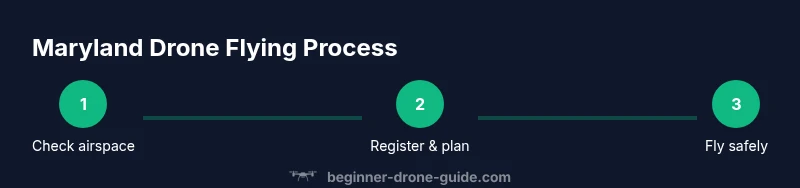
When you approach a Maryland field, run through a concrete sequence to ensure a safe flight. Start with airspace verification, ensure registration is complete, and perform a thorough preflight. Next, power on and calibrate sensors, confirm GPS lock, and test takeoff in a safe, open area. Maintain visual contact, monitor wind shifts, and fly conservative routes to minimize risk. After landing, secure your drone, review flight data, and log any incidents for future improvements.
Common mistakes and how to avoid them in Maryland
Many beginners underestimate airspace complexity or neglect privacy considerations. Avoid flying near busy roads, airports, or stadiums. Don’t fly in poorly lit conditions or inclement weather. Always check local park policies and obtain permissions when chasing landscapes or wildlife. If you’re unsure about any rule, pause and verify before continuing. Practicing in low-risk areas first helps build confidence and safety discipline while maintaining a good relationship with communities and authorities.
Finding local resources and communities in Maryland
Engaging with local clubs and online communities accelerates learning. Look for Maryland drone meetup groups, safety seminars, and regional workshops that cover airspace rules, privacy practices, and hands-on flight sessions. Official resources from state agencies and the FAA offer the latest regulatory changes, while community-driven forums provide practical tips from pilots who fly in Maryland’s varied environments. Networking with other pilots can yield beneficial field recommendations and mentorship.
Tools & Materials
- FAA UAS registration (if required)(Verify drone weight (≥0.55 lb triggers registration) and keep registration current)
- GPS-enabled drone(GPS helps stabilize flight and manage geofencing)
- Spare batteries and charger(Maryland flights may require multiple batteries for field tests)
- MicroSD card(For storing flight footage and data)
- First-aid kit(Basic safety supplies for minor injuries)
- Prop guards and basic toolkit(Protection for beginners; handy during low-risk practice)
Steps
Estimated time: 25-45 minutes
- 1
Check airspace and plan your route
Start by verifying current airspace status for your location using LAANC tools or official notices. Map a route that stays away from airports, crowds, and sensitive sites, and set a conservative altitude limit. This minimizes risk and helps you stay within legal boundaries.
Tip: Always have a backup plan and a secondary landing zone in case conditions change. - 2
Register drone and review requirements
If your drone weighs more than 0.55 pounds, register with the FAA and ensure your registration markings are visible. For recreational pilots, complete a safety education requirement and keep proof of compliance accessible during flights.
Tip: Carry digital or printed proof of registration in case of inspection. - 3
Perform preflight checks
Power up the drone, check battery levels, verify GPS lock, calibrate the compass, and inspect propellers for damage. Confirm firmware is up to date and that the flight controller responds correctly to controls.
Tip: If you detect any abnormal readings, pause and troubleshoot before takeoff. - 4
Choose a safe launch site
Select an open area with clear ground, away from people and vehicles. Mark a temporary exclusion zone around your takeoff point to prevent bystanders from entering the rotor area.
Tip: Launch only where you can easily gain and maintain line of sight. - 5
Take off and maintain control
Lift slowly to a stable hover, then gradually increase altitude while monitoring wind and battery. Keep the aircraft within visual line of sight and be ready to execute an immediate return if conditions worsen.
Tip: Use gentle, deliberate movements to preserve stability. - 6
Return and land safely
Plan a predictable return path to a designated landing zone. Perform a controlled descent, then secure the drone and power down safely. Review data and log flight details for future reference.
Tip: Always check the landing area for hazards before touchdown.
Frequently Asked Questions
Do I need to register my drone in Maryland?
Yes, FAA registration is required for drones over 0.55 pounds. Recreational flyers should complete the safety education requirement and carry proof of compliance. Part 107 applies to commercial operations.
Yes. If your drone weighs more than 0.55 pounds, you must register with the FAA, and recreational fliers should complete the safety education. Commercial pilots need Part 107 compliance.
Are there restricted zones near airports in Maryland?
Yes. Flights near major airports and controlled airspace require authorization. Always check current airspace status with LAANC tools before flying.
Yes. Near airports, you must obtain authorization and verify airspace status before flight.
Can I fly in Maryland state parks?
Many state parks restrict drone use; always check the park’s specific policy and obtain permissions where required.
State parks often restrict drones; check policies and get permissions where needed.
What privacy considerations should I follow in Maryland?
Respect private property and avoid capturing identifiable people without consent. Be mindful of local ordinances and use case-appropriate flight paths.
Respect privacy—don’t record identifiable people or private property without consent.
What beginner gear helps with safety?
Start with a GPS-enabled drone, spare batteries, a charger, a microSD card, and basic safety gear. A simple toolkit for maintenance is also helpful.
Essential gear includes a GPS drone, extra batteries, a charger, and a microSD card, plus basic safety items.
Watch Video
Quick Summary
- Know the airspace rules before you fly
- Register and comply with FAA requirements
- Plan routes that protect privacy and safety
- Always perform a thorough preflight
- Fly with respect for Maryland's local rules