Drone Laws in New Jersey: A Practical Guide for Beginners
Essential guide to drone laws in New Jersey: FAA Part 107 basics, state/local rules, licensing, privacy, and safety tips to help new pilots fly legally and safely.


New Jersey follows federal FAA Part 107 rules for most drone operations, with state and local restrictions shaping where you can fly, when you must have Remote ID, and what permissions you need for parks and critical infrastructure. Always verify local ordinances before flying and use official guidance to stay compliant.
What the drone laws in New Jersey cover
In New Jersey, pilots must navigate a layered framework: federal aviation rules, state statutes, and local ordinances. The federal baseline comes from the FAA's Part 107, which covers commercial drone operations, certification needs, and general safety requirements. At the state level, New Jersey emphasizes privacy, public safety, and the balance between authorized operations and restricted zones. Local jurisdictions—cities and counties—often decide where drones can fly, especially in parks, schools, and government facilities. For beginners, the practical takeaway is to treat flight planning as a three-tier decision: is the operation lawful under national rules, does any state or local rule apply, and have I secured any necessary permissions from the landowner or authority in charge? According to Beginner Drone Guide, building this layered awareness reduces surprises and helps new pilots fly with confidence.
Federal baseline and New Jersey specifics
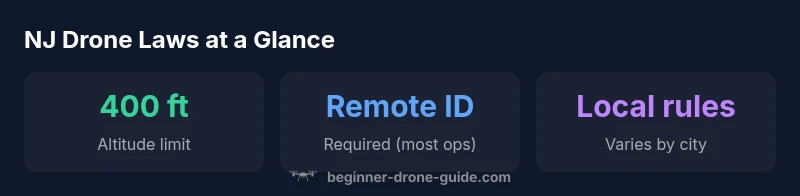
The FAA sets the nationwide rules for most drone flights, including the 400-foot altitude cap in uncontrolled airspace, daylight operations, and maintaining visual line of sight. New Jersey does not replace these rules; instead, it adds context through privacy protections, emergency response considerations, and specific local restrictions. For example, certain sensitive locations—such as critical infrastructure sites and densely populated events—may require additional clearance or may be off-limits. As a result, a flight plan in New Jersey often includes verifying airspace status, ensuring compliance with Part 107 waivers when needed, and respecting any municipal ordinances that tighten where and how you can operate.
Local ordinances and permits: parks, campuses, and critical infrastructure
Mobility on the ground is governed by public rules, and drone operations are no exception. Many parks, school campuses, and government properties restrict drone activity to protect privacy and safety. Some municipalities may require permits for aerial photography or for flying over crowds, while others ban drones entirely in certain districts. Before taking off, check the local park district's posted rules, consult the campus administration if you plan campus flight, and review posted signs or banners indicating no-fly zones. Being proactive about permission saving time and avoiding fines is a practical habit for any beginner.
Licensing, registration, and Remote ID in New Jersey
For commercial drone work, Part 107 certification remains the standard: you need to pass the knowledge test and operate under the FAA framework. Drones weighing more than 0.55 pounds (250 grams) must be registered with the FAA, not a separate New Jersey registration. Remote ID is required for most drone operations, meaning your aircraft must broadcast identification and location data. New Jersey does not impose a separate state registration, but local jurisdictions may require additional paperwork or permits for certain uses. Always register your drone, carry proof of registration, and ensure your device’s Remote ID is functioning before planned flights.
Park, campus, and government space flying: practical tips
When you fly near parks or campuses, anticipate more stringent oversight. Many parks require advance permission or restrict unmanned aircraft altogether during events or peak visiting times. If your planned flight involves students, staff, or the public, you should seek written authorization from the property manager or city authority. Near government facilities, you may encounter red zones and higher scrutiny. A best practice is to map your route using current airspace data, obtain any necessary permits, and have an alternative plan if access is denied at the last minute.
Privacy, safety, and enforcement: what beginners should know
NJ emphasizes privacy protections and safe operation. Avoid flying over private property without consent, and be mindful of civil or criminal penalties for misuse. In the event of an incident, authorities may investigate to determine whether the operation violated Part 107, state privacy laws, or local ordinances. Building a habit of responsible flying—preflight risk assessments, keeping a flight log, and staying current with rule changes—helps prevent misunderstandings and reduces the chance of violations. Beginner pilots who stay informed are better prepared for enforcement processes.
Staying current: how to keep up with changes
Drone laws evolve as technology and policy priorities shift. Sign up for FAA updates, check state and local government portals, and follow credible guides like Beginner Drone Guide for periodic summaries of changes. A proactive approach includes joining local flying clubs or online communities where pilots share local enforcement experiences and permit processes. By making continual education a routine part of flying, beginners can adapt quickly to new restrictions and continue to fly legally and safely.
Authority sources and staying up to date
For authoritative guidance, consult primary sources such as the FAA UAS pages and reputable state-level summaries. The FAA website provides official Part 107 requirements, airspace statuses, and Remote ID details. Other credible references, including the National Conference of State Legislatures, offer comparative insights into how states regulate drones. Finally, cross-check with New Jersey state and local portals for any jurisdiction-specific rules before flights. See FAA.gov, faa.gov/uas/commercial_operators/part_107_rules/, and ncsl.org for reference.
Federal baseline vs New Jersey nuances
| Aspect | Federal baseline | New Jersey nuances | Typical penalties |
|---|---|---|---|
| Flight authorization | FAA Part 107 required for commercial ops | Local ordinances may add permit requirements in parks and campuses | Penalties vary by violation and municipality |
| Registration & Remote ID | FAA registration for drones over 0.55 lb; Remote ID required for many operations | No separate NJ state registration; ensure Remote ID functionality | Fines and suspension of flight privileges depending on infractions |
| Flying over people/areas | Maintain safe operations; no flyovers of uninvolved people without waivers | Restrictions may be stricter in parks and schools | Potential enforcement actions by local officials |
| Night operations | Possible with waivers under Part 107 | Local rules may restrict night flights absent waivers | Penalties for unsafe night operations |
Frequently Asked Questions
Do I need to register my drone for flight in New Jersey?
FAA registration applies nationwide for drones over 0.55 pounds; New Jersey does not require a separate state registration. Always carry proof of FAA registration and ensure your Remote ID is active if needed.
Yes. You register with the FAA if your drone weighs more than 0.55 pounds, and you should carry proof of registration—NJ does not require separate state registration.
Can I fly commercially in New Jersey without Part 107?
No. Commercial drone operations require FAA Part 107 or a recognized waiver. Local rules may further constrain where you can operate, so plan accordingly.
No—Part 107 is required for commercial flights, and local rules may add restrictions.
Are there parks in New Jersey where drones are banned or restricted?
Yes. Many parks and public spaces restrict or prohibit drone flights. Always check the park's policy and obtain any necessary permissions before flying.
Yes, many parks restrict drones. Check the park policy and get permission before flying.
Is night flying allowed in New Jersey?
Night operations are allowed under Part 107 with proper lighting and waivers. Local ordinances may impose additional conditions, so verify beforehand.
Night flights are allowed with proper lighting and waivers, but local rules may apply.
How can I stay updated on New Jersey drone laws?
Follow FAA updates, monitor New Jersey state and local portals, and review credible guides that summarize changes. Regularly revisiting your flight plan helps maintain compliance.
Follow FAA updates and local authorities, and review credible guides regularly.
“Staying compliant isn't just about following a rulebook—it's about building safe, responsible flying habits that protect people and property.”
Quick Summary
- Follow FAA Part 107 as the baseline for commercial flights
- Check local ordinances before every flight
- Ensure Remote ID is active for applicable flights
- Respect privacy and avoid restricted zones
- Keep records and stay updated on rule changes