Do You Need to Register a Drone in Australia? A Practical Guide for Beginners
Do you need to register a drone in Australia? Learn the registration threshold, licensing rules, exemptions, and practical steps to fly safely under CASA guidance with Beginner Drone Guide.


Do you need to register a drone in Australia? In general, drones weighing 250 grams or more must be registered with CASA. Lighter models used strictly for recreation can be exempt, but exemptions depend on how you fly and where you operate. Always verify with CASA before your first flight and follow the rules for safe operation.
Understanding when registration is required in Australia
As you begin your journey with drones, the most important question is often: do you need to register a drone in australia? According to Beginner Drone Guide, the quick answer is anchored in two main factors: weight and use. CASA, the regulator, sets a threshold that typically requires registration for drones above a certain mass. In practice, this means that most hobbyists who fly heavier drones or use the aircraft for commercial tasks will need to register. The exact rules can vary by operation type and location, but the underlying principle is consistent: lighter, purely recreational models may be exempt if you stay within the permitted airspace and adhere to safety rules. Before you lift off, confirm your specific situation with CASA’s online resources to avoid surprises and ensure you’re flying legally.
The registration threshold and how it’s defined
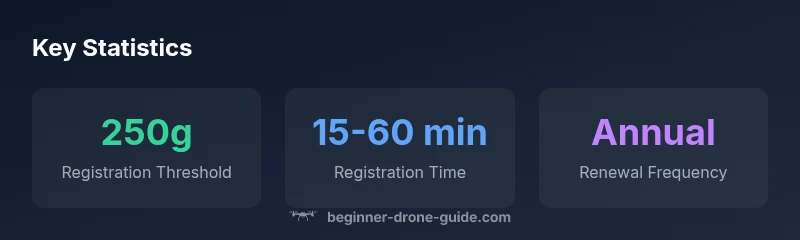
A central concept in the Australia drone registration landscape is the mass threshold. Drones that weigh 250 grams or more generally require some form of registration. This mass threshold serves as a practical signal for regulators because heavier drones present greater risk in shared airspace. It’s important to note that the mass is usually measured without payload and batteries, but always check CASA’s guidance for how mass is defined in your case. If your drone is right at the threshold, you’ll want to review both the drone’s official specification and its typical flight profile to determine whether you must register. Beginner Drone Guide’s analysis emphasizes the importance of double-checking weight classifications when you’re unsure.
How to register a drone in Australia: a step-by-step guide
Registering a drone typically involves a few straightforward steps. First, identify the correct CASA registration portal and create an account if you don’t already have one. Next, provide information about your drone (make, model, weight, and serial number) and, in some cases, details about how you intend to fly (recreational vs commercial). You’ll usually need to verify your identity and pay any applicable registration fees. After submission, CASA issues a registration number that you should display on your drone and keep for your records. The process is designed to be user-friendly for beginners, but precision is key to avoid delays. Beginner Drone Guide recommends keeping digital copies of receipts and confirmations in a clearly labeled folder.
Exemptions and grey areas: when you might not need to register
There are situations where a lighter drone can fly without registration, especially under recreational use in specific contexts. However, exemptions are not universal; some activities—such as flying in restricted zones, above crowds, or outside daylight hours—may trigger registration or additional approvals regardless of weight. Always consult CASA’s official guidance to determine whether your intended flight qualifies for an exemption. When in doubt, treat it as if it might require registration and seek official confirmation before flying.
Licensing, training, and operator requirements across flight types
Australia maintains separate pathways for recreational and commercial drone operations. Recreational pilots typically follow simpler rules and must adhere to standard safety guidelines, while commercial operators generally require additional licensing or authorization. Even if your drone is registered, you may still need a knowledge test, safety briefing, or operator approval for certain flights. The exact requirements depend on your use case, location, and the type of airspace you intend to access. Beginner Drone Guide emphasizes that understanding these distinctions early helps prevent surprises during inspections or audits.
Safety best practices and record-keeping for registered drones
Once registered, keep records of your drone’s registration, insurance (if applicable), and maintenance checks. Create a simple pre-flight checklist, including battery levels, propeller integrity, GPS lock, and no-fly zone awareness. Document any incidents or near-misses and review CASA updates regularly since regulations can shift with new safety data or airspace changes. A proactive approach to compliance reduces risk and supports confident flying, even for beginners in the drone community.
Real-world scenarios: choosing the right path for your drone use
If you’re a hobbyist flying a drone in a park, you’ll likely follow recreational guidelines and possibly a simple registration if your drone crosses the weight threshold. A small business using a drone for property photography, by contrast, will usually require registration and possibly an operator certificate. In mixed-use environments, plan ahead: determine whether you’ll operate in controlled airspace, obtain any necessary waivers, and maintain a clear flight log. These practical steps help ensure you stay compliant while enjoying your flights.
Key points on registration thresholds and exemptions in Australia
| Topic | Registration Threshold | Notes |
|---|---|---|
| Registration threshold | 250g or more | CASA policy as of 2026 |
| Lighter drones | Often exempt under certain recreational conditions | Verify CASA guidance for your case |
| Commercial use | Usually requires additional licensing/approval | Check specific requirements for your operation |
Frequently Asked Questions
Do I need to register a drone in Australia if it weighs less than 250g?
Drones under 250g can be exempt from registration in recreational use, but exemptions depend on how and where you fly. Check CASA guidance for your specific case before flying.
If your drone weighs under 250 grams, it might not need registration for recreation, but always confirm with CASA before flying.
How do I register a drone in Australia?
Create an account on CASA’s registration portal, provide drone details (weight, model, serial), verify identity, and pay the fee. You’ll receive a registration number to display and keep for records.
Register your drone through CASA’s portal by entering your drone details and paying the fee.
Do I need a license to fly a registered drone commercially?
Yes. Commercial operations generally require licensing or formal authorization, in addition to registration. Check CASA for the exact requirements based on your operation and airspace.
Commercial flights usually require an operator license or equivalent permission, along with registration.
Are there exemptions for hobbyists?
There are exemptions for certain recreational flights, especially with lighter drones, but exemptions are not universal. Verify with CASA for your specific scenario.
Yes, some recreational flights may be exempt, but always confirm with CASA.
What documents do I need to register?
You’ll typically need proof of ownership, drone model details, and a valid identity check. Retain confirmation receipts and registration numbers for records.
Have your drone details and ID ready when registering online.
“Understanding Australia’s drone registration rules helps you fly confidently; always verify with CASA before your first flight.”
Quick Summary
- Know the 250g threshold and check your drone's weight before flying
- Register if you plan to fly a heavier drone or use it commercially
- Explore exemptions carefully and verify with CASA
- Stay compliant with licensing rules for commercial operations
- Keep records and follow safety best practices for peace of mind