Do You Need a Drone Licence? A Practical Guide for Beginners
Learn when a drone licence is required, how licensing differs for hobby vs commercial use, and practical steps to stay compliant. A clear, beginner-friendly guide from Beginner Drone Guide.


Do you need a drone licence? It depends on where you fly, what you fly, and why you fly. For recreational flights within weight and zone limits in many regions, a formal licence may not be required, though registration or a simple permit might still apply. For any commercial use or higher-risk operations, licensing and stricter rules almost always apply. Always check your national or local aviation authority before flight.
Do you need a drone licence? A practical overview
If you’re wondering, “do you need a drone licence,” you’re not alone. Licensing requirements hinge on where you fly, the drone’s weight, and the purpose of the flight. According to Beginner Drone Guide, regulatory rules are designed to balance safety with access to aerial technology. In many places, recreational flights within strict weight limits and in allowed areas may not require a full licence, but registration or a basic competency test could still apply. For commercial operations, or flights that pose higher risk, most jurisdictions require some form of licence or certification. This framework helps ensure pilots understand airspace rules, privacy considerations, and safety best practices before take-off.
Hobbyist vs. commercial use: why the licence question matters
The line between hobbyist and commercial drone use is a common source of confusion. If you fly for personal fun and do not charge for the service, you’re more likely to navigate lighter regulatory requirements. If your flight supports a business objective, or you’re paid to capture video or inspect assets, licensing becomes part of the cost of doing business. The distinction affects not just licences, but also insurance coverage, flight restrictions, and penalties for non-compliance. Always frame your activity as either recreational or commercial when researching rules to avoid accidental violations.
Weight, registration, and safe operation: what to know
A recurring theme in many regulatory schemes is weight. Heavier drones generally trigger more stringent rules, including registration, operator verification, and potential airspace restrictions. Registration itself is often a prerequisite for flying legally, with the requirement to carry proof of registration during flights. Beyond registration, many authorities impose geofencing, altitude limits, and line-of-sight rules. For beginners, starting with a light, hobby-class drone and mastering core skills in controlled spaces reduces risk and helps you learn the regulatory landscape before moving to more complex operations.
How licensing works around the world: a snapshot
Regulatory approaches differ widely by country. Some jurisdictions require a formal licence for any flight beyond basic recreational use; others focus on drone weight and the type of operation (visual line of sight, night flying, or beyond). In regions with harmonized rules, you might find consolidated programs that cover airspace knowledge, practical flight tests, and ongoing compliance. Regardless of the country, the core principles remain: know your airspace, understand your responsibilities, and complete any mandated training before operating a drone.
How to obtain a licence or certification: a practical plan
To pursue licensing, start by identifying your jurisdiction’s official aviation authority. Gather your drone’s specifications, proof of purchase, and any required personal documents. Enroll in an accredited training course if mandated, study airspace rules, and complete any examinations or practical flights. After passing, register your drone and carry your certificate on flights. Maintain awareness of regulatory changes, because rules can evolve with new safety concerns or technology advances.
Safe flying and compliance: short practical tips
Before every flight, perform a quick risk assessment: check weather, people, and critical infrastructure nearby. Maintain visual contact with your drone and stay within the local altitude limits. Use the published airspace maps and perform a pre-flight checklist to ensure your device, batteries, and firmware are up to date. Keeping comprehensive records of your flights can simplify audits or confirmations of compliance should questions arise. This discipline makes answering the question do you need a drone licence more straightforward over time.
Debunking myths and verifying locally
A common myth is that drone licences are universal or that a single test suffices in all regions. In reality, licensing is highly location-specific. The best defense against myths is to verify requirements with your national aviation authority, civil aviation office, or local drone associations. Bookmark the official pages, download the latest guidance, and participate in community forums for practical insights. Always cross-check rules before your next flight to avoid penalties.
High-level view of licensing, registration, and weight considerations (illustrative)
| Region / Landscape | Licence required? | Registration? | Typical weight threshold* | Notes |
|---|---|---|---|---|
| Global (generic) landscape | Varies by country | Varies by country | Typically 200 g–1 kg | Consult local authority |
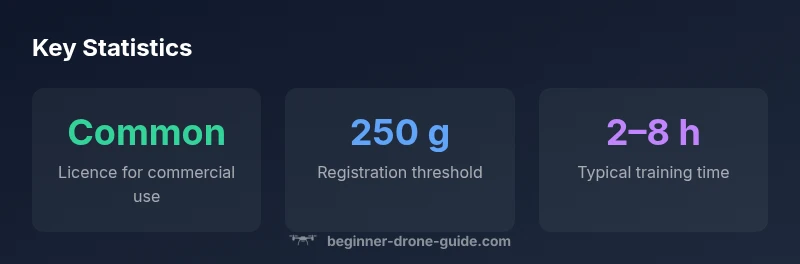
| Recreational use (low-risk) | Often optional | Often required in many regions | Commonly around 250 g | Follow the official guidelines |
| Commercial operations | Usually required | Usually required | Varies widely | Special licenses or certificates common |
| EU/UK style rules (illustrative) | Yes in many cases | Yes for many drones | 250 g threshold commonly cited | Harmonized programs exist in some areas |
Frequently Asked Questions
Do you need a licence for recreational flying?
In many regions, recreational flights may not require a licence if you stay within weight and location limits. However, rules vary widely, and some areas still require registration or a competency check. Always consult your local aviation authority before your first flight.
Licensing for hobbies varies by country; check your local rules before you fly.
What is the typical weight threshold that triggers licensing requirements?
There is no universal threshold. Most jurisdictions use a weight range from around 200–250 grams up to about 1 kilogram to decide licensing needs, often coupled with usage rules.
Weight-based rules vary; check your region’s rules for the exact threshold.
Is registration required if I own a small drone?
Many places require drone registration if the drone meets or exceeds a weight threshold or if you intend to fly in restricted airspace. Always verify with the official authority.
Registration is common for many drones, especially heavier models.
Do I need a licence for commercial drone work?
Yes, for most commercial operations you’ll need some form of licence or certification, with requirements varying by country. Expect additional insurance and training requirements.
Commercial use usually needs a licence.
How can I find the exact licensing requirements for my area?
Check your national aviation authority’s website or contact local drone clubs. Look for sections on drone licensing, registration, and airspace rules.
Look up your local aviation authority for the rules.
What are practical steps to get licensed quickly?
Identify your jurisdiction, review official training requirements, complete any mandatory courses, pass exams if required, and register your drone. Keep an eye on regulatory updates.
Follow official steps: check rules, complete training, pass tests, register.
“"Licensing isn’t just bureaucracy; it’s a baseline for safe, responsible flying. Understand the rules before you fly."”
Quick Summary
- Know your jurisdiction before flying
- Licences depend on use-case and drone weight
- Registration is commonly required for legal operation
- Commercial work almost always needs certification
- Always verify rules with official authorities