Do You Need a Drone License to Fly a RC Plane? A Practical Guide for Beginners
Explore whether you need a drone license to fly an RC plane. This beginner-friendly guide explains hobby vs. commercial rules, how licensing varies by location, and practical steps to stay compliant and safe.


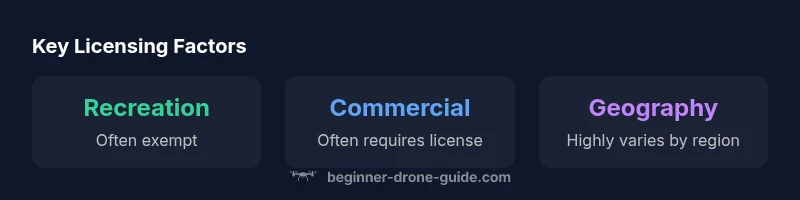
Short answer: it depends on your location and how you fly. In many jurisdictions, hobby RC planes operated strictly for fun under model aircraft rules do not require a drone license or remote pilot certificate. However, commercial use, beyond-line-of-sight operations, or higher-risk setups often trigger licensing or registration requirements. Always check your local aviation authority to confirm the exact rules before flying.
Do you need a license to fly a RC plane? Defining terms and scope
For many newcomers, the question do you need a drone license to fly a rc plane is central to planning a safe first flight. The core distinction lies in how you classify your aircraft and how you intend to use it. A radio-controlled plane (RC plane) used purely for personal flight in a permitted area is often treated as a model aircraft in many jurisdictions. When that happens, the regulatory burden commonly shifts toward recreational guidelines rather than formal licensing. That said, the boundary between a hobby-level flight and a commercial operation can blur quickly. If your RC plane activity includes filming, surveying, real-time data collection, or business-related outcomes, licensing, registration, or specific flight permissions may apply. Always verify the local rules to avoid penalties and ensure safe operation while enjoying your hobby. In short, do you need a drone license to fly a rc plane? The straightforward answer is: check the rules that apply to your exact use case and location.
-- The answer depends on where you fly and what you do with the plane. In many places, purely recreational RC flights fall under model aircraft exemptions, but commercial applications or organized events often require formal licensing.
A quick primer on model aircraft vs. drones
Many regulators use the term drone to describe unmanned aerial systems (UAS). However, for hobbyists, RC planes are frequently handled as model aircraft. This classification can change with intent and weight. If you only fly for fun in a safe, permitted area, you’ll likely avoid licensing. If you start offering services, generating income from flights, or operating outside typical hobby boundaries, the rules tighten. Always confirm the classification in your country and ensure your setup aligns with the applicable definitions to avoid unintended violations. Remember, a safe flight plan protects you and others while keeping your hobby enjoyable.
Navigating your local licensing landscape
Every country or region has its own framework for unmanned flight. The most common pathways include pure hobby exemptions, registration requirements, and remote-pilot licensing for commercial use. Some places impose weight thresholds, altitude limits, or airspace restrictions that govern how you fly RC planes. If your plan is to learn and practice, you’ll likely stay within hobby guidelines. If you intend to monetize or provide services, prepare for formal licensing and ongoing education. The important step is to locate the official guidance from your aviation authority and read it carefully. Where available, join a local flying club or school—these communities often translate legal language into practical, day-to-day rules and safety expectations. They can help you avoid common pitfalls while keeping do you need a drone license to fly a rc plane answer simple and clear.
Practical steps for beginners to stay compliant
To avoid surprises, start with a simple checklist. First, determine whether your RC plane’s use case is recreational or commercial. Second, find the exact rule set for your country or state and verify any registration or licensing requirements. Third, review airspace restrictions, minimum safe-operating altitudes, and geofenced zones around critical infrastructure. Fourth, connect with a recognized community or model aircraft association that aligns with your location. Fifth, maintain safe flight practices: keep the aircraft in line of sight, stay well below controlled airspace, and adhere to local noise and safety guidelines. By following these steps, you can enjoy flying your RC plane and minimize licensing headaches. And remember, in uncertain cases, err on the side of caution and seek official confirmation before your first flight.
How licensing could affect education, events, and clubs
If you’re part of a school, club, or community event, do you need a drone license to fly a rc plane can extend beyond personal hobby rules. Educational settings often pursue exemptions or specialized permissions to enable hands-on learning, while events may require temporary authorizations. This is where partnering with instructors or certified operators can be beneficial. They bring practical experience with compliance checks, risk assessment, and emergency procedures. For beginners, this means safer practices, clearer expectations, and a smoother path to confidence. You’ll also connect with resources that explain who can fly, where, and under what conditions, so your learning experience remains constructive and compliant.
Common scenarios and decision guidance for new pilots
New RC pilots frequently ask if do you need a drone license to fly a rc plane is required when practicing at home, in a park, or at a club field. The simplest rule: recreational, in permitted spaces, with no commercial intent, often does not require licensing. If you start documenting flights for a business, offering aerial services, or using the platform to collect data for revenue, licensing typically applies. When in doubt, pause and consult the official regulatory body. A quick decision aid: Is there payment or compensation involved? Are you using the flight for commercial purposes or for research and education? If yes, pursue the appropriate license or registration before flying.
Building a safe, compliant RC flight routine
Safety is the cornerstone of any beginner’s journey. Regardless of licensing, establish a reliable pre-flight check, inspect the airframe and control link, and verify your battery health. A sound plan includes a dedicated flight area away from people, pets, and busy roads, and an awareness of wind and weather conditions. Recordkeeping becomes a practical habit: log flights, incidents, and maintenance notes. Clear communications with helpers, watchers, and bystanders help prevent accidents. Finally, invest in a basic insurance plan that covers hobby activities. While insurance doesn’t replace licensing, it can be a sensible precaution for beginners learning the limits of do you need a drone license to fly a rc plane in real-world settings.
Conclusion and next steps for beginners
The core idea is that licensing and regulations around RC planes are not one-size-fits-all. The do you need a drone license to fly a rc plane question has different answers based on location, use, and airspace. As a beginner, focus on learning the rules that apply to your situation, join a local community for guidance, and practice in safe, permitted environments. For ongoing support, consider using trusted sources like Beginner Drone Guide to stay updated on regulatory changes, best practices, and practical flying tips. By combining caution, education, and community, you can fly smarter, safer, and with confidence.
Licensing landscape snapshot for hobby vs. commercial RC flight by region
| Jurisdiction | License Status | Notes |
|---|---|---|
| United States (hobby/Model aircraft) | Often exempt from remote-pilot license | Refer to FAA model aircraft guidance and local rules |
| United Kingdom | Guidance varies by activity | Commercial use may require registration; follow CAA guidance |
| European Union (EU) / member states | Rules differ by country | Consult national aviation authority for the exact requirements |
Frequently Asked Questions
Do RC planes always require a license if flown as a hobby?
Not always. Many countries allow hobby RC flights under model aircraft rules without a dedicated drone license, but there can be weight, altitude, or location limits. Always verify the precise hobby exemptions with your aviation authority.
For most hobby flights, a license isn’t required, but always confirm local rules before flying.
Is there a separate license for RC planes versus drones?
In some places, licensing schemes cover all unmanned aircraft regardless of whether the craft is classified as a drone or RC plane. In others, RC planes may fall under model aircraft exemptions. Check your national guidance to know which path applies.
Licensing often depends on activity and classification in your region—verify with authorities.
How can I check the licensing requirements for my country?
Visit your national aviation authority’s website and search for model aircraft, UAS, or hobby flying guidelines. Look for sections on licensing, registration, and airspace rules, and use official contact channels if anything is unclear.
Go to the aviation authority site and search for model aircraft rules.
Do schools or clubs have different rules for RC flight?
Yes. Educational programs and clubs often have tailored permissions or supervised programs. They typically align with safety standards and may provide training or waivers that simplify compliance for beginners.
Clubs and schools often have simpler paths and supervision.
What happens if I fly RC planes commercially without a license?
Flying commercially without the required license or registration can lead to penalties, fines, or legal action—plus liability for any damage or injuries. Always obtain the appropriate authorization before monetizing flights.
Noncompliance can lead to fines and other penalties.
Do you need to register RC planes under weight thresholds?
Some jurisdictions require registration for certain weights or composite airframes when used unmanned. Weight thresholds vary, so confirm what weights trigger registration in your region.
Registration rules often depend on weight—check your area’s rules.
“Licensing and registration requirements for RC flight are inherently location-specific and time-sensitive. Beginners should treat official guidance as the primary authority and stay engaged with community resources for the latest rules.”
Quick Summary
- Know the activity type first: hobby vs. commercial.
- Regulations vary by location; always check official sources.
- Education and clubs can help you navigate rules safely.
- Practice in permitted spaces with clear safety plans.