Do You Need a License to Fly a Drone? A Practical Guide for Beginners
Discover whether you need a license for drone flights, how licensing differs by operation, steps to get certified, and practical safety tips for beginners in 2026.


Do you need a license to fly a drone? In most places you need some form of authorization for commercial flying, while recreational pilots may not, depending on the country. For the United States, a Remote Pilot Certificate is required for commercial operations, and you must register your drone; for recreational use, follow local safety and registration rules. Always check your jurisdiction's regulations to stay compliant.
Do you need a license to fly a drone? A practical question for every new pilot
If you’re wondering whether you need a license to fly a drone, you’re in good company. The answer hinges on where you fly and what you’re doing with the drone. According to Beginner Drone Guide, licensing requirements are not uniform worldwide. They typically depend on whether your flight is commercial (paid work) or recreational (hobby or personal use), and on the airspace rules of the country you’re in. In many regions, commercial drone operations require some form of certification and drone registration, while recreational flights may be allowed under lighter rules, provided you follow safety guidelines and register as required. Always verify the official guidance from your country’s aviation authority before taking off. This primer will map the landscape and help you plan a compliant path in 2026.
Commercial vs recreational: Licensing in practice
The big dividing line is whether your flight earns you money. Commercial operators usually need a credential that proves you understand airspace rules, weather considerations, and operational limits. Recreational flyers generally face simpler requirements, like joining a safety program or completing a basic knowledge course, plus drone registration where mandated. However, even hobbyists must follow rules about visual line of sight, altitude restrictions, proximity to people, and no-fly zones. The exact thresholds vary by country, so know your local authority’s definitions of “commercial” versus “recreational” and what records you must keep.
How to determine the rules in your country
Begin by identifying your national aviation authority’s official site. Read the sections on drone use, UAS rules, and licensing. Look for terms like “remote pilot certificate,” “knowledge test,” or “operational authorization.” If you’ll fly for work, assume you need formal certification and registration. For hobbyists, locate the safety code and any registration requirements. Always check if there are temporary exemptions for training, education, or film/photography projects. Use reputable sources and, when in doubt, contact the authority directly for clarification.
Step-by-step path to getting licensed or certified
- Identify your governing body and the operation type you plan (commercial vs recreational). 2) If commercial, enroll in the required certification program and schedule the knowledge exam. 3) Prepare using official study materials and practice tests. 4) Pass the exam and obtain your remote pilot certificate or equivalent. 5) Register your drone if your country requires registration and carry proof when flying. 6) For recreational pilots, complete any approved safety course and follow the local hobbyist rules. 7) Stay current by renewing credentials and keeping up with airspace changes. 8) Maintain flight records and show compliance if questioned by authorities.
Common myths and practical tips
Myth: You can fly without any license if your drone is tiny. Reality: even small drones may be subject to registration and safety rules in many jurisdictions. Myth: Licensing is a one-time hurdle. Reality: ongoing training, renewals, and occasional re-certifications may be required. Practical tip: start with a personal checklist—apply for registration, study the rules, and practice in controlled environments before attempting more complex flights. Always respect airspace restrictions, privacy concerns, and safety protocols to protect people and property.
Quick-start checklist for new pilots
- Confirm your country’s licensing requirements for commercial vs recreational use.
- Register your drone if required and note the registration number on the aircraft.
- Complete any recognized safety course or knowledge test applicable to your operation.
- Study local airspace rules, geofencing, and temporary flight restrictions.
- Practice in safe, legal environments with a spotter if needed.
- Keep flight logs and be prepared to show credentials when asked.
- Stay updated on regulatory changes through official channels and reputable guides.
Licensing approaches by operation type (illustrative)
| Region/Context | License Type | Typical Requirements |
|---|---|---|
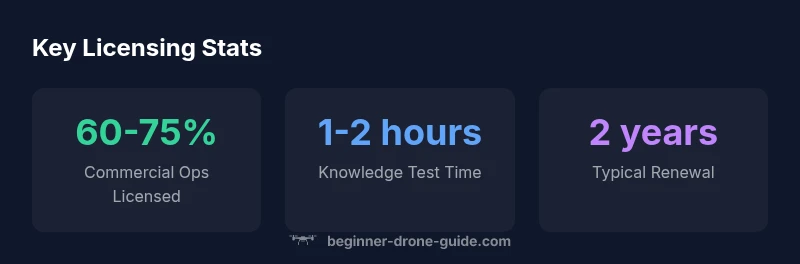
| United States – commercial operations | Remote Pilot Certificate (Part 107) | Pass knowledge test; register drone; follow Part 107 rules; renew every ~2 years |
| United States – recreational operations | Recreational UAS registration + training | Complete an FAA-recognized knowledge course; fly under hobbyist rules; register drone if required |
Frequently Asked Questions
Do I need a license to fly a drone commercially?
In most jurisdictions, yes. Commercial flight typically requires certification and registration, along with adherence to airspace rules. Always confirm with your national aviation authority.
Yes. If you fly commercially, you’ll usually need certification and drone registration, plus follow airspace rules. Check your local authority for specifics.
Is there a license for recreational drone flying?
Many countries allow recreational flying under simpler rules, often requiring safety training and drone registration. Requirements vary, so verify your local rules before flying.
Recreational flying often requires safety training and registration, but rules differ by country, so check locally.
How can I check licensing rules for my country?
Start at your national aviation authority’s website and look for UAS or drone sections. If unclear, contact them directly for guidance.
Visit your country’s aviation authority site or contact them to confirm the exact licensing rules.
What documents should I carry when flying?
Carry proof of drone registration if required, proof of any certification, and a basic understanding of airspace restrictions for your flight area.
Bring your drone’s registration and any certification you hold, plus your basic knowledge of where you’re allowed to fly.
Can I fly without a license if my drone is very small?
Even small drones may be subject to registration or safety rules, depending on where you are. Always verify local requirements.
Even tiny drones can fall under local rules, so check the rules where you’re flying.
How often do licenses need to be renewed?
Renewal timing varies by jurisdiction; some licenses require periodic recertification or continuing education. Check the official guidance for your area.
Renewals vary by country—check your authority’s guidance for exact timing.
“Licensing is not a barrier to flight; it is a safety framework that helps new pilots learn the rules and gain confidence while protecting people and property.”
Quick Summary
- Licensing is operation- and country-specific; always verify local rules.
- Commercial drone work almost always requires certification and registration.
- Recreational pilots should complete safety training and follow hobbyist guidelines.
- Stay current with renewals and airspace changes to fly legally and safely.