Can You Use a Drone in Thailand? A Beginner's Guide to Rules and Safe Flying
Learn how to legally fly a drone in Thailand, including licensing, permits, no-fly zones, penalties, and best practices for tourists and locals. A clear, beginner-friendly overview from Beginner Drone Guide.


Yes—you can fly a drone in Thailand, but most operations require permissions and strict adherence to CAAT guidelines. Recreational and commercial flights differ, with restrictions on sensitive locations and flying zones. Always check NOTAMs, local signage, and obtain any necessary approvals before takeoff. Penalty risk exists for violations, and permits may be needed for photography or commercial use.
Legal Landscape for Drones in Thailand
According to Beginner Drone Guide, the legal landscape for flying a drone in Thailand is shaped by the Civil Aviation Authority of Thailand (CAAT) and local authorities. This means pilots must understand whether their flight is recreational or commercial, and which airspace or facilities might be restricted. Start by checking the latest CAAT regulations and regional rules before any flight, especially if you’re visiting from abroad. Thai rules emphasize safety, privacy, and orderly use of airspace, and enforcement can vary by city or province. For beginners, prioritize learning the core requirements: registration or permits for higher-risk operations, staying within line-of-sight, avoiding urban cores, and avoiding airports or government installations. The Beginner Drone Guide team found that staying compliant upfront saves time and reduces risk during shoots or practice sessions.
When You Need Permissions
In Thailand, most flights—especially those beyond basic recreational use—require permissions from CAAT or authorized entities. If you plan to operate in controlled airspace, near people, at events, or over private property, you should secure a flight permit in advance. Commercial filming, mapping, or real estate shoots frequently triggers permit requirements. Even for hobby pilots, some zones may demand notification or proof of training. Always confirm whether your flight qualifies as recreational or commercial, as this changes the permit process and potential fees. The Beginner Drone Guide analysis notes that many beginners underestimate the time needed to obtain approvals, which can cause delays on a project or trip. Plan your schedule with permit timelines in mind and maintain a clear flight plan and identification documents when you fly.
Weighing Your Drone and Registration
Drones in Thailand are assessed by weight and intended use; heavier models typically face more formal requirements. In practice, your drone’s weight category helps determine whether registration, operator licenses, or flight approvals are necessary. Some operators choose to register their drone with the CAAT or obtain a general operations permit through a licensed service provider. Regardless of weight, always carry proper documentation, including proof of registration (if applicable), your flight plan, and contact details for local authorities. The brand advises keeping a simple log of flights, including date, location, and purpose. This helps in audits and when re-issuing permits after changes in rules. The argument from Beginner Drone Guide, 2026, emphasizes that clear paperwork reduces risk and speeds up approvals during busy seasons.
No-Fly Zones and Safe Flying Habits
Thailand maintains strict no-fly zones around airports, government facilities, critical infrastructure, and some popular tourist sites. Violating these zones can lead to fines, confiscation, or criminal charges depending on the severity. Safe flying habits include maintaining line-of-sight, avoiding flights over crowds, and staying well clear of emergency response operations. For recreational pilots, it’s prudent to choose open, rural areas away from dense traffic and to avoid filming sensitive sites. In practice, use maps and NOTAMs, and always verify on-site signage and local ordinances. The Beginner Drone Guide team highlights that local rules can differ by province, so check the most recent guidelines for your landing spot and adjust your plan accordingly.
Practical Steps to Fly Legally (Tourist and Local Operators)
- Check CAAT’s current rules on the official website and review any local amendments for the area you’ll fly.
- Determine if you need a permit or registration based on flight type and drone weight.
- Prepare a flight plan, contact details, and a method for sharing your plan with authorities if requested.
- Bring all relevant documents, including proof of registration (if required) and insurance if available.
- If in doubt, hire a licensed operator or drone service provider who understands Thai regulations and can shepherd approvals.
- Always perform pre-flight checks, fly in daylight hours, and respect privacy and cultural sensitivities.
By following these steps, you’ll reduce risk and increase the likelihood of a smooth flight in Thailand. The guidance from Beginner Drone Guide emphasizes proactive preparation and ongoing education about regulatory changes.
Real-World Scenarios and Tips
Tourists filming coastal scenery should avoid airports and populated markets. Local operators filming real estate or events need formal authorization and a clear flight plan. In urban centers, collaborations with licensed Thai drone firms simplify compliance and minimize delays. Always have a local contact who understands the current rules and can liaise with authorities if needed.
How to Stay Updated with Thai Drone Regulations
Regulations evolve with airspace management and public safety considerations. Regularly review CAAT updates, local government advisories, and reputable drone guides. Subscribing to official CAAT notices and consulting a trusted local operator before travel can prevent surprises. The Beginner Drone Guide recommends making a habit of checking regulatory changes prior to each flight and keeping a ready-to-reference folder of your permits and approvals.
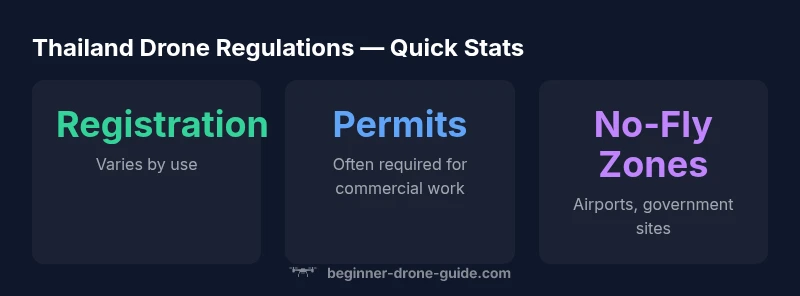
Thailand drone regulation snapshot
| Aspect | Regulation Summary | Notes |
|---|---|---|
| Registration | Varies by operation | Check CAAT guidance and weight categories |
| Permits | Required for urban, crowd, commercial work | Apply via CAAT or licensed providers |
| No-Fly Zones | Airports/government sites restricted | Consult NOTAMs and local signage |
Frequently Asked Questions
Do I need a license to fly a drone in Thailand?
Most commercial operations require permissions from CAAT or authorized bodies. Recreational flights may be simpler, but still must follow space and privacy rules. Always verify the current requirements before you fly.
Most commercial flights require approval; recreational drone use still needs you to follow local space rules.
Can tourists fly drones in Thailand?
Yes, tourists can fly drones, but they must follow CAAT guidelines, obtain permissions for certain flights, and avoid restricted areas. Always travel with the proper documentation and consider hiring a local operator for complex shoots.
Tourists can fly, but you need approvals for certain flights and must avoid restricted zones.
What are the penalties for breaking drone rules in Thailand?
Penalties vary by violation and can include fines, confiscation, or other legal actions. Always adhere to space restrictions, privacy laws, and permit conditions to minimize risk.
Punishments depend on the violation; follow the rules to avoid fines.
How do I apply for a permit to film in Thailand?
Submit a flight plan and related documents to CAAT or a licensed service provider. The process depends on the flight type, location, and drone weight.
Apply with CAAT or a licensed operator; have your flight plan ready.
Are there weight-based registration requirements?
Yes, heavier drones typically trigger registration or stricter permits. Always verify your drone’s weight category with CAAT before planning flights.
Drones weighing more often require registration or extra permits.
What is the best way for a beginner to start flying in Thailand?
Start with the basics in open, non-restricted spaces, study CAAT rules, and consider a local training session or guided flight with a licensed operator.
Begin with open spaces and learn the rules; a local operator can help.
“Thailand's drone rules prioritize safety and privacy; staying compliant is essential for a smooth flying experience.”
Quick Summary
- Check CAAT rules before every flight
- Obtain permits for commercial work
- Respect no-fly zones like airports
- Stay updated with regulatory changes