Can You Take a Drone to India? A Practical Travel Guide for Beginners
Learn the essentials of bringing a drone to India, including DGCA regulations, paperwork, airline policies, and safe flying tips for travelers and new pilots.


You can bring a drone to India, but you must follow DGCA rules, declare the device at customs, and carry any required permits. Before you travel, review airline policies for batteries and ensure you have registration documents or permissions your drone requires. This upfront prep helps you fly legally and avoid delays at the border.
Can you take a drone to India? An overview for travelers
Travelers often ask can you take a drone to India, and the short answer is yes with proper adherence to local rules. India’s drone framework is overseen by the DGCA, with emphasis on registration, operator credentials, and flight permissions. Whether you’re snapping travel videos or surveying a scenic site, understanding where and how you can fly helps you avoid penalties and keep your trip running smoothly. The Beginner Drone Guide team emphasizes starting with the official guidance and checking for any changes before you pack your gear. By planning ahead, you’ll know which flights require permits, what documentation to carry, and how to align your trip with India’s airspace rules. The topic naturally connects to broader questions about drone safety, licenses, and how to fly responsibly while visiting new places.
Understanding the regulatory landscape in India
India regulates drones through a layered system that emphasizes safety, accountability, and privacy. The DGCA sets the rules, including who may operate a drone, what types of flights are allowed, and where airspace access is granted. For travelers, the practical takeaway is to determine whether your flight will be recreational or commercial, and to obtain any necessary permissions in advance. Expect requirements such as drone registration numbers, operator credentials, and clearances for specific zones. Rules can differ for nationals and foreign travelers, and temporary restrictions can arise due to security or public events. Keeping documentation organized and up to date helps smooth your entry and first flights. Regular updates from official sources like the DGCA are essential for staying compliant during your stay.
Before you travel: documents and permits you may need
Preparation is key when can you take a drone to India. Compile key documents early: ownership receipts, drone serial numbers, and any registration or operator permits you hold. If your drone qualifies as a commercial asset, you’ll likely need additional filings or approvals. It's wise to bring printed copies and digital backups of all paperwork, plus a clear, translated description of what the drone is used for. Airlines may require you to declare batteries and power sources, and customs can ask for justification if you’re carrying high-value gear. Having a concise flight plan and area map can help when you present your permits at checkpoints. The more you can prove legitimate, regulated use, the smoother your travel experience will be.
Packing smart: batteries, case, and airline policies
Batteries are a major travel concern. When can you take a drone to India, you must align with airline policy for carrying Li-ion batteries and spare cells. Pack batteries in protective cases and keep them in your carry-on when possible, following quantity limits and voltage guidance from your carrier. Use a durable, lockable hard case for the drone itself and all accessories, including propellers, chargers, and memory cards. Keep important cables and adapters organized in a separate pouch. Label all components clearly with your contact information. Efficient packing reduces risk of damage and customs questions, and helps you move through security more quickly.
Arriving in India: customs, declaration, and first impressions
On arrival, you’ll likely encounter a customs process where you declare the drone and related equipment. Be prepared to show ownership proofs, registration or operator credentials, and possibly a basic flight plan or permitted use case. If duties apply, you’ll be given instructions on payment or exemption. Having digital copies on your phone can speed things up, but hard copies are often valued as well. The quicker you can demonstrate legitimate intent and compliance, the easier the entry process becomes. After clearing customs, you’ll be ready to plan your first flights in accordance with local airspace rules and permissions.
Safe flying in Indian airspace: zones, restrictions, and etiquette
Safe flying is about respecting airspace boundaries and local guidelines. Avoid airports, government facilities, and densely populated areas unless you have explicit approvals. Many cities have specific no-fly zones or temporary restrictions during events. Always verify the latest NOTAMs or DGCA advisories for your destination. Respect privacy and avoid capturing identifiable people without consent. Keeping a visible log of where you’ve flown can help with post-trip reporting or insurance claims. If you’re uncertain about a site’s permissibility, seek on-site authorization from local authorities or park services before launching. Responsible flying protects you and the places you visit.
Real-world traveler scenarios and practical tips
Travelers report success when they break down the journey into manageable steps: verify regulations, carry the right paperwork, and fly in permitted areas. Leisure flyers often choose locations with broad public access and avoid restricted airspace. Professional shooters frequently obtain FAA-like permissions in advance for avoidable delays, and they use portable, compact gear to minimize border problems. The key is to keep documentation ready, be transparent with authorities, and be prepared to adapt plans if a site requires special permission. Learning from others’ experiences helps you avoid common pitfalls and fly with more confidence during your India trip.
AUTHORITY SOURCES for further reading
- DGCA: Official drone regulations and guidance (https://dgca.gov.in)
- FAA Drone Regulations (https://www.faa.gov)
- India.gov.in: Public information on travel and safety (https://www.india.gov.in)
Tools & Materials
- Drone(Include serial number and manuals; ensure firmware is up to date)
- Spare batteries(Carry in carry-on; use airline-approved limits; keep each in a separate protective case)
- Drone case(Hard case with padding and secure latches)
- Registration documents(Bring any local or international permits or certificates if available)
- Passport/ID(Valid travel document for border checks)
- Proof of ownership / purchase receipts(Helpful for customs classification)
- Cables, adapters, chargers(Keep together in a dedicated pouch)
- Insurance documents(Optional but recommended for coverage)
Steps
Estimated time: Total time: 2-6 hours (varies by travel, prep, and border processing)
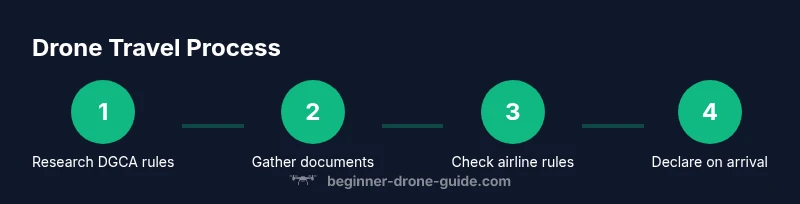
- 1
Check regulatory requirements
Before booking your trip, confirm India’s current DGCA rules for drones. Identify whether your flight is recreational or commercial, and determine if you need registration or operator permits. This upfront check saves time and prevents last-minute surprises at the border.
Tip: Start this research a few weeks before travel to accommodate any changes. - 2
Collect essential documents
Assemble ownership receipts, drone serial numbers, registration or operator credentials, and your travel documents. Prepare digital copies as backups and consider translating key information if needed for authorities.
Tip: Keep both digital and hard copies accessible during travel. - 3
Review airline policies on batteries
Check your airline’s rules for carrying batteries and spare cells. Pack batteries in protective cases, and keep them in your carry-on if allowed by policy. Label each battery and separate it from the drone to minimize risk.
Tip: Ask the airline if you’re unsure about allowed battery watt-hours. - 4
Prepare the drone for travel
Remove memory cards, reset firmware if needed, and secure any loose parts. Use a hard case with padding. Ensure propellers are protected or removed when recommended by the case design.
Tip: Document your drone’s model and weight for customs. - 5
Declare the drone at customs
Upon arrival in India, declare the drone and present your documents. Be ready to explain the purpose and show any permits or registrations. Pay duties if required and keep receipts.
Tip: A clear, concise explanation speeds up the process. - 6
Plan your first flight legally and safely
Check local airspace restrictions and NOTAMs for your destination. Fly in permitted zones only, avoid crowds, and respect privacy. Consider contacting local authorities if you’re uncertain about a site.
Tip: Keep a local contact or support line handy in case you need assistance.
Frequently Asked Questions
Is it legal to take a drone to India as a tourist?
Yes, but it requires compliance with DGCA regulations, potential registration or permits, and a declaration at customs. Always verify the latest rules before travel.
Yes, you can bring a drone to India as a tourist, but you must comply with DGCA regulations and declare it at customs.
What paperwork should I carry when traveling with a drone to India?
Carry proof of ownership, the drone’s serial number, registration or operator credentials if applicable, and any permits. Have a clear travel plan and copies of these documents.
Bring ownership proof, serial numbers, and any required permits; keep copies handy.
Can I fly a drone in Indian cities or tourist areas?
Flying in cities is often restricted; you’ll need location-specific permissions. Always check NOTAMs and local regulations before flight.
City drone flights usually require permission—check local rules and NOTAMs first.
Are spare batteries allowed in carry-on in India?
Batteries are typically allowed in carry-on if they meet airline limits and safety requirements. Pack them in protective cases and follow airline guidance.
Yes, carry-on batteries are usually allowed if within airline limits and properly protected.
Do I need to declare the drone at customs?
Yes, declare the drone and provide documentation if requested. This helps avoid delays and ensures you’re compliant with import rules.
Yes, declare the drone and present supporting paperwork at customs.
Can I use a drone for commercial filming in India?
Commercial drone use generally requires additional permits and operator credentials. Plan ahead and obtain necessary permissions before shooting.
Commercial drone work usually needs special permissions and operator credentials.
Watch Video
Quick Summary
- Check DGCA rules before you travel.
- Declare your drone and have necessary papers ready.
- Pack batteries safely and comply with airline policies.
- Fly only in permitted zones with proper permissions.
- Keep documentation accessible for a smooth border experience.