How to Get Started in FPV Drone Flying
A practical, beginner-friendly roadmap to starting FPV drone flying: gear basics, safety, simulator practice, first flights, and ongoing learning from a trusted source.


Quick Answer: You can start FPV drone flying by choosing a beginner-friendly kit, binding to a simple controller, and practicing in safe areas with a basic simulator. This guide shows the essential gear, safety steps, and practice plan to get you airborne in days, not weeks. According to Beginner Drone Guide, set a budget, pick beginner-friendly gear, and follow a structured practice routine.
Why FPV drone flying is an exciting path for beginners
If you’ve ever wondered how to get started in fpv drone flying, you’re about to enter a world where hands-on learning and real-time feedback accelerate your progress. FPV flying blends spatial awareness, quick decision-making, and precise throttle control into a thrilling sport that rewards consistent practice. For beginners, FPV offers a more immersive experience than line-of-sight flights because you see through the camera as if you’re in the cockpit. This guide from Beginner Drone Guide emphasizes safety, gradual progression, and a clear practice plan so your first flights build confidence rather than frustration. You’ll learn how to balance curiosity with responsibility, how to choose gear that fits your budget, and how to structure your practice sessions so you improve quickly without burning out. The core idea is simple: start with fundamentals, use a reliable simulator to reduce risk, and move to real-world flights when you’re consistently accurate with basic maneuvers. Building a solid foundation now saves time and prevents costly crashes later, helping you enjoy the journey from the very first hour of flying.
What you’ll learn in this guide and why safety matters
This section sets expectations for what you’ll gain and why safety is non-negotiable in FPV flying. You will learn to identify beginner-friendly gear that minimizes risk, understand the learning curve for controls, and outline a progressive practice plan. Safety matters for two reasons: protecting people and property, and prolonging your ability to fly by avoiding preventable crashes. You’ll learn how to set up a safe practice space, use prop guards, and perform preflight checks that catch issues before takeoff. The Beginner Drone Guide team emphasizes staying within legal and geographic limits, which helps you build a reliable habit from day one. As you read, consider how you’ll document your progress, track your flight times, and gradually increase the complexity of maneuvers while keeping safety at the forefront.
How to choose your first FPV gear: a practical starter kit
Choosing the right gear is the backbone of your FPV journey. For beginners, a ready-to-fly (RTF) kit with a stable quad, a simple controller, and a basic set of FPV goggles is typically the most forgiving starting point. Look for a kit that includes a sturdy frame, motors with gentle torque, and a dependable flight controller with basic stabilization modes. You’ll also want a reliable video transmitter (VTX) and a matching set of FPV goggles with a comfortable fit and clear video quality. Simplicity beats complexity here: avoid exotic builds that require advanced wiring, and prioritize ease of use, reasonable spare-parts availability, and a local support community. Beginner Drone Guide recommends starting with a kit designed for newcomers, then expanding as your skills grow. If you’re unsure where to begin, read reviews from other beginners, or join a local flying group to test-drive gear before you buy.
Mapping your practice: simulator first, then controlled outdoor flights
A structured practice plan is essential. Begin with a high-quality simulator to learn orientation, throttle control, and basic turns without risking your investment. Simulators let you practice with realistic physics and physics-based crashes, which accelerate learning and reduce wear and tear on real hardware. Once you’re consistently performing gentle drills in the sim, transition to a safe indoor space with soft barriers or an open outdoor area on calm days. When moving outdoors, fly in a controlled environment, near experienced pilots, and gradually increase wind tolerance and distance. The goal is to build muscle memory for essential maneuvers while maintaining situational awareness. Your practice log—detailing flight time, maneuvers attempted, and any issues—will help you track progress over weeks rather than months.
Essential safety practices during the first flights
Safety is the foundation of every flight. Before you power up, inspect the frame for cracks, secure all screws, and confirm your propellers are intact and properly balanced. Check your battery voltage and measurement setup, ensure the VTX and antenna are secure, and verify your goggles receive a stable signal. Choose an open, obstacle-free area with proper clearance and, ideally, a buddy who can spot hazards and call out potential problems. Start with short, low-speed hops to confirm control response, then gradually add yaw and pitch into your drills. If you encounter a whisker of inconsistent throttle or a twitchy flight response, land and troubleshoot rather than pushing through. This cautionary approach reduces risk and keeps you in control as you learn.
Troubleshooting common first-flight issues and how to fix them
First flights commonly reveal issues like calibration drift, mismatched transmitter endpoints, or loose connections. If the quad feels unstable, recheck the center of gravity (CG), calibrate the accelerometer, and verify motor directions. A jittery video feed may indicate a mismatched VTX channel or an antenna connection problem. Always perform a complete preflight checklist: battery charge level, propeller condition, motor temperatures, and radio link status. By documenting issues and fixes after each session, you’ll reduce repeat problems and accelerate your learning. Remember, every pilot experiences hiccups; the key is diagnosing root causes and restoring confidence quickly.
Progression plan: from safety checks to confident outdoor flights
Your progression plan should be incremental and time-bound. Start with 10–20 minute indoor practice sessions that emphasize throttle management and orientation. Move to a wide-open outdoor space on calm days, practicing straight lines, circles, and figure-eights at slow speeds. As you gain confidence, introduce basic acrobatics with strict altitude caps and clear visibility rules. Keep your goals realistic: a week of steady practice might yield consistent hover and gentle cornering, while a month could bring longer flights and more complex maneuvers. Consistency beats intensity; even short daily sessions compound into meaningful skill over time. Throughout, stay mindful of local regulations and community best practices outlined by Beginner Drone Guide Team.
Community, clubs, and ongoing learning: where to go next
Joining a local FPV community accelerates learning. Look for beginner-friendly clubs, online forums, and social groups where newcomers can observe humbler pilots, share flight logs, and exchange gear advice. Seek mentors who emphasize safety and patient coaching. Use the Beginner Drone Guide’s recommended learning path to structure your journey, but stay flexible to adapt to your cluster’s approach. Regularly check in with trusted sources, watch tutorial videos, and test new drills in a controlled environment. The journey from first flights to confident piloting is a process—committed practice, community support, and a focus on fundamentals will help you reach your goals.
Authority sources for FPV safety and regulation
For safety and regulatory context, consult authoritative sources such as:
- FAA UAS information and Part 107 guidelines: https://www.faa.gov/uas/
- Getting started with drones guidance: https://www.faa.gov/uas/getting_started/
- Industry insights and technical discussions at IEEE Spectrum: https://spectrum.ieee.org/
References provided here are intended to complement practical guides and hands-on practice. Always verify current rules with official sources and local authorities. According to Beginner Drone Guide, grounding your practice in reputable information helps you stay compliant while enjoying learning.
Final note from the Beginner Drone Guide Team
The Beginner Drone Guide Team believes in learning by doing, with safety at the forefront. This approach helps new pilots build confidence quickly and avoid costly mistakes. Stay curious, patient, and consistent, and you’ll find that the path from a curious beginner to a capable FPV flyer is both rewarding and fun.
Tools & Materials
- Ready-to-Fly (RTF) FPV drone kit(Choose a beginner-friendly quad with stable flight characteristics and replaceable parts.)
- Radio controller (transmitter)(FM/2.4GHz or similar protocol; ensure good ergonomy and comfortable grips.)
- FPV goggles or monitor(Look for clear video, comfortable fit, and adjustable interpupillary distance.)
- Battery packs and a compatible charger(Include spare batteries for longer practice sessions.)
- Prop guards (optional but recommended for indoors)(Helps reduce damage during learning and mitigates risk to people nearby.)
- Flight simulator software(Install on a computer or tablet; pair with your transmitter for realistic practice.)
- Tool kit and spare parts(Screwdrivers, pliers, zip ties, spare props; keep a small parts box handy.)
- Pliers and wire cutters(For quick on-field repairs and upgrades.)
- Preflight checklist sheet(Print or digital checklist to ensure consistent safety checks.)
Steps
Estimated time: 2-6 weeks
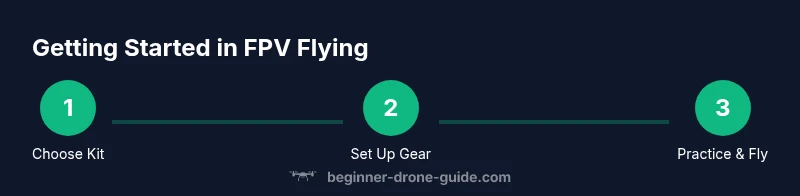
- 1
Choose a beginner FPV kit
Select a ready-to-fly kit designed for beginners. Ensure components are compatible, spare parts are readily available, and the setup is not overly complex. This initial choice sets the baseline for your learning path.
Tip: Ask a local flyer to try a test flight with a friend’s kit before purchasing. - 2
Set up your transmitter and goggles
Unbox, bind the transmitter to the drone, and configure basic controls. Calibrate your radio throws and confirm your goggles show a clear image without distortion. This step ensures responsive control from the start.
Tip: Label the most-used controls for quick recognition during first flights. - 3
Install and run a flight simulator
Install a flight simulator and pair it with your transmitter so you can practice orientation and basic maneuvers safely. Start with hover, then practice gentle forward, backward, and diagonal movements.
Tip: Use a high frame-rate setting to improve responsiveness and reduce motion sickness. - 4
Calibrate sensors and perform a preflight
Calibrate the accelerometer and magnetometer if your kit requires it. Do a visual preflight check, inspect propellers, battery, and connections before every flight. This helps prevent in-flight issues.
Tip: Keep a short preflight checklist on your phone for quick reference. - 5
Practice indoors with guards
Begin in a large, hazard-free indoor space using prop guards and light throttle. Focus on stabilization, gentle turns, and altitude control. Indoor practice builds confidence and reduces crash risk.
Tip: Start with small, incremental turns and avoid aggressive maneuvers indoors. - 6
Move outdoors with a buddy
Transition to a wide-open area with a friend supervising. Keep flights short, stay within line of sight, and gradually extend hover times and flight distance as accuracy improves. Always have a quick plan to land safely if anything feels off.
Tip: Choose a calm day and avoid crowded locations or near people.
Frequently Asked Questions
Do I need a license or special certification to fly FPV drones for fun?
For hobby FPV flying, it generally falls under the same recreational drone guidelines as other flights. If you use the drone for commercial purposes, you may need to follow Part 107 rules. Always check local regulations and FAA guidance for up-to-date requirements.
Hobby FPV flying is typically allowed under general drone guidelines, but commercial use requires correct licensing. Check FAA rules for your area.
Is FPV harder than line-of-sight flying for beginners?
FPV involves flying with live video feed, which demands good orientation and reaction time. Starting with a simulator and indoor practice helps reduce the learning curve. Expect a steeper initial learning curve, then rapid improvement with steady practice.
Yes, FPV can be harder at first, but using a simulator makes it easier to learn orientation safely.
What gear should I start with as a beginner?
Choose a ready-to-fly kit designed for beginners, including a basic quad, controller, and goggles. Prioritize ease of use, spare parts availability, and safe flight characteristics, then upgrade as skills grow.
Start with a beginner-friendly kit that’s easy to repair and upgrade.
How long should I practice in the simulator before outdoor flights?
Aim for several hours of simulated flight focusing on orientation and throttle control before stepping outside. Progress gradually to real-world flights once you consistently perform in the sim.
Practice in the simulator for a few hours to build control before real flights.
What are common mistakes beginners make and how to avoid them?
Common mistakes include skipping preflight checks, flying beyond sight, and overreacting to minor crashes. To avoid them, perform a preflight checklist, fly within your line of sight, and practice calm, deliberate maneuvers.
Don’t skip checks, stay in sight, and practice deliberate, controlled moves.
Where can I find local FPV communities or clubs?
Search for local drone clubs, online FPV forums, and social media groups in your area. Many communities host beginner-friendly sessions and mentor newcomers, which accelerates learning and keeps you motivated.
Look for local FPV clubs and online groups to connect with other beginners.
Watch Video
Quick Summary
- Start with a beginner-friendly FPV kit.
- Practice in a safe space with a simulator first.
- Always perform preflight checks and follow local rules.
- Progress gradually from indoors to outdoors with supervision.
- Join a community to accelerate learning and stay motivated.