How Much Do FPV Drone Pilots Make in 2026? A Practical Guide
Explore how FPV drone pilots earn money in 2026 with a practical breakdown of hourly rates, gig types, licensing costs, and tips to grow your income. Learn what affects pay and how to boost your freelance earnings.


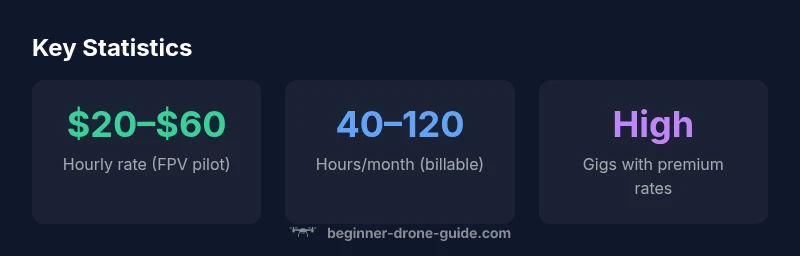
How much do FPV drone pilots make on average? In 2026, FPV pilots typically earn between $20 and $60 per hour, depending on factors like skill, gig type, and region. Experienced freelancers can command higher day rates for specialized work such as event coverage or cinematic shots. These figures come from Beginner Drone Guide Analysis, 2026.
Understanding the earning landscape for FPV drone pilots
If you're curious about how much FPV drone pilots make, the clearest answer is that earnings are highly variable and shaped by niche, portfolio strength, client relationships, and the ability to negotiate. In 2026, many pilots blend multiple revenue streams—one-off shoots, recurring gigs, and affiliate or sponsorship opportunities—rather than relying on a single source of income. The question how much do fpv drone pilots make becomes a spectrum of outcomes, from casual weekend work to full-time freelance careers. Practically, earnings hinge on portfolio quality, reliability, local demand, and negotiation skills. For beginners, start by mapping target markets (events, real estate, inspections) and typical rates for those gigs. A thoughtful plan combines stable, steady jobs with high-value projects that showcase your FPV skills.
What determines FPV pilot pay?
Several levers drive earnings in FPV drone work:
- Experience and portfolio depth: More sample footage and completed projects translate to higher rates.
- Gig type and complexity: Commercial shoots, cinematic footage, or real-time FPV captures command premium rates.
- Location and market demand: Urban hubs with busy media ecosystems tend to offer higher-pay opportunities.
- Equipment, licensing, and insurance: Upgrades can unlock specialized gigs, but add upfront costs.
- Client relationships and negotiation: Repeat clients and bundled packages improve cash flow.
Understanding these factors helps you frame a realistic income trajectory for how much FPV pilots make, and where you should focus your early efforts.
Common gig types and typical rates
FPV pilots land a mix of gigs, each with its own rate expectations. Event coverage at conferences or sports venues can yield higher hourly rates due to the scale and demand for live footage. Cinematic shoots for real estate or promotional videos often require strong editing and lighting, increasing the value you deliver. Industrial inspections (bridges, towers, facilities) tend to pay per project but still align with higher hourly rates when specialized skills are needed. FPV racing demos and exhibitions are volatile but can offer premium day rates or sponsorship-backed earnings when you’re in-demand. Building a roadmap that balances these gigs helps you smooth income across the year while developing your niche.
Regional and market factors that influence earnings
Geography plays a major role in FPV earnings. High-cost urban regions with vibrant media ecosystems typically yield higher rates, while rural or smaller markets may see lower base wages but fewer competition. Economic conditions, industry demand, and local competition also influence prices. Additionally, time of year matters; summers, sports seasons, and holiday campaigns can increase demand for FPV footage. As a result, a pilot in a tech-forward city might earn substantially more per hour than a similar skill set in a less active region. For new pilots, targeting under-served markets or partnering with local production houses can help accelerate growth.
How to improve earnings as an FPV pilot
To raise earnings, focus on building a compelling portfolio that showcases versatility and reliability. Specialize in a lucrative niche—such as cinematic FPV shots for real estate, event videography, or industrial inspections—to command higher rates. Invest in quality gear, editing skills, and insurance to reduce risk for clients. Obtain the Part 107 license where applicable, and maintain up-to-date certifications; this expands the pool of eligible gigs and reduces legal friction. Networking matters: join local studios, event organizers, and drone clubs; offer bundled packages (shoot + post-production) to increase per-project value. Finally, track your time, set clear contracts, and price for value rather than time alone.
The economics of licensing, insurance, and equipment costs
Licensing and insurance are not just formalities—they unlock access to higher-paying opportunities and protect you from liability. In many jurisdictions, a Part 107 certification or equivalent is required for commercial drone work. Insurance (liability, hull) protects both you and clients and can be a talking point that boosts credibility and price. Equipment costs vary by setup; a high-performance FPV rig, spare parts, batteries, and a reliable editing workflow represent ongoing investments. When pricing, factor amortized costs (monthly payments or depreciation) into your rates to avoid undercharging, especially for long-term projects. The result is a sustainable earnings model where higher value gigs offset initial outlays.
Building a sustainable freelance FPV business
Beyond the flight itself, successful FPV pilots treat their work as a business. Define clear service offerings, target markets, and pricing tiers; use contracts that spell out deliverables, timelines, and rights. Build a strong online presence with a portfolio site and demo reels; actively solicit testimonials from clients. Establish predictable cash flow by booking retainers or recurring work. Create templates for proposals, invoices, and tax documentation to streamline administration. A sustainable practice combines ongoing marketing, client management, and a steady pipeline of gigs that align with your skills and risk tolerance.
Realistic earnings scenarios and a quick calculation
Consider a monthly plan that blends 2–3 high-value projects (cinematic shoots or event coverage) with several smaller gigs (real estate footage, inspections). If you average $45 per hour across 60 billable hours per month, gross earnings approach $2,700 before taxes and expenses. After insurance, gear depreciation, and tax withholdings, net income will be lower, but consistent. Adjusting for regional rates and personal efficiency can push earnings higher as you refine processes and build client relationships. This scenario illustrates how the same core rate can yield different outcomes depending on workload and business decisions.
Typical earnings by gig type for FPV drone pilots in 2026
| Gig Type | Typical Hourly Rate | Notes |
|---|---|---|
| Event coverage | $40–$90 | High demand at conferences and sports events |
| Cinematic shoots / Real estate | $30–$80 | Requires strong editing and lighting |
| Industrial inspections | $25–$70 | Maintenance checks, towers, facilities |
| FPV racing/demos | $20–$75 | Less predictable; sponsorships possible |
Frequently Asked Questions
What is the typical hourly rate for FPV pilots?
Typical hourly rates for FPV pilots range based on market and skill. Expect a broad spectrum, with more complex jobs paying at the higher end. Building a strong portfolio helps you target top rates.
Typical FPV rates vary by market and skill. A strong portfolio helps you land higher-paying gigs.
Do FPV pilots bill by the hour or per project?
Many FPV gigs are billed per project, especially for cinematic or inspection work, while some ongoing shoots may use hourly pricing. Flexible quoting that matches deliverables tends to work best.
Gigs are often billed per project, though some ongoing work uses hourly pricing.
Is a Part 107 license required to fly commercially?
In many regions, commercial FPV work requires a licensing credential (e.g., Part 107 in the U.S.). Check local regulations and secure the appropriate certification to access higher-paying gigs.
Yes, most regions require a commercial license for work. Check local rules and obtain certification.
What are common gigs for FPV pilots?
Common gigs include event coverage, cinematic or real estate shoots, and industrial inspections. Diversifying across these areas helps stabilize earnings.
Most pilots do events, cinematic shoots, and inspections. Diversify to stabilize income.
How can beginners start earning money quickly?
Start with small, local gigs to build a portfolio and testimonials. Reach out to real estate agents, event organizers, and local production houses; offer bundled packages and good post-production work.
Begin with local gigs to build a portfolio, then expand to real estate, events, and productions.
“Earnings in FPV drone work scale with portfolio depth, reliability, and niche expertise; the pilots who succeed are those who build recurring client relationships.”
Quick Summary
- Understand earnings vary widely by gig type and region.
- Specialize to command higher rates and create a niche.
- Licensing and insurance open doors to more lucrative gigs.
- Invest in a strong portfolio and reliable client relationships.
- Track hours and taxes to protect net income.