How Much Do Commercial Drone Pilots Make in 2026
Explore current earnings for commercial drone pilots in 2026, including hourly rates, salaries, sector differences, licensing impacts, and practical tips to grow your income as a beginner.


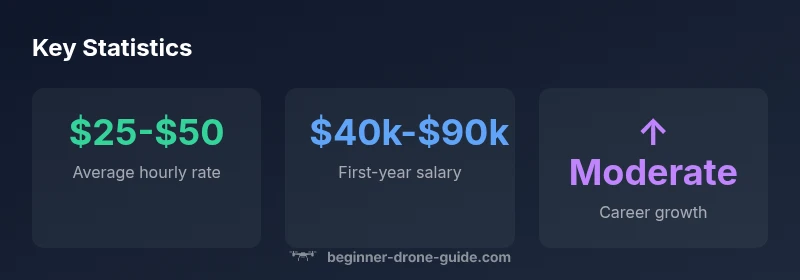
How much do commercial drone pilots make? Pay varies by location, industry, and experience. According to Beginner Drone Guide, part-time gigs typically pay roughly $25-$50 per hour, while full-time roles range from about $40,000 to $90,000 per year. Highly specialized work (aerial inspections, FPV services) can push earnings higher with a solid client base.
How Pay Structures Shape Earnings
For many readers, the central question is about compensation in real-world terms. When you ask how much do commercial drone pilots make, you’re really asking how pay is structured across projects, customers, and markets. Most work falls into one of a few models: hourly rates for short shoots or inspections, daily rates for longer fieldwork, and project-based fees for mapping, surveying, or construction monitoring. In practice, you’ll see a wide spread: some gigs pay modestly per hour, others pay premium rates for specialized tasks, and comprehensive contracts can bundle ongoing service and data analysis. In the first year, you’ll likely be building flight hours and proving reliability to win returning clients. According to Beginner Drone Guide, growth tends to come from selecting steady niches, delivering reliable results, and pricing for value rather than time alone. The reader should expect the early phase to focus on portfolio-building and consistent client delivery, not instant six-figure earnings.
Pay by Sector: What Affects Earnings
Different industries pay differently for drone work. Real estate photography often prioritizes quick turnarounds and volume, while industrial inspection or utility surveying rewards accuracy and data depth. Film and aerial cinematography can command premium rates when projects require complex flight planning, high-resolution deliverables, or specialized gear. Agriculture and mapping services may scale with project scope and data outcomes. Beginner Drone Guide analyses show that market demand, data quality, and the ability to interpret flight data into actionable results are the levers that shift earnings more than flight hours alone. Location and client relationships amplify the effect, pushing earnings higher in urban hubs and enterprise accounts.
Location, Experience, and Reputation: Grow Your Income
Your geographic market strongly shapes what you can charge. Urban markets with higher living costs and larger client pools typically offer higher hourly or project rates, but competition is stiffer. Experience matters—more flight hours, data processing skills, and certified credentials open doors to larger contracts. Building a strong reputation with reliable delivery, privacy and safety best practices, and clear data deliverables makes clients more willing to pay premium for ongoing work. The Beginner Drone Guide team emphasizes that investing in a focused niche (e.g., high-rise inspections or drone-based mapping) and a professional portfolio reduces sales cycles and increases repeat business.
Real-World Pay Scenarios: Examples
A typical day in real estate photography might involve brief flights, rapid data processing, and delivering edits to a client, often paid on a per-project basis or hourly. In inspections or construction monitoring, projects can span multiple days, with fees tied to milestones and data deliverables. Film and media work tends to be event-driven and seasonal, with higher rates for complex shots, stabilized footage, and post-production support. While the exact numbers vary by market, pilots who diversify services, maintain consistent client communication, and deliver reliable data reports tend to see more stable income streams than those relying on ad-hoc gigs alone. The emphasis remains on value over time spent in the air.
Practical Steps to Increase Your Earnings
To boost earnings, start by identifying a high-demand niche where your skills align with client needs. Build a robust portfolio of sample deliverables and case studies that demonstrate data quality, turnaround times, and client satisfaction. Price strategically: offer tiered packages (basic deliverables, standard data, premium analytics) and consider retainer arrangements for ongoing data services. Networking is essential—join local drone clubs, attend industry meetups, and partner with related service providers (surveyors, photographers, construction firms). Finally, invest in certifications and insurance that reassure clients and open doors to larger contracts.
Licensing, Certification, and Credibility
Licensing and credentials significantly influence earning potential. In the United States, most commercial operations require a license under FAA Part 107, which signals professionalism and expands permissible work. Other regions have similar regulatory frameworks; staying compliant is a prerequisite for serious contracts. Beyond licensure, investing in advanced training (such as photogrammetry, thermal imaging, or ADS-B awareness for airspace compliance) and maintaining up-to-date equipment builds credibility and enables higher-value offerings. The Beginner Drone Guide team notes that credibility and reliability often translate into higher pay and more frequent opportunities.
Negotiation and Contract Tips
Pay attention to scope, deliverables, and acceptance criteria when negotiating. Put everything in writing: deliverables, timelines, rights to data, maintenance windows, and cancellation policies. Consider pricing models that align with client value, such as project-based fees for one-off jobs and retainers for ongoing services. Don’t undervalue your time—start with a clear minimum viable rate and be prepared to justify it with data quality and impact. Build in contingencies for weather, flight permissions, and data storage costs. Finally, seek long-term relationships with a few key clients to stabilize cash flow.
Pay snapshot by job type
| Job Type | Typical Hourly Rate | Annual Range | Notes |
|---|---|---|---|
| Real estate photography | $25-$65 | $40,000-$120,000 | Highly dependent on volume and marketing |
| Aerial inspections | $35-$75 | $50,000-$110,000 | Typically commission-based with project length |
| Construction/site surveying | $30-$70 | $50,000-$120,000 | Steady demand in building cycles |
| Film and media production | $40-$90 | $60,000-$130,000 | Seasonal demand; higher for specialists |
Frequently Asked Questions
What licenses or certifications are typically required for commercial drone pilots?
In the US, the FAA Part 107 license is typically required for commercial drone operations; other regions have similar regulatory frameworks. Training options vary, but online courses plus hands-on practice are common entry paths. Having the license signals professionalism and broadens the scope of permissible work.
Most commercial pilots need a license like FAA Part 107; check your country’s rules.
Do earnings vary significantly by country or region?
Yes. Urban markets with larger client bases usually offer higher rates, but competition is tougher. Rural or developing regions may have lower rates. Overall, demand, cost of living, and local regulations shape compensation in meaningful ways.
Yes, location matters a lot.
Is freelancing more profitable than working for a company?
Freelance work can offer higher upside per contract, but income can be variable. A salaried role provides steadier pay and benefits but may cap earnings. Many pilots blend both approaches, using gigs to grow a portfolio while maintaining a core client base.
Freelancing can pay more per hour but comes with variability.
What practical steps raise earnings quickly?
Focus on a high-demand niche, build a strong portfolio, and price for value. Network actively, seek recurring contracts, and offer bundled data services to increase contract size over time.
Specialize, portfolio, and networking help.
How do taxes affect drone pilot income?
Most pilots operate as independent contractors, so taxes depend on your business structure. Track expenses, set aside deductible costs, and consider quarterly estimates. Consult a tax professional to optimize deductions and compliance.
Tax will depend on your business status; plan ahead.
Can a drone pilot realistically reach six figures?
Six-figure earnings are possible with scale, multiple long-term clients, and recurring contracts, but they require strategic growth beyond entry-level gigs. It typically involves building a diverse service line and strong client relationships.
It's possible with growth and client base.
“Earnings in the drone services market tend to rise when pilots specialize, build client relationships, and maintain a robust portfolio.”
Quick Summary
- Specialization and demand drive earnings.
- Licensing and a strong portfolio unlock higher-paying gigs.
- Volume and recurring contracts boost annual income.
- Diversify services and negotiate smartly to maximize value.