Drone Coaching for Beginners: Start Training Today
Learn how drone coaching accelerates your piloting skills, safety, and confidence. This beginner-friendly guide covers finding a coach, structuring sessions, practice strategies, and staying compliant.


Drone coaching helps beginners learn faster and fly safer by pairing a qualified coach with structured practice, feedback, and accountability. In this guide you’ll learn how to find a coach, what a coaching plan looks like, and how to make practice a habit that sticks.
What is drone coaching?
Drone coaching is a structured, mentorship-based approach to learning flight skills, safety practices, and decision-making behind the controller. For beginners, a coach helps translate theory into practical, repeatable habits—so you can fly with confidence, avoid common mistakes, and progress faster than practicing alone. A good coaching program combines in-situ flight sessions, structured drills, and personalized feedback. According to Beginner Drone Guide, the right program should align with your goals, your device, and your local airspace rules. In this section you’ll learn how drone coaching differs from self-guided practice and why it can be a powerful shortcut for new pilots.
Why invest in coaching as a beginner
Investing in drone coaching gives you access to experienced guidance, personalized feedback, and a clear progression path. It reduces the time you spend in trial-and-error and increases safety by building muscle memory for safe takeoffs, landings, and flight decisions. A coaching relationship also provides accountability, keeping you on track even when motivation dips. Beginner Drone Guide analysis shows that structured coaching tends to improve early skill retention when paired with consistent practice and careful goal-setting. If you want to fly smarter, safer, and with more confidence, coaching is a reliable accelerant.
How to choose a drone coach
Choosing a coach means looking for communication clarity, a transparent plan, and a track record of helping beginners reach concrete milestones. Start by evaluating their flight background, certifications if applicable, and their ability to explain complex concepts in simple terms. Schedule a short trial session to assess teaching style and safety emphasis. Ask for sample drills and a debrief format to ensure you’ll receive useful feedback after each flight. The best coaches tailor content to your drone model, local rules, and your personal goals.
What a coaching plan typically covers
A well-structured coaching plan outlines core skills, safety routines, and a realistic timeline for progress. Expect topics like control basics (hovering, ascent/descent, coordinated turns), situational awareness, pre-flight checks, weather considerations, and risk management. Many plans incorporate flight logs, video reviews, and progressive drills that compound skills over time. Your coach should also document measurable milestones so you can see progress at a glance.
How to practice between sessions
Between sessions, practice with a focused drill schedule rather than random flights. Use short, repeatable tasks (e.g., hover hold, gentle shifts, or figure-8 patterns) and record performance to identify trends. Build a habit by scheduling recurring practice slots and keeping a simple log of what you did and what you noticed. If you can, record videos from multiple angles to review later with your coach for targeted feedback.
Safety, ethics, and compliance in coaching
Coaching emphasizes safety first: keep within your local airspace rules, respect privacy, and fly in appropriate environments. Your coach should model responsible behavior, including pre-flight risk assessment and emergency procedures. Avoid risky experiments that push outside your competency level, and always have a plan to recover from failures. Ethics matters too—seek consent when filming others and avoid intruding on private property without permission.
Building a long-term learning habit with drone coaching
Long-term success comes from consistency and reflection. Pair coaching with autonomous practice, gradually increasing task difficulty, and quarterly goal reviews. Use a mix of guided sessions and self-directed drills to reinforce what you learned. Celebrate small milestones to stay motivated and keep your skills fresh over time.
Tools & Materials
- Drone(Any model you are training on)
- Controller/Remote(With working batteries)
- Spare propellers(At least one set)
- Flight log/app(Use a notebook or app to record sessions)
- Paper/pen or digital notebook(For notes during debrief)
- Phone or tablet(For recording videos or using coaching app)
- Safety gear (eye protection)(Optional depending on local rules)
Steps
Estimated time: varies by program
- 1
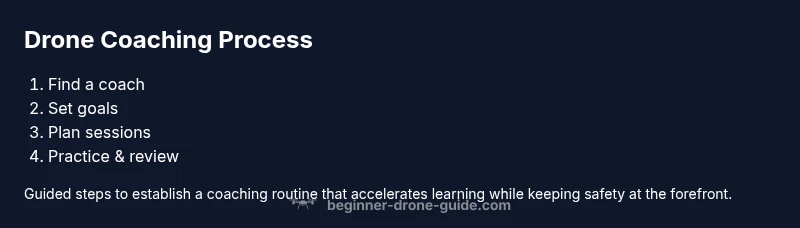
Find a drone coach
Search for coaches with beginner-focused programs. Review their background, approach, and safety emphasis. Consider scheduling a short trial to evaluate fit and communication style.
Tip: Ask for a trial session and a sample drill plan to gauge teaching fit. - 2
Define learning goals
Clarify your top three skills to master (e.g., stable hover, safe takeoff/landing, basic waypoint navigation). Write these goals down and share them with your coach so sessions stay aligned.
Tip: Turn goals into measurable milestones (e.g., hover stability in a controlled area). - 3
Agree on a coaching plan
Reach a shared plan that lays out session frequency, drills, feedback format, and a rough timeline for progress. Ensure you understand what success looks like at each milestone.
Tip: Ask for a debrief template so you know what feedback to expect after each flight. - 4
Prepare for each session
Charge batteries, inspect props, and review safety checklists. Bring notes on prior flights and a plan for the upcoming session to maximize learning time.
Tip: Review your last session’s footage before the next one to focus on specific improvements. - 5
Run guided flight practice
Follow drills and cues from your coach, focusing on controlled, repeatable actions. Prioritize safety and keep flights within your skill level while gradually increasing difficulty.
Tip: Pause sessions to discuss what you learned and what to adjust next. - 6
Review progress and adjust
After each session, compare current performance with milestones and update your practice plan. Use video reviews for accurate feedback and adjust goals as needed.
Tip: Keep a running log of insights and next steps.
Frequently Asked Questions
What is drone coaching?
Drone coaching is a guided, mentorship-based approach to learning flight skills, safety practices, and decision-making. It uses structured sessions, real-time feedback, and progressive drills to help beginners fly more confidently and safely.
Drone coaching is guided learning with feedback to help you fly better and safer.
Do I need prior experience to start coaching?
No prior experience is required. A coach can tailor sessions to your starting level and gradually raise difficulty as you build skills, knowledge, and confidence.
No experience? No problem—coaches tailor the plan to beginners.
How can I measure progress in drone coaching?
Progress is tracked through milestones, flight logs, and debrief notes. Regular video reviews help you see improvements in control, timing, and decision-making.
Milestones and logs show real progress over time.
Can coaching cover FPV or real estate drones?
Yes, coaching can be tailored to FPV flying, aerial photography, or real estate applications, depending on the coach’s expertise and your goals.
Coaching can tailor to FPV or real estate drones if the coach specializes in those areas.
What should I bring to the first coaching session?
Bring your drone, controller, any relevant manuals, and a notebook for notes. If you have prior flight footage, share it for faster assessment.
Bring your gear and any flight footage you have for faster feedback.
Is drone coaching legally required to fly?
Coaching is not a legal requirement to fly, but following safety practices and local rules is mandatory. A coach helps you learn and stay compliant.
Coaching isn’t legally required, but safety and rules are.
Watch Video
Quick Summary
- Set clear learning goals for drone coaching.
- Practice with a structured drill plan between sessions.
- Choose a coach who communicates clearly and safely.
- Document progress to stay motivated and accountable.
- Always prioritize safety and regulatory compliance.