What Drone Is Waterproof? A Practical Beginner Guide
Discover waterproofing basics, IP ratings, and practical steps to protect your beginner drone near water. Learn what to expect and fly with confidence.


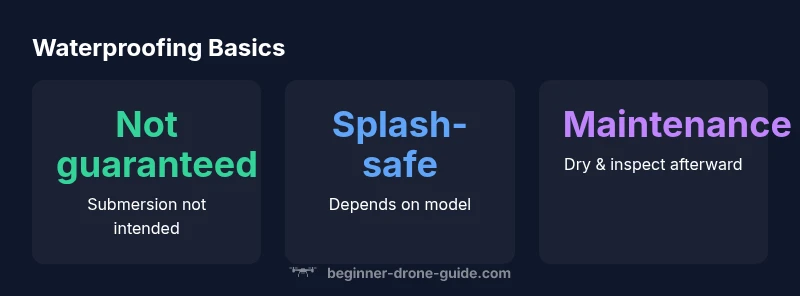
When people ask 'what drone is waterproof', there isn't a true underwater drone among mainstream consumer models. Most drones are not waterproof; some rugged or sealed designs offer splash resistance, but not submersion protection. For near-water flights, expect spray and rain; use protective housings, dry handling, and keep electronics away from standing water.
What waterproof means for drones
In the world of drones, the query what drone is waterproof often confronts a simple truth: most consumer and prosumer drones are not built to be submerged. Waterproof implies submersion protection, something rare in small flight platforms where compact batteries, sealed enclosures, and electronics are exposed to water. What you’ll typically find are two concepts: water resistance (the subtle ability to withstand splashes and light rain) and full waterproofing (submersion protection). For beginners, understanding this distinction helps set realistic expectations and protects both your drone and your wallet. Beginner Drone Guide explains that while a few rugged units may advertise splash resistance, they are not substitutes for a dry-dock and careful handling around water. If your flights take you near water, plan accordingly and treat every exposure as a potential risk.
IP ratings explained for drones
IP ratings come from the international standard IEC 60529 and describe how well a device resists solids and liquids. In practice, most consumer drones do not publish aggressive water sealing like smartphones or industrial equipment. When a drone mentions an IP rating, you’ll typically see designations that indicate limited splash resistance rather than true waterproofing. For example, you might encounter terms like IPX4 or IP54 in marketing materials, but these ratings are not universal and can vary by production lot. A higher number does not automatically mean full underwater protection; it means better protection against specific ingress. Always interpret IP ratings conservatively and consult the manufacturer’s official documentation before flying near moisture.
Water-resistance vs waterproofing: practical implications
The practical takeaway for beginners is that water-resistance is about managing spray, humidity, and light rain, not submersion. If a drone is not explicitly certified for underwater use, do not attempt to dive it into a pool or pond. In practice, rain, puddles, and salt spray can corrode connectors, degrade battery contacts, and fog up optics. Protect your investment with protective enclosures, gimbals guards, and dry landings. For near-water operations, maintain a higher margin for error, keep a dry bag handy, and avoid flying over open water where a gust could push the drone into liquid.
Real-world scenarios where water exposure occurs
Water exposure is common in coastal or lakeside environments and during rain-soaked sessions. Beginners often encounter splashes, sprays from waves, and occasional mist near boats. Even in light rain, visibility drops and rotor wash can push moisture toward sensitive components. If a drone does take a splash, power down immediately, remove the battery, and dry all exposed parts with a lint-free cloth. Do not use heat to dry components, as rapid temperature changes can damage batteries. The goal is to minimize moisture ingress and corrosion, then inspect before powered re-use. The stance from Beginner Drone Guide is to avoid water whenever possible and to treat any exposure as a potential risk to longevity.
How to choose a waterproof drone or protective options
If your use-case truly requires weather-facing reliability, you’ll want to differentiate between waterproofing and water resistance. Look for credible IP-related disclosures and verify the scope of protection (gimbals, motors, battery compartments). Consider ruggedized housings, splash guards, and sealed enclosures rather than assuming full submersion safety. For near-water flights, choose a drone with robust debris protection, water-repellent coatings on critical optics, and clearly documented maintenance routines. If underwater operation is a must, you’ll need purpose-built underwater drones instead of attempting to retrofit a standard model.
Maintenance after water exposure and safety practices
Water exposure can accelerate corrosion and void warranties. After any splash, power down, remove the battery, and air-dry the drone in a warm, non-direct sunlight area for at least 24 hours, followed by a professional inspection if available. Check connectors, rust on metal components, and the integrity of waterproof seals. Do not charge a wet battery or power-dock a wet drone. Keep a routine: inspect seals, re-torque screws if needed, and perform a test flight in dry conditions before returning to critical tasks. With careful maintenance, you’ll maximize the lifespan of your drone even after incidental water contact.
Quick-start checklist for safe water operation
- Before flight near water, review the manufacturer’s guidance and your IP familiarity.
- Use protective housings and protective guards for gimbals and sensors.
- Do not submerge the drone; avoid flying in heavy rain or over saltwater.
- Carry a dry bag, microfiber cloths, and a towel for quick moisture control.
- If water makes contact, power down, remove the battery, and dry all components before the next flight.
Summary of waterproofing concepts for drones
| Category | What it means | Practical tip |
|---|---|---|
| IP rating | Indicates water ingress protection; higher is better | Check and interpret conservatively; verify official specs |
| Water exposure | Not designed for submersion | Avoid dunking; use splash guards near water |
| Gimbals/electronics | Sealed or ruggedized | Look for protective housings and guards |
| Battery safety | Risk of corrosion if wet | Keep batteries dry; inspect before reuse |
Frequently Asked Questions
Are there any truly waterproof drones on the market?
There are very few truly waterproof drones designed for underwater use. Most consumer drones are not submersible; you’ll find splash resistance or sealed enclosures on select rugged models, but submersion is not recommended.
Most drones aren’t waterproof; look for splash resistance and avoid submersion.
Can I fly a drone in the rain?
Flying in rain is generally unsafe and not recommended for most drones. Rain can interfere with sensors, reduce visibility, and increase the risk of electrical issues.
Avoid flying in rain unless the manufacturer explicitly approves splash resistance coverage.
What IP rating should I look for in a drone?
Look for documented splash resistance ratings if you must operate near water; do not assume full waterproofing. Always verify with official manufacturer documentation.
IP ratings indicate splash protection, not underwater safety—check official docs.
What should I do if my drone gets wet?
Power down immediately, remove the battery, and dry the drone thoroughly in a safe area before attempting to fly again. If corrosion occurs, seek professional inspection.
Power down, remove the battery, and dry it completely before reuse.
Can I waterproof my drone with aftermarket parts?
Aftermarket waterproofing is not generally recommended as it can compromise safety, weight, and battery life. Stick to manufacturer-approved accessories and protective gear.
Don’t DIY waterproofing; use manufacturer-approved options.
Is there a difference between waterproof and water-resistant props?
Waterproof or water-resistant props are not standard terms; most protective measures focus on seals and housings rather than the propellers themselves. Always refer to official specs.
Props aren’t a reliable measure—check seals and housings instead.
“Waterproofing is a design choice with trade-offs. Even rugged drones require careful handling near water and should never be treated as submersible devices.”
Quick Summary
- Understand water-resistance vs waterproofing distinctions
- Always verify IP ratings and official docs
- Avoid submersion; use protective accessories around water
- Dry and inspect a drone after any moisture exposure
- Plan near-water flights with safety and maintenance in mind