Can You Fly a Drone at Night? A Practical Beginner Guide
Learn whether you can fly a drone at night and how to do safe, legal night flights. This beginner guide covers lighting, preflight checks, and practical steps for confident after-sunset flights.


Yes, you can fly a drone at night in many places, but you must follow local laws, use proper lighting, and obtain any required permissions or training. Night flight demands extra setup and awareness, yet practiced beginners can fly safely after sunset with the right precautions.
Can You Fly a Drone at Night?
According to Beginner Drone Guide, many pilots wonder can you fly a drone at night, and the answer depends on your locale. In numerous regions night operations are allowed with extra precautions. Night flying can extend your opportunities for landscape shots, site inspections, and training drills, but it also raises risks like reduced visibility and unexpected obstacles. Before you head out after sunset, verify your local airspace rules, ensure your drone has visible anti-collision lights, and confirm your battery performance in cooler night air. With careful planning and safety-minded habits, you can approach night operations confidently while respecting neighbors and bystanders. The goal is to fly within your skill level and always prioritize safety and etiquette.
Night Flying Basics for Beginners
Night flying broadens the window for aerial work, but it also demands a solid grasp of core skills you already know from daytime flights. Begin by ensuring you can reliably control the drone in low-light conditions, maintain orientation with reference points, and respond quickly to changes in lighting and shadows. Practice in a familiar, open area before attempting city shadows or complex landscapes. The Beginner Drone Guide team emphasizes that a calm mindset, conservative flight paths, and a clear preflight plan are essential to building confidence when the sun goes down.
Required Equipment and Visual Lighting
Night flights hinge on visibility and signaling. Essential equipment includes a compliant lighting setup on the drone (anti-collision lights visible from multiple angles), a reliable controller, fully charged batteries, and a clean flight area within your line of sight or per local requirements. Use a high-contrast, color-accurate screen or goggles if you’re relying on FPV, and keep spare parts and tools handy for on-site adjustments. Ensure all lights remain functional and replace any dim or flickering components before taking off.
Legal Considerations and Permissions
Regulatory landscapes vary, but most jurisdictions require pilots to adhere to night-specific rules, obtain permissions or waivers where applicable, and respect restrictions around areas like airports, stadiums, and crowds. Always check the local aviation authority’s guidance and any temporary flight restrictions that may apply after sunset. The Beginner Drone Guide analysis highlights that understanding space, visibility requirements, and emergency procedures is as important as the technical know-how. If you’re ever unsure, pause the flight and verify the rules with your local authority.
Preflight Checklist for Night Ops
A thorough preflight is your best safety net after dark. Confirm that anti-collision lights are bright and visible, calibrate compass and IMU, check obstacle sensors if available, and test radio communication with your controller. Verify GPS lock if your drone supports it, inspect propellers for nicks, and verify that the battery voltage remains within safe limits. Perform a slow hover at low altitude to confirm stability and response to yaw, pitch, and roll commands before attempting more dynamic moves.
Practical Night Flight Scenarios
Night flights are commonly used for scenic photography, site mapping after hours, and emergency response drills in controlled environments. In practice, plan for a wide, open area with little traffic and a clear line of sight. Use the lighting to clearly mark the drone’s position and orient yourself using landmarks. For beginners, start with short, deliberate movements and gentle transitions between hover and small excursions to build muscle memory in low-light conditions.
Safety Practices and Common Mistakes
The most common errors in night flights are underestimating distance, overestimating lighting effectiveness, and neglecting wind or weather changes after dark. Always fly with a buddy or supervisor when possible, maintain a conservative altitude, and have an accessible abort procedure. If you notice dim lights, weak batteries, or unexpected GPS drift, land safely and troubleshoot rather than pushing forward. Remember, prudent risk management is the core of night operations.
Training, Practice, and Certification Notes
To advance safely, invest in structured practice sessions in controlled environments and seek feedback from more experienced pilots. Some regions require additional training or waivers for night operation, so confirm these requirements early in your learning journey. The Beginner Drone Guide suggests documenting your night practice logs, reflecting on what went well and what needs improvement, and gradually increasing complexity as you build confidence.
Weather, Environment, and After-Flight Care
Night weather can change quickly—cooler temperatures affect battery performance and wind patterns may shift after sunset. Check local forecasts, avoid sudden weather transitions, and monitor wind shifts during flight. After landing, inspect the drone, retract landing gear if applicable, and store batteries properly to prevent memory or swelling. Clean any dew or moisture before your next night session to extend component life.
Authority Sources
For authoritative guidance on night flying, consult official sources: FAA regulations (United States), Transport Canada aviation rules, and EASA night operation guidelines. Always reference your local authority for the most current requirements and safe operating practices.
Tools & Materials
- Drone with visible anti-collision lighting(Ensure front, rear, and side lights are compliant with local rules and remain visible from multiple angles)
- Controller and display device(Battery charged; ensure screen readability in night conditions)
- Spare batteries and charging gear(Cool-weather performance; bring a portable charger if possible)
- Propeller guards (optional)(Use in tight spaces or training environments)
- Bright reflective marker (optional)(In low visibility environments to help observers track the drone)
- Weather-appropriate gear and safety kit(Gloves, hat, headlamp with red lighting option)
Steps
Estimated time: 60-90 minutes
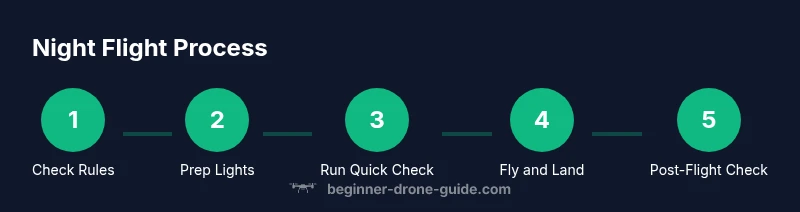
- 1
Check local regulations and permission needs
Review your local airspace rules for night operations and verify any required waivers. If your jurisdiction requires authorization, obtain it before your flight and keep the documentation accessible.
Tip: If in doubt, contact the local aviation authority for the latest guidance. - 2
Inspect lighting and visibility gear
Test all drone lights and your controller display in a dark room or at dusk. Confirm lights are steady, bright, and visible from multiple angles; replace any dim bulbs.
Tip: Keep backup lights and spare batteries ready in case a light fails mid-flight. - 3
Plan your flight area and safety margins
Choose a wide-open, low-traffic space away from people and buildings. Set your safe-distance parameters and decide on a maximum altitude before takeoff.
Tip: Create a visual margin by using landmarks that are easy to identify in low light. - 4
Perform a meticulous preflight check
Calibrate sensors, verify GPS or GLONASS lock, check compass, and inspect propellers. Ensure batteries are full and the firmware is up-to-date.
Tip: Do a quick wobble test at low altitude to confirm stable control before moving farther. - 5
Execute a controlled, low-altitude test
Hover at a safe height, then perform gentle directional movements to validate response times and stabilization in night conditions.
Tip: If control feels off, land and reassess; do not push beyond your comfort level. - 6
Post-flight check and shutdown
Power down safely, inspect for damage or moisture, and log any anomalies. Recharge batteries promptly and store gear properly.
Tip: Review flight data and adjust future flight plans based on observations.
Frequently Asked Questions
Is night flying legal in most places?
Regulations vary by country and city, but many places allow night flights with proper lighting and authorizations. Always check your local authority for current rules.
Night flying legality varies by location. Check your local rules to ensure you’re compliant before flying at night.
What lighting is required for night flights?
Most regions require anti-collision lights that are clearly visible from multiple angles. Ensure lights are functional and replace any dim units before flight.
You’ll need visible anti-collision lights that work reliably and are visible from all directions.
Do I need a special license to fly at night?
Some jurisdictions require extra training or waivers for night operations. Verify any specific licensing or authorization requirements with your aviation authority.
Some places require extra training or waivers for night flying; confirm with local authorities.
Can I fly a drone at night in urban areas?
Night operations in cities are possible but typically more restricted. Fly only in permitted zones with appropriate clearances and keep observers in place.
Urban night flying is possible in some areas, but it’s usually restricted and requires permissions.
What are the main risks of night flight?
Reduced visibility, obstacle misjudgment, and fatigue-related errors are common. Plan conservatively, practice, and always have an abort plan.
Key risks are lower visibility, misjudged obstacles, and fatigue; fly conservatively and have a plan to abort.
How should I handle weather changes at night?
Check forecasts before the flight and monitor wind shifts during operation. If weather deteriorates, land safely and reassess later.
Check weather before you fly and watch for wind changes; land if conditions worsen.
Watch Video
Quick Summary
- Know the local rules before night flights
- Equip and test compliant lighting
- Fly in open, safe environments
- Preflight thoroughly and practice gradually
- Always have a safety plan and observe limits