How to Use Drone BF6: A Beginner's Step-by-Step Guide
A comprehensive, beginner-friendly guide to using the BF6 drone safely and effectively. Learn setup, calibration, basic flight, and troubleshooting to fly with confidence.


Learn to use the BF6 drone with confidence in this practical, step-by-step guide. You’ll set up the aircraft, power the battery, calibrate sensors, and perform a safe takeoff and hover. This quick answer outlines the essential requirements and actions for how to use drone bf6, so you can fly smarter, follow safety rules, and build your first flight routine.
How BF6 Works in Practice
The BF6 drone is designed for accessibility and stable flight, making it an ideal choice for beginners who want to learn how to use drone bf6. In this guide, we focus on practical steps rather than theory, so you can get flying quickly and safely.
According to Beginner Drone Guide, BF6 ships with a straightforward controller layout, crisp LED status indicators, and gentle stabilization algorithms that help new pilots regain control after a surprise gust. The Beginner Drone Guide team found that most early incidents come from underestimating wind, failing to calibrate sensors, or neglecting a preflight routine. By starting with a calm space and a clear checklist, you lay a solid foundation for every flight.
You’ll notice three core improvements when you practice regularly: intuitive stick control, reliable compass and IMU feedback, and predictable return-to-home behavior in mild GPS environments. This section serves as a practical orientation to help you move from unboxing to confident hovering.
Safety and Legal Considerations for BF6
Flying a BF6 requires awareness of local aviation rules, property rights, and safe operation practices. Always check wind and visibility, choose open areas free of people, and avoid restricted zones. The BF6's safety features—geofencing, obstacle avoidance (if present), and automatic return-to-home—are helpful but not a substitute for prudent piloting.
Beginner Drone Guide analysis shows that structured practice under supervision, combined with clear indicators from the app, dramatically reduces common mistakes. Before your first flights, review the local regulations, register if required, and ensure you have a line-of-sight view of the aircraft at all times. If you are ever uncertain about boundaries, land and reassess.
Finally, respect other airspace users and always declare your intention to fly in crowded areas or near airports. The BF6 can help you fly responsibly, but your choices determine safety and legality. Your first flights should be in a low-risk environment, gradually expanding as your skills grow.
Core BF6 Features You Should Know
- Stabilized flight: The BF6 uses basic stabilization algorithms to keep hover smooth and forgiving for beginners.
- Simple GPS mode: When outdoors, GPS lock helps with position hold and precise hover.
- Quick-start controller: A well-labeled controller reduces scramble and accelerates learning.
- Return-to-home: A safety feature that lands the drone if it loses connection (within a safe distance).
- Modular payload: Optional accessories can extend your BF6's use-case without overwhelming the pilot.
Understanding these features helps you plan flights and set realistic expectations. Practice the basics in a safe area before attempting advanced maneuvers. Always consult the BF6 manual for compatibility notes and recommended settings.
Setup and Pre-Flight Checklist
Before you fly, complete this practical setup to ensure reliable performance and safety. The BF6 requires basic steps that, once routine, dramatically reduce surprises during takeoff.
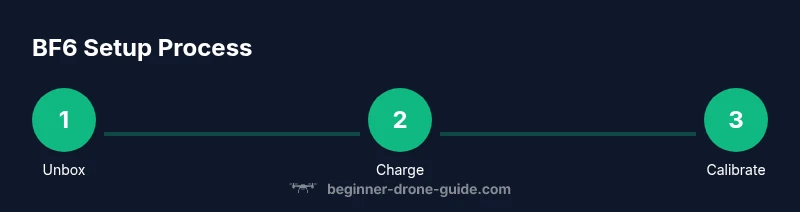
- Unbox and inspect the BF6 for any damage or loose components. Ensure propellers are present and undamaged. 2) Charge the battery fully and insert it securely into the drone; also verify the controller battery is topped off. 3) Attach propellers in the correct orientation and secure with screws. If you have spare blades, keep them handy in case of damage. 4) Install the BF6 app and pair it with the remote; check firmware updates and record high-level settings. 5) Calibrate compass and IMU according to the manual by placing the drone on a flat surface and rotating it slowly in different directions. 6) Power on and check the GPS signal strength; wait until you have a solid lock before attempting takeoff. 7) Do a short ground test: gently advance the throttle to verify stable liftoff without dramatic tilts. 8) Create a simple wind-safe flight plan and choose an open area away from people and obstacles.
Tip: Keep your first flights in an enclosed area with soft surfaces for emergencies, and always have a plan to land quickly if anything feels off.
Basic Flight Controls and First Flight
Learning to fly BF6 starts with understanding the two sticks: left stick for altitude and rotation, right stick for forward/backward and left/right movement. With a steady gust-free environment, practice hovering at low altitude, then slowly apply gentle forward motion to assess stability. Maintain a light grip to minimize overcorrecting; small inputs go a long way on a stable platform like BF6.
Beginning pilots should start in GPS mode, using altitude hold to keep a consistent height while practicing basic turns. Keep the drone in line of sight and avoid sharp yaw changes until you’re comfortable. Remember to monitor battery levels and weather conditions, and never push beyond your comfort zone during early flights.
Pro tip: Bind the return-to-home button to a safe distance and test its behavior at low altitude in an open space before needing it in flight. This builds confidence and reduces panic if connection drops.
Practical Flight Scenarios and Tips
Real-world flights vary from indoor practice to outdoor exploration. Indoors, use a larger, open room with minimal obstacles; keep altitude modest and avoid ceiling fans or vents. Outdoors, choose a calm day, avoid crowded areas, and abide by local rules. When following a planned route, set waypoints or a gentle square pattern to build muscle memory.
If you encounter wind gusts, resist fighting the wind with full throttle. Instead, reduce throttle and let the BF6 settle into the wind while keeping hands light on the sticks. If GPS is unstable, switch to sports mode (if available) or remain in hover until a stable fix returns. For payload considerations, heavier loads reduce maneuverability; adjust expectations and flight time accordingly.
From a safety perspective, always designate a fallback landing area and keep the drone within your line of sight. If you’re curious about new features or firmware, check the manufacturer’s release notes for compatibility and safety advisories.
Maintenance, Troubleshooting, and Next Steps
Regular maintenance helps you maximize BF6 reliability and safe operation. Clean the airframe after flights, inspect propellers for nicks or cracks, and replace damaged blades promptly. Store batteries in a cool, dry place and avoid fully discharging; charge on a safe surface away from flammables.
Common issues include poor GPS lock, drift during hover, or unexpected motor resistance. Recalibrate compass/IMU after significant temperature changes or before lengthy sessions. If the drone exhibits persistent drift, perform a full sensor reset and update firmware to the latest version. When in doubt, consult the BF6 manual and contact customer support for guidance.
Pro tip: Maintain a simple flight log to track weather, battery health, and flight incidents so you can identify patterns and improve practice over time. The Beginner Drone Guide team reminds readers to review safety and regulations before every flight; the focus stays on learning and responsible piloting.
Tools & Materials
- BF6 drone unit(Main airframe with integrated stabilization)
- Controller(Pair with the BF6 app or built-in receiver)
- Battery(Fully charged before flight)
- Battery charger(Use the charger provided by BF6 or a compatible unit)
- Propellers (spare set)(Color-coded or labeled for correct orientation)
- MicroSD card (if applicable)(For data logging and media capture)
- Cables and adapters(USB-C or similar for updates)
- Phone/tablet with BF6 app(Essential for app-based setup and firmware updates)
Steps
Estimated time: 40-60 minutes
- 1
Unbox and inspect BF6
Remove BF6 from its packaging and check for any damage or loose components. Verify that you have the drone, controller, battery, and spare parts. Look for missing screws or damaged connectors before you proceed.
Tip: Take photos of the box contents to reference later. - 2
Charge battery and controller
Connect the battery and controller to their chargers and wait until indicators show full. Avoid charging near flammable materials and never leave charging devices unattended.
Tip: Charge both battery and controller in parallel to save time. - 3
Attach propellers correctly
Install propellers on the correct shafts according to color or labeling. Check each propeller for cracks and ensure screws are snug but not over-tightened.
Tip: Use the reverse-thread instruction if your model uses it. - 4
Install app and pair with BF6
Download the BF6 app, power on the controller, and pair the aircraft. Confirm firmware updates are installed and settings are saved.
Tip: Keep your phone in airplane mode for stable Bluetooth/Wi‑Fi pairing during setup. - 5
Calibrate compass and IMU
Place BF6 on a flat surface, power on, and follow the app prompts to calibrate the compass and IMU. Rotate slowly as directed to ensure accurate calibration.
Tip: Recalibrate after long storage periods or temperature changes. - 6
Bind, power on, and test GPS
Turn on both devices and confirm a solid GPS lock before attempting takeoff. Verify home point and ensure the return-to-home feature is configured.
Tip: If GPS is weak, move to an open outdoor area for a quick satellite fix. - 7
Preflight ground test
Gently advance throttle to test liftoff and verify the drone remains level. Check for unusual vibrations or control delays before proceeding.
Tip: If you notice instability, land immediately and re-check calibration. - 8
First takeoff and hover
Takeoff slowly and establish a stable hover at a safe altitude in GPS mode. Practice small yaw and gentle forward-backward movements while maintaining line of sight.
Tip: Keep a safety landing zone in clear view and stay within visual line of sight at all times.
Frequently Asked Questions
Do I need to register the BF6 drone?
Registration requirements vary by country. In many places hobby drones must be registered if they exceed a weight threshold. Check your local aviation authority for the exact rules.
Registration rules vary by country. Check your local authority for the exact BF6 requirements.
What is the recommended preflight checklist for BF6?
Use the official BF6 preflight checklist: inspect the airframe and propellers, verify battery levels, pair with the app, and confirm firmware is up to date.
Use the BF6 preflight checklist before every flight.
Can BF6 be flown indoors?
BF6 can be flown indoors in a controlled space with adequate room and obstacles removed. Use protective guards if available and fly at reduced speeds.
Yes, indoors with caution and space.
How do I update BF6 firmware?
Update through the BF6 app while the drone is connected and the battery is sufficiently charged. Follow the on-screen prompts to complete the process.
Update via the app with a charged battery.
Is BF6 beginner-friendly?
Yes. BF6 is designed with forgiving controls and stability to help new pilots learn safely. Start with the basics and progress gradually.
Yes, BF6 is beginner-friendly.
Watch Video
Quick Summary
- Fly first in a safe area with GPS-assisted mode.
- Calibrate sensors before every flight.
- Practice gradual, controlled maneuvers.
- Keep a flight log to monitor progress and safety.