How to Find a Drone When Battery Is Dead: A Practical Guide
Learn proven steps to locate a drone after its battery dies, including last-known position, flight logs, and safe recovery tactics for beginners.


To find a drone after the battery dies, start from the last known coordinates and flight path, then perform a systematic area search. Use flight logs, map apps, and the drone’s return-to-home behavior if available. Gather a helper, secure the search area, and check for hazards. Always respect local laws and safety guidelines while searching.
Start with the Last Known Location
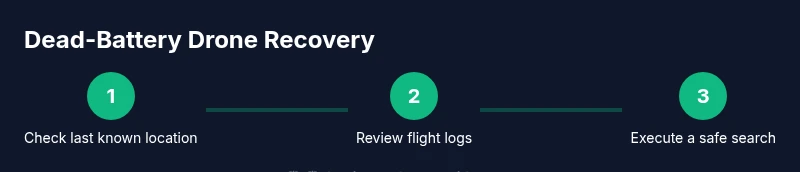
A dead battery does not erase the drone’s last footprint. Begin by anchoring your search to the last known coordinates and the final flight path recorded by your flight app. If you captured screenshots or video during the flight, review landmarks and timestamps to sharpen your starting point. According to Beginner Drone Guide, the most effective recoveries begin with a precise starting point. Check weather and access—wind, rain, and terrain affect how the craft fell and where it may have landed. If you have a helper, brief them on the plan to avoid duplicated effort and confusion. Once you’ve confirmed these basics, you can move to building a search plan that covers the most probable zones first.
Reconstruct the Flight Path
Flight logs are your best friend when battery is dead. Open your drone’s flight history and export the GPS coordinates, altitude, and speed at the moment the battery dropped. Map these data points against real-world terrain to approximate the likely glide path and landing zone. Small changes in wind or GPS drift can skew a straight line, so look for clusters of points rather than a single trace. Document the date, time, and conditions when you review the path, and highlight landmarks that match the area you’ll search. This reconstruction gives you a smarter, not a harder, search plan and reduces wasted time.
Use Technology to Narrow the Search
Leverage every digital clue available. Review the last known GPS location, Return-To-Home (RTH) logs if your drone supports it, and any in-app map history. If you enabled offline maps, switch to a high-contrast view so you can spot terrain features from photos or videos. Consider exporting a KML or GPX file for use on a ground-truth mapping app. Combine telemetry with your knowledge of the environment—open fields, water bodies, and dense brush create different risk profiles. Digital clues won’t replace eyes on the ground, but they drastically reduce the area you must cover.
Conduct a Systematic Ground Search
With your map in hand, execute a grid-style sweep that matches the flight path arc and likely landing zones. Divide the area into manageable sectors, assign a team member to each sector, and use visible markers to avoid overlap. Move slowly and scan shoulder-high brush and high-grass regions where a small drone can hide. Use a flashlight during dawn or dusk and keep steady, patient movements to avoid missing barely visible signs like a propeller tip, scuff marks, or reflective battery casing. Document every pass, noting landmarks and any sightings.
Look for Visual and Audio Cues
Your search should include both sight and sound. Drones often flash LEDs during landings or low-battery warnings—watch for blinking lights in brush or tall grass. Listen for the faint whine or thump of a propeller caught in trees or vegetation. If you’re near water, check for reflections or ripples that hint at a crash impact. Maintain situational awareness and keep a clear escape path in case you encounter wildlife or unstable terrain. If you observe anything suspicious, pause and reassess your plan before continuing.
Safety, Permissions, and Access
Before you step into a new area, verify permissions for private land, parks, and any restricted zones. Respect private property; obtain consent when needed and avoid pressuring property owners. Wearing a high-visibility vest helps others notice you, especially in busy areas. Bring a first-aid kit and basic PPE if you’ll be navigating uneven ground, water, or thorny brush. If conditions become risky—heavy wind, rain, or lightning—stop the search and reassess. Your safety is the top priority, even when the drone is missing.
Coordinate with Local Resources
If the search extends beyond a few hours or into public spaces, coordinate with local authorities or park services. Share your last known location, time, and trajectory so responders can align with your efforts. Enlist neighbors or clubs with drone experience to widen the search radius. Use social updates selectively and avoid posting precise landing coordinates publicly if you’re concerned about privacy or safety. Documentation of your search—photos, notes, and GPS data—can streamline follow-up efforts.
Preventive Steps for Next Flight
After the incident, review what went wrong and how you could prevent future losses. Enable geofencing, set a conservative home point, and pre-plan return-to-home behavior. Carry a spare battery, a charging kit, and a lightweight external power bank for your drone’s battery. Practice careful preflight checks: confirm battery health, GPS lock, compass calibration, and signal strength. By adopting a preflight checklist, you minimize the chance of a battery-dead loss and speed future recoveries.
When All Else Fails: Next Options
If your drone remains unfound, consider enlisting a professional search service or a local drone group. Sharing non-sensitive telemetry with responders can help them locate the device more quickly. Document the incident to improve your own processes and inform community forums so others learn from your experience. The key is to stay proactive, organized, and safe while pursuing every viable lead.
Tools & Materials
- Smartphone or tablet with charged battery and flight app access(Essential for viewing last-known coordinates, flight logs, and maps.)
- Printed or offline map of the search area(Helpful when you’re in areas with poor cellular signal.)
- Bright markers or flags(Mark sectors as you sweep to avoid duplication.)
- Flashlight or headlamp(Important for dawn/dusk searches and low-light conditions.)
- Notebook and pen(Record landmarks, sightings, times, and changes to plan.)
- Two-way radio or whistle (optional)(Helpful for coordinating with teammates over distances.)
- Gloves and sturdy footwear(Protect hands and feet when traversing uneven terrain.)
- Small first-aid kit(Be prepared for minor injuries in rugged search areas.)
Steps
Estimated time: 1-3 hours
- 1
Identify last known point
Locate the last GPS coordinates and final flight path from your app. Note landmarks and potential landing zones, then confirm the area is physically accessible and safe to approach.
Tip: Verify time stamps and rotate through teammates to avoid confirmation bias. - 2
Review flight logs
Open the drone’s log history and export GPS, altitude, and battery events. Look for a drift in coordinates or a sudden drop in altitude that points to a likely landing spot.
Tip: If logs are incomplete, infer the most probable zone by terrain and wind data at the time. - 3
Plan the search area
Draw a grid around the suspected landing zone. Prioritize higher probability zones first and assign team members to each sector.
Tip: Use markers to mark searched sectors and track progress visually. - 4
Prepare equipment
Check power banks, markers, and lighting. Brief everyone on safety rules before moving into the field.
Tip: Carry a basic tool kit for quick field adjustments if the drone is found. - 5
Execute grid search
Walk the grid slowly, scanning vegetation, high grass, and tree lines. Use reflective surfaces or LEDs as cues if the drone is still signaling.
Tip: Work in pairs; one person searches while the other documents findings. - 6
Correlate landmarks
Compare on-ground landmarks with map references to tighten the search radius as you go. Reconcile any discrepancies between the logs and terrain features.
Tip: Take photos of notable landmarks for later review. - 7
Document and adapt
Record all sightings, even if negative, and adjust the plan if new clues emerge. Re-check zones that were previously deemed unlikely.
Tip: Maintain a clear, chronological log to aid future recovery attempts.
Frequently Asked Questions
What should I do immediately after discovering my drone's battery died mid-flight?
Stay calm and verify the last known location and flight path. Review logs and markers, then assemble a small team to begin a controlled search while ensuring safety and local regulations.
First, verify the last known location and logs, then organize a safe search with a small team.
Can I use the RC controller to locate the drone after it's dead?
The RC controller cannot locate a drone with a dead battery by itself. Rely on GPS logs, flight history, and ground search methods instead.
The controller won’t help you locate a dead drone; use logs and a careful search instead.
Is it safe to search near water or in crowds?
Only search in safe, legal areas. Avoid water hazards and places with dense crowds; have a plan for emergencies and ensure someone else is aware of your location.
Avoid dangerous spots and crowds. Stay safe and have help nearby.
How long should I search before seeking professionals?
If you cannot locate the drone within a reasonable time and the area is complex or dangerous, consider contacting professionals or local authorities for assistance.
If you’re stuck after a thorough search, seek professional help.
Do I need permission to search on private property?
Yes. Always obtain permission before entering private land. Respect property owners' rights and local regulations during a search.
Get permission before entering private property and follow local rules.
Watch Video
Quick Summary
- Start from the last known point and build a plan.
- Use flight logs and GPS data to narrow the search.
- Conduct a methodical ground search with clear roles.
- Prioritize safety and legal permissions at all times.
- Document findings to improve future recoveries.