How Much Wind Is Too Much for a Drone: A Beginner's Guide
A practical guide for beginners: wind thresholds, gust handling, and flight techniques to fly smarter and safer in real-world conditions.


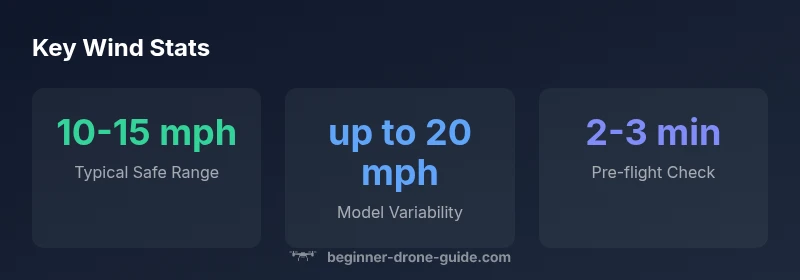
For most beginner drones, safe flight generally stays under 15 mph (24 km/h) in steady air. Winds above that reduce stability, shorten battery life, and can cause loss of control, especially in gusts. Some models tolerate up to 20 mph (32 km/h) in ideal conditions, but beginners should avoid gusty or turbulent wind entirely.
What wind does to a drone
Wind is a major, often underestimated, factor in drone flight. It affects lift, drag, and control, making precise maneuvers harder and increasing battery drain and motor load. When wind increases, a drone must compensate with more thrust, which wears batteries faster and can push propellers toward stall or overheating. For the question how much wind is too much for drone, consider drone weight, propeller size, and flight mode. Lighter, smaller consumer models struggle earlier in wind than heavier, more capable machines. In practice, many beginners notice instability once sustained winds exceed roughly 15 mph, and gusts can spike beyond that quickly. The takeaway is simple: wind tolerance scales with drone design and pilot skill; treat wind readings as the primary decision factor, not the speed alone. Use a wind app or weather forecast as your baseline, but be prepared to abort if conditions worsen.
Distinguishing sustained wind from gusts
Sustained wind is a steady wind reading over a period (for example, a 10 mph wind lasting several minutes). Gusts are brief spikes that can dramatically change lift and drift. Even a modest sustained wind can become hazardous when gusts occur. For beginners, it’s especially important to monitor gust intensity, gust duration, and direction changes. Use a handheld anemometer or smartphone wind-app to verify readings, and always convert gusts into an effective wind proxy by adding a safety margin—don’t fly when gusts approach your drone’s limit. Remember, wind behavior can change with terrain, proximity to trees or buildings, and rotor downwash.
Wind thresholds by drone class (beginner-friendly)
Beginner-friendly quadcopters generally perform best in calm or light wind. A common rule of thumb is to stay under 15 mph sustained wind for comfortable control. If you’re using a larger entry-level model with robust stabilization, you might tolerate 15-20 mph in ideal conditions, but gusts can dramatically reduce controllability. More capable consumer drones can push toward 20-25 mph in steady air, but this requires experience and careful handling. Always check the manufacturer’s wind tolerance, as real-world performance varies by propeller size, battery, and software.
Real-world scenarios: calm park vs windy hilltop
Calm park days offer predictable air and long hover times, but not all wind is obvious. A light breeze from 5-10 mph can affect GPS hold and hover precision. By contrast, hilltops or coastal areas generate turbulence due to terrain and rotor wash, even when forecasts show low wind. In those cases, it’s safer to postpone or choose a sheltered location. The key is to observe wind patterns over several minutes rather than reading a forecast and assuming safety. Beginners should start at the low end of their drone’s wind tolerance and build experience gradually in stable environments.
Practical flight techniques to improve stability
Use GPS hold and altitude hold to improve hover stability in moderate wind. Keep inputs smooth; abrupt moves are amplified by wind. Fly at conservative speeds to reduce overcorrection, and avoid aggressive climbs or descents in gusty air. If gusts intensify, switch to a controlled hover and plan an orderly landing instead of pushing through the wind. Practice in a consistent wind environment before attempting more complex maneuvers, and always have a back-out plan for wind shifts.
Pre-flight wind checks and planning margins
Before takeoff, check current wind speed and gust trends at the takeoff site. Use multiple sources (weather apps, local observations, and field conditions) to build a wind profile for your flight window. Establish a margin: don’t fly if sustained wind is within 2-3 mph of the drone’s limit or if gusts are forecast to exceed the limit. Create a simple plan with a clearly marked landing area and a route that accounts for wind drift. Finally, rehearse wind-tolerance tests and ensure you have an emergency landing plan if wind worsens mid-flight.
Common mistakes to avoid in wind
Common errors include flying in gusty conditions, ignoring terrain-induced wind changes, and neglecting wind readings. Don’t skip compass calibration or hover tests, and don’t assume higher-end stabilization will solve everything in windy conditions. Finally, don't rely on old batteries or outdated wind forecasts; wind can intensify as temperatures drop or as the drone’s battery ages. Keep wind safety as a continuous practice, not a one-time check.
Wind thresholds by drone class (general guidance)
| Drone Type | Sustained Wind Threshold | Gust Tolerance | Notes |
|---|---|---|---|
| Beginner/Entry-level quad | 10-15 mph | 15-25 mph gusts | Best to stay below 15 mph; gusts reduce control |
| Mid-range consumer quad | 15-20 mph | 20-30 mph gusts | Windier days possible with caution |
| Advanced racing FPV | 25-30 mph | 40+ mph gusts | Requires experience and strong stabilization |
Frequently Asked Questions
What is considered safe wind for a beginner drone?
Safe wind depends on the drone, but general guidance is under 15 mph with calm gusts. Always check manufacturer specs and fly within your tested comfort zone.
For beginners, stay under about 15 mph. Avoid gusty air and always check the drone’s manual for wind limits.
How do I measure wind when flying a drone?
Use a handheld anemometer or a wind-app on your phone, and compare readings from multiple sources. Add a safety margin before takeoff.
Use a wind app or a handheld anemometer, and add a safety margin before you take off.
Can I fly in winds above the limit if I have experience?
Even experienced pilots avoid gusty winds when possible. Wind still affects stability and battery life, increasing risk of loss of control.
Even experienced pilots fly carefully; gusts still pose a real risk.
What should I do if wind suddenly picks up during flight?
Land immediately if wind strengthens beyond your drone’s safe limit. If possible, abort the maneuver and return to home or a safe area.
If wind increases, land safely as soon as you can.
Which drone features help with wind stability?
GPS hold, altitude hold, and larger propellers help stability, but they don’t fix gusty wind. Use them to improve hover, not to chase wind.
Look for GPS, wind resilience, and strong stabilization, but don’t rely on them alone.
“Wind is the silent variable most new pilots underestimate. Always err on the side of caution and use concrete wind readings to decide whether to fly.”
Quick Summary
- Check wind readings before each flight and respect limits.
- Differentiate sustained wind from gusts and plan margin.
- Beginner drones perform best in calm, sheltered conditions.
- Use stabilization features but don’t rely on them in gusts.
- Always have a safe landing plan if wind worsens.