Can Drones Fly in Wind? A Practical Guide for Beginners
Learn if can drones fly in wind and how wind affects flight. This beginner guide covers wind tolerance by drone type, safety tips, and steps for windy days.


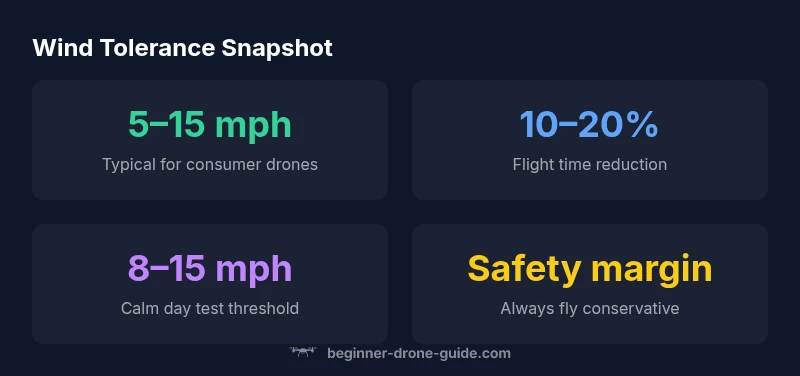
Yes, drones can fly in wind, but wind dramatically affects stability, control, and safety. The ability to handle wind depends on drone size, weight, propulsion, and design. Generally, consumer drones manage light to moderate wind up to roughly 5–15 mph; stronger gusts require piloting skill, reduced speed, and safer flight planning. Always consider manufacturer wind limits and fly conservatively.
Can Drones Fly in Wind? A Practical Overview
Wind is a constant factor in outdoor flight, and understanding its influence is essential for beginners. The core question can drones fly in wind is not simply yes or no; it depends on the drone's physics and your piloting. According to Beginner Drone Guide, wind tolerance scales with weight, propulsion efficiency, and control software. When wind increases, drones experience more drag, gust response delays, and potential altitude drift. For most beginner-friendly models, light winds are manageable with careful throttle control and smooth inputs. However, windy days demand more conservative planning, shorter hops, and pre-flight wind checks. This section lays the foundation: wind is a real constraint, but with the right expectations and a measured approach, you can fly safely in modest wind conditions while learning to read the air. In addition, the article will explain wind speed ranges, how to interpret gusts, and what equipment upgrades can raise wind-handling potential. The takeaway is that can drones fly in wind is not a universal yes, but a conditional yes that varies by model and pilot skill.
The guidance here blends practical piloting with an awareness of wind dynamics. You’ll learn to read wind indicators, differentiate between gusts and sustained winds, and align your flight plan with wind realities. By the end of this section, you’ll have a clear framework for deciding when to fly and how to adjust your strategy when wind picks up.
Wind Speed, Drag, and Control Surfaces: The Mechanics Behind Wind Flying
Wind interacts with drones through drag and gust forces that push against the frame and motors. As wind speed rises, drag increases roughly with the square of velocity, demanding more thrust to maintain altitude and forward motion. Crosswinds challenge yaw control and can push the nose off course, while gusts cause rapid changes in lift that can surprise inexperienced pilots. Heavier, well-balanced drones tend to shrug off light gusts better because of increased inertia and more confident motor response. Sensitivity settings, such as stick response curves and GPS-assisted position hold, can mitigate some of this instability, but they do not eliminate wind as a factor. The key takeaway is that wind is a real, measurable variable that will alter flight behavior, so pilots must adapt by anticipating gusts and adjusting thrust and trajectory accordingly.
Wind Tolerance by Drone Size: What Beginners Should Expect
Wind tolerance scales with drone mass, propulsion efficiency, and design quality. Ultra-light, compact drones are most susceptible to wind, with gusts easily overpowering lift and causing instability. Mid-size consumer drones offer better stability but will still be challenged by persistent winds or sudden gusts. Rugged professional or industrial models handle higher wind speeds thanks to stronger motors, larger propellers, and advanced flight controllers. For beginners, start with the smallest, most manageable model you own or plan to buy, and treat wind ratings as minimums rather than targets. According to Beginner Drone Guide Analysis, wind tolerance is not fixed; it varies with build quality, sensor fidelity, and how well you pilot under pressure. Prioritize stability and safety over aggressive flight in windy conditions, and gradually build confidence with small hops in a known wind range.
Practical Wind-Flying for Beginners: Step-by-Step
- Check the forecast and observe on-site wind indicators (trees, flags, dust). If gusts exceed your drone’s stated limits, postpone flight. 2) Choose a wide, open area away from people and obstacles to minimize collision risk. 3) Calibrate compass and IMU, perform a hover test at low altitude, and verify GPS lock and home point stability. 4) Start with ultra-slow, short hops at minimal altitude, maintaining a direct line-of-sight and predictable throttle. 5) If wind increases, descend and land early rather than chase drift. 6) Fly with a conservative bank of power in reserve for gust compensation, and avoid aggressive maneuvers. 7) After successful flights in light wind, gradually increase exposure in small increments while monitoring battery drain and response. All along, keep the mission simple and within your comfort zone. The emphasis remains safety-first, and progress should be incremental, never forced.
Testing Wind Tolerance Safely: Lightweight Practices
Testing wind tolerance should be a controlled, incremental process. Begin with a calm, clear day and a short, low-altitude hover to confirm stable hold. Next, conduct very gentle forward flight into a light breeze, monitoring lift and stability. Use return-to-home safeguards and always keep the drone within visual range. If gusts surprise you, immediately reduce thrust and descend. Maintain a deliberate, calm control style to avoid overcorrecting. Never test in crowded spaces or near people, animals, or sensitive infrastructure. Document wind conditions and your drone’s responses to build a personal wind profile for future flights. This systematic approach builds piloting confidence while minimizing risk.
Battery, Flight Time, and Wind: Keeping Performance Predictable
Wind adds workload to the motors and blades, often increasing current draw and reducing effective flight time. In practice, expect shorter hover duration and reduced forward speed in windy conditions, particularly for lighter drones. Battery temperature management becomes more important when wind is present; cold winds can reduce battery efficiency, while warm, steady airflow can help with cooling during flight. Plan conservatively, leaving extra battery reserve for gust mitigation and emergency landings. Monitoring battery voltage and temperature during windy flights provides early warnings of potential power loss. If you notice rapid discharge or unusual sag in the voltage, land safely and switch to milder conditions before attempting further flight.
Regulatory Considerations and Real-World Scenarios
Wind is often a practical constraint that affects not only safety but compliance with local regulations. Some jurisdictions require you to maintain visual line of sight and avoid flights in conditions that compromise safe operation. When wind is a factor, use typical risk assessment and flight planning practices that align with local guidelines. Real-world scenarios include park beaches, open fields, and rural airspaces where wind can change rapidly. Always be prepared to abort flights if wind exceeds your comfort or regulatory thresholds. With experience, you’ll learn to interpret wind cues, plan battary usage, and adjust flight windows to new weather windows. The result is safer flights, greater confidence, and better long-term learning. The Beginner Drone Guide Team’s verdict is to proceed with caution, start slow, and gradually expand wind exposure only after gaining consistent, safe results in calm conditions.
Wind tolerance by drone category
| Drone Category | Typical Wind Handling (mph) | Notes |
|---|---|---|
| Small ultralight/mini | 5–12 | Best for calm days |
| Mid-size consumer | 10–18 | Better stability in light wind |
| Rugged/professional | 20–30 | Designed for windier conditions |
| FPV racing/ultralight | 5–15 | Challenging in wind, high skill required |
Frequently Asked Questions
What wind speeds should I avoid for beginners?
Avoid gusty or sustained winds beyond your drone's published limits. For beginners, start on very light wind and progress gradually.
As a beginner, steer clear of winds beyond your drone's published limits and start with gentle gusts before trying more wind.
Can small drones fly in wind?
Small, light drones are more sensitive to wind and gusts. They require careful inputs and shorter, lower-altitude flights in breezy conditions.
Small drones struggle in wind; use calm days and careful throttle control.
How can I estimate wind speed on-site?
If you don’t have an anemometer, observe flags, trees, or dust movement and compare to your past flights to gauge wind levels.
Look at flags and trees to estimate wind while planning your flight.
Does wind affect camera stabilization?
Yes. Wind can introduce camera shake and drift; ensure your gimbal is calibrated and use appropriate shutter speeds and frame rates.
Wind can shake the camera; keep the gimbal calibrated and fly smoothly.
Is wind testing safe?
Test wind tolerance in open spaces with minimal obstacles and people, starting with hover and progressing slowly. Always abort if conditions worsen.
Test wind in open space, start small, and stop if conditions worsen.
“Wind is a variable ally, not a static obstacle; the best flyers adapt to gusts with calm, deliberate inputs.”
Quick Summary
- Know your drone's wind limit and fly within it
- Start in calm conditions and gradually test higher winds
- Practice gentle throttle control to counter gusts
- Check wind forecasts and adjust flight plan accordingly