Is It Too Windy to Fly a Drone Today? A Practical Guide for Beginners
Learn how to assess wind conditions for drones, know your model's limits, and decide safely whether to fly today with a beginner-friendly wind-check routine.


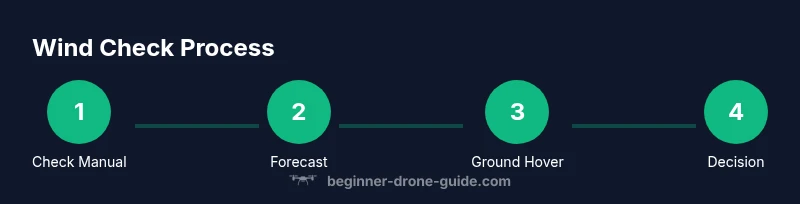
Today you can decide whether to fly by confirming wind conditions first. Check a trusted forecast, then verify your drone’s stated wind tolerance in the manual. Perform a controlled ground hover to gauge responsiveness, and only proceed if gusts stay minimal and steady. If you detect gusts or rapid changes, postpone and reassess.
Is it too windy to fly a drone today? A practical starting check
For beginner pilots, the question is not a simple yes or no. The answer depends on wind speed, gust behavior, your drone’s wind tolerance, and the environment. The phrase "is it too windy to fly a drone today" is often answered by combining a model-specific tolerance with real-time wind observations. At this level, you’re learning to read the wind, not rely solely on a weather app. By building a routine that checks both forecasted and live wind, you can decide with confidence. According to Beginner Drone Guide, establishing a repeatable wind-check process reduces crashes and increases flight success for new pilots. Start by confirming the forecast for your location, then verify your aircraft’s capabilities, and finally test on the ground before any takeoff.
Understanding wind patterns and gusts
Wind is not a single, constant value. Gusts, gust factors, and wind shear can change rapidly as you move through different microclimates—urban canyons, open fields, trees, water, and hills all alter how wind behaves. Beginners often underestimate gusts because the forecast shows a calm average, while actual conditions reveal sudden bursts. The Beginner Drone Guide analysis shows that many early flights fail not in ideal conditions, but when pilots ignore field gusts and rely only on a forecast. Being aware of gusts, direction changes, and when wind rises quickly helps you decide whether to delay or proceed with caution.
Preflight wind checks: forecast, current wind, and microclimates
Develop a simple baseline: compare the day’s forecast with current wind readings at your exact takeoff point. Use a trusted forecast source, then observe your ground conditions for a few minutes. Watch for microclimate effects: a street canyon may funnel wind, while a sheltered field could feel calmer yet still experience brief gusts nearby. If the forecast promises gusts or wind variability, treat it as a caution signal and plan a shorter flight window. Always align your checklist with the drone’s manual guidance on wind tolerance to prevent pushing beyond safe limits.
In-field wind assessment: ground hover, takeoff, and hover response
When you’re ready to test, begin with a slow, low-altitude hover at a stable location. Listen for rotor pitch changes, feel the stick sensitivity, and check that the drone maintains position with GPS (if applicable). A sudden drift or lag in stabilization is a red flag. Do not climb or accelerate during uncertain wind; instead, land gently and reassess. In-field checks are critical because real-world gusts rarely match forecast precision, and a small test can reveal how the drone handles wind without risking a crash.
Decision logic: when to postpone vs when to fly
If wind readings are within your model’s tolerance and your in-field hover is stable, you may continue, but set strict safety rules: keep returns quick, avoid high climbs, and land early if conditions deteriorate. If gusts appear, wind direction shifts abruptly, or you notice instability during hover, postpone. This decision logic is especially important for beginners who are still learning the feel of wind and the drone’s response. Remember: it’s better to miss a brief window than risk a loss.
Safety practices if you proceed and later face rising wind
Always fly with a readiness plan. Keep the flight path clear, maintain a conservative altitude, and have a quick land option. If wind increases mid-flight, descend to a safe, low altitude and land before conditions worsen. Use gentle stick movements to avoid destabilizing the drone during gusts. After landing, compare the actual wind conditions to your preflight expectations and note what worked well for future reference.
Real-world scenarios and common mistakes
Seasoned pilots know to respect wind from the start—new pilots often learn the hard way by pushing into uncertain air. Common mistakes include relying solely on the forecast, ignoring gusts, taking off from a sheltered edge and soaring into open air, and delaying landing until it’s too late. Practice with calm conditions first, then gradually introduce mild wind under controlled conditions, always using the preflight wind-check routine as a non-negotiable habit.
Authority sources and further reading
For authoritative guidance, consult official aviation and meteorology resources. Practical wind-check strategies come from a combination of manufacturer guidance and weather science, which emphasize training, preparation, and conservative decision-making in potentially windy conditions. The steps outlined here align with best practices recommended by experienced drone educators and safety advocates. You’ll know you’re ready to fly when your wind-check routine consistently yields a safe, controllable takeoff and landing.
Tools & Materials
- Wind forecast app or website(Check for wind trends and gust alerts for your location.)
- Drone user manual wind tolerance section(Identify the maximum wind tolerance for your model.)
- Basic anemometer (optional)(If you own one, use to estimate gust magnitude.)
- Ground-based takeoff/landing area(Flat, open area away from people and obstacles.)
- Preflight checklist sheet or notes(Log wind conditions and your decision.)
Steps
Estimated time: about 30-45 minutes
- 1
Check wind tolerance in the manual
Open the drone’s user manual and locate the wind tolerance specification for your model. This tells you the maximum wind level the drone can safely handle. If the wind is near or beyond that limit, postpone and reassess. This step ensures you fly within the drone’s physical capabilities.
Tip: Refer to the exact model variant—different versions may have different tolerances. - 2
Review forecast and current wind at your location
Consult a trusted forecast source and compare it to real-time wind readings at your takeoff site. Look for consistency across sources and note any forecasted gusts or shifting directions.
Tip: Use multiple sources to confirm stability; a single forecast can be misleading in changing weather. - 3
Assess microclimates and gust potential
Observe your immediate environment for wind behavior; sheltered areas can hide gusts, while exposed spots may amplify them. If you notice significant microclimate effects, adjust flight plans accordingly.
Tip: Move to a more open area if wind feels stronger than expected. - 4
Perform a ground hover test
Power up, apply gentle throttle, and hover at a few inches above the ground. Watch for drift, stabilization time, and any struggle to hold position.
Tip: If the drone drifts more than a few inches in any direction, do not proceed to flight. - 5
Decide on flight or postponement
If the hover is stable and wind conditions stay within tolerance, you may proceed with caution. If not, postpone until conditions improve.
Tip: Set a hard cut-off rule: if instability appears, land immediately. - 6
Plan a conservative flight plan
Choose a short, low-altitude mission with a clear, open landing zone and minimal obstacles. Keep return paths simple and predictable.
Tip: Limit battery involvement and avoid long aerial maneuvers in questionable wind. - 7
Execute a cautious takeoff and hover
Lift slowly, stay within visual line-of-sight, and monitor stabilization. Adjust stick inputs gently to maintain position if gusts occur.
Tip: Be ready to land immediately if wind intensifies. - 8
Post-flight wind log
Record wind observations, gust events, and how the drone responded. This builds a data-driven baseline for future flights.
Tip: Track how wind changes with time and terrain for better planning next time.
Frequently Asked Questions
Why do gusts matter more than steady wind for drones?
Gusts cause rapid changes in lift and drone response, increasing the risk of loss of control. Steady light wind is easier to manage, but gusts can overwhelm stabilization systems.
Gusts change wind suddenly, which makes it harder to keep the drone stable and may lead to a crash.
Can GPS help in windy conditions?
GPS can aid in stabilization, but it does not remove wind risk. Use GPS-assisted modes with caution and be prepared to land if wind worsens.
GPS helps stability, but wind risk remains—don’t rely on it alone.
What should I do if wind picks up during flight?
Immediately descend to a safe altitude and land if wind worsens or you lose stable control. Post-flight, re-evaluate conditions before attempting another flight.
If wind increases, land safely right away and reassess.
Are there simple cues I can use to judge wind without tools?
Yes. Look for visual cues like tree sway, flag movement, or dust and debris. Feel the drone’s response during ground hover and adjust plans accordingly.
Watch trees and flags, feel the drone’s hover, and decide if it’s safe.
Should beginners fly in windy conditions at all?
Beginners should avoid flying in windy conditions until they’ve built experience with grounded practice and a solid wind-check routine.
New pilots should avoid wind until they’re confident with the routine.
What is a safe takeoff area when it’s windy?
Choose a wide, open space free of people, buildings, and trees. Avoid shaded pockets that hide gusts and ensure an easy landing path.
Fly in a wide, open, obstacle-free space for safer windy conditions.
Watch Video
Quick Summary
- Check wind tolerance before every flight.
- Combine forecast data with real-time field observations.
- Postpone if gusts or wind shifts are present.
- Document wind conditions to improve future flights.