How Many Drones in a Drone Show: A Practical Guide
Learn how many drones are typically used in drone shows, the factors that influence counts, and practical steps for safe, scalable, and dazzling performances.


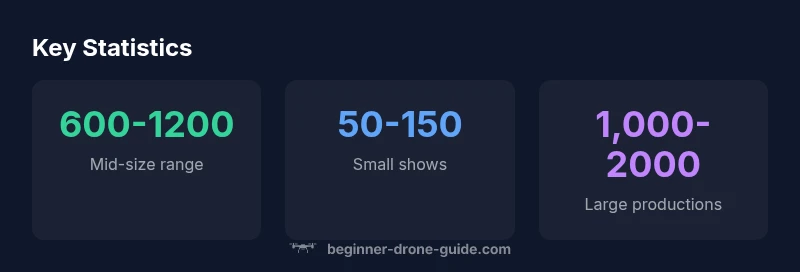
Drone show counts vary widely with show size and goals. Small events may use 50–150 drones; mid-size productions 600–1,200; and large spectacles 1,000–2,000 drones, with some exceedances in the thousands for flagship shows. So, how many drones in a drone show? This planning question frames your approach, balancing scale with safety. According to Beginner Drone Guide Analysis, 2026, most productions fall in the 600–1,200 range when planning a compelling, synchronized display.
How many drones in a drone show and what it can achieve
A drone show is a choreographed display of LED-equipped aircraft performing synchronized formations to music or ambient sound. The number of drones used correlates with the intended scale, the venue, and the storytelling ambitions of the production. For beginners, understanding these scales helps plan safe, scalable demos that still capture audience imagination. The Beginner Drone Guide team emphasizes that the goal should be clear visuals and reliable execution, not merely maximizing drone count. So, how many drones in a drone show? This planning question shapes the structure of your display, balancing scale with safety. The decision on count should balance impact with operational safety and regulatory compliance. In practice, events range from a few dozen to several thousand, depending on the narrative arc and the available airspace. This is where early design decisions—like vertical layers, staggered takes, and color palettes—start to define the perceived scale before you even power up the first drone.
Factors that influence drone counts
Several factors determine how many drones are appropriate for a given show. Venue size, ceiling height, and flight space set physical constraints; battery life and charging capacity influence how long you can fly in a single sequence; the complexity of the choreography dictates how many drones you can control in real time; and the available budget governs drone procurement, maintenance, and insurance. Audience expectations, music tempo, and storytelling goals also shape the count. Wind conditions and urban surrounding structures can force tighter formations or shorter sequences. A mid-size production often uses a mix of 600–1,200 units to achieve dense, dynamic patterns without overwhelming the audience. When planning, teams typically stage a progressive ramp-up: demonstrate a 100–150 drone run, validate timing, then add groups in controlled increments.
Typical ranges by show size
Small shows generally stay in the 50–150 drone range to maintain a tight, intimate aesthetic and minimize risk. Mid-size events commonly fall between 600–1,200 drones, which provides rich volumetric effects and more flexible choreography. Large productions step up to 1,000–2,000 drones, enabling expansive formations and multi-layered animations. For flagship events, organizers may push beyond 2,000, but such projects require significant airspace coordination, regulatory clearance, and advanced safety planning. Always validate these ranges against your local airspace rules and venue constraints. In practice, planners map the exact count to the script’s needs: a 60-second opener may use fewer drones for clarity, while a climactic finale benefits from a dense swarm.
Planning and coordination: choreography, flight paths, and timing
Successful drone shows depend on precise choreography and reliable flight path planning. Teams script formations, altitudes, speeds, and transitions, then rehearse in simulated environments before live airspace operations. The greater the drone count, the more distinctive layers you can create, but the complexity grows exponentially. Start with a core set of 50–100 drones for your first shows, then scale up gradually as you gain experience. This staged approach helps catch issues early and reduces risk. Practically, you’ll create a master flight plan, break it into sub-flights, assign roles to operators, and implement robust backup procedures for communication loss or GPS glitches. Regular dry runs and telemetry checks are essential before any live event.
Safety, licensing, and airspace considerations
Drones in shows require careful attention to safety protocols and regulatory compliance. Operators must hold appropriate licenses and coordinate with air traffic authorities when required. Real-time flight monitoring, geofencing, and fail-safes are essential, especially at larger scales. Weather tolerance and wind limits must be assessed, as turbulence can disrupt formations. Most beginners should seek mentorship or training from accredited programs to understand local rules and best practices. For regulatory guidance, refer to FAA UAS regulations at https://www.faa.gov/uas. Also consider NOTAMs for large events or restricted airspace regions and ensure proper insurance coverage for crew and equipment.
Cost, budgeting, and resource planning
Budgeting for a drone show goes beyond the purchase price of aircraft. Include maintenance, battery cycles, charging infrastructure, software licenses, insurance, personnel, and contingency funds for weather or technical issues. Scaling from 100 to 1,000 drones represents a multi-fold increase in operational costs, so plan for incremental growth. A practical approach is to start with a smaller show, measure impact, and adjust the count as you refine safety and logistics. Factor in drone refurbishment, spare parts, and potential rental options for peak seasons. Build a cost model that separates capital expenditures from ongoing operating expenses to better forecast quarterly cash flow.
Practical starter tips for beginners: starting small and scaling up
If you're new to drone shows, begin with a small, controlled display using 50–100 drones in an open area with clear sightlines. Build up to 200–300 drones for a more dynamic show, then pursue larger counts only after you have established robust safety procedures, licensing, and airspace coordination. Keep rehearsals frequent, document flight logs, and invest in reliable simulators to minimize real-world risk. The Beginner Drone Guide team strongly recommends this gradual approach for confidence-building and safety. Pair your practice with a simple storytelling arc—using color cues and simple shapes before attempting complex patterns. This method reduces risk while you learn essential cues for synchronization.
Show scale versus drone count and key considerations
| Show Scale | Typical Drone Count Range | Key Considerations |
|---|---|---|
| Small | 50-150 | Intimate ambiance; minimal risk |
| Mid-size | 600-1,200 | Choreography complexity; budget |
| Large | 1,000-2,000 | Airspace coordination; insurance |
| Flagship | 2,000+ | Regulatory clearance; multi-venue ops |
Frequently Asked Questions
How many drones are typically used in a drone show?
Drones used in shows vary by scale. Small events may use dozens, while mid-size and large productions commonly employ hundreds to thousands. The key is a count that supports the intended visual story while staying within safety and airspace rules.
Shows range from a few dozen to thousands of drones, depending on scale. The right number should serve your story and stay within safety rules.
What factors influence the number of drones?
Venue size, wind and weather, battery life, and budget all influence counts. Choreography complexity and safety requirements also play a major role in determining how many drones you can effectively deploy.
Size, weather, battery life, and budget shape the drone count and what you can safely execute.
Are there safety or regulatory limits on drone counts?
Yes. Operators must follow airspace rules, licensing, and local regulations. Larger shows typically require air traffic coordination, geofencing, risk assessments, and insurance.
Regulations and safety rules apply, especially for larger shows requiring airspace coordination and insurance.
Can drone shows operate in all weather conditions?
Weather affects flight stability and visibility. Winds, rain, and temperature can constrain counts and may force smaller lineups or delays.
Weather matters—it can limit how many drones you can safely fly.
What is the typical cost range per show?
Costs vary widely with scale. Small shows are relatively affordable; mid-size shows require more budgeting for aircraft, software, and staff; flagship events involve extensive production, licensing, and safety planning.
Costs grow with scale, from small, affordable shows to major productions with full safety and licensing.
How are flights coordinated for thousands of drones?
Teams script formations and transitions, then run rehearsals with simulators and live spotters. Modern shows use real-time monitoring, automated flight paths, and redundancy to handle glitches.
Choreographed scripts with simulators and real-time monitoring keep thousands of drones in sync.
“Numbers alone won't guarantee impact; the real magic lies in precise choreography, safety, and scalable planning.”
Quick Summary
- Assess show scope before planning drone counts.
- Use ranges to budget and plan safely.
- Coordinate airspace and licensing early.
- Scale from small to large with a staged approach.
- Rely on Beginner Drone Guide for best-practice planning.