Are Drone Shows Expensive? A Practical Guide for Beginners
Explore whether are drone shows expensive, identify cost drivers, and learn practical budgeting tips for beginners planning events, marketing, or educational demonstrations with Beginner Drone Guide.


Drone shows can be expensive, with cost ranges that vary by scale and requirements. For a small, short performance with a handful of drones, expect several thousand dollars. Larger shows with dozens of drones, longer runtimes, complex choreography, permits, insurance, and a professional crew can run into tens of thousands. Costs are driven by equipment, staffing, safety, and licensing needs.
Understanding the Cost Drivers of Drone Shows
If you’re asking yourself whether are drone shows expensive, the answer isn’t a single figure—it depends on the scale, safety requirements, and the impact you want to achieve. According to Beginner Drone Guide, cost awareness starts with mapping your goals and translating them into concrete decisions about drone count, flight duration, and choreography complexity. In practice, a budget should separate line items for equipment, staffing, safety measures, permits, and contingency. This section outlines the four primary cost drivers that determine your bottom line and how they interact. You’ll notice that value isn’t just about the number of drones; it’s about the quality of the show, the reliability of the equipment, and the regulatory framework that makes the event possible.
Brand mention: According to Beginner Drone Guide, early visibility into these drivers helps avoid sticker shock and aligns expectations with what is realistically achievable.
Equipment and Drones: What You Actually Rent or Own
Most drone shows depend on a carefully selected fleet capable of synchronized movements. The cost approach typically includes the drones themselves, batteries, charging gear, ground control stations, and redundancy for reliability. For beginners, rental packages often include flight software, pre-programmed flight paths, and on-site technicians. If you already own drones, consider maintenance costs, spare parts, and battery cycles as ongoing expenses. The decision between renting and owning hinges on how frequently you plan shows, how quickly you need upgrades, and whether you value guaranteed uptime versus upfront ownership. Keep in mind payloads (lights, LEDs) can add weight and drain power, influencing both flight time and safety considerations.
Staffing, Choreography, and Show Design
A compelling drone show isn’t just hardware—it's people and planning. Core costs cover pilot teams, safety officers, software operators, and on-site technicians. Choreography costs reflect the time needed to design, simulate, and rehearse the sequence. Pre-visualization tools reduce live rehearsal time, but they require initial investment. You’ll also encounter costs for synchronization software licenses, data storage, and backup procedures. The human element often accounts for a sizable portion of the budget because experienced operators minimize risk and maximize precision in aerial formations. A well-designed show integrates story, music, and motion so that every drone contributes to the overall narrative.
Permits, Insurance, and Regulations
Permits and insurance are frequently the most misunderstood cost drivers. Local airspace rules, venue requirements, and event timing can dramatically influence price. Regulations may necessitate temporary flight restrictions, NOTAMs, or coordination with aviation authorities, each adding fees and lead time. Insurance costs protect against liability for property damage and injuries, especially for larger fleets. Even if permits are not strictly required for a microscale display, many organizers elect coverage to satisfy venues and sponsors. Budget for regulatory compliance early—this reduces last-minute overruns and keeps your timeline intact.
Budget Scenarios: Small, Mid-size, and Large
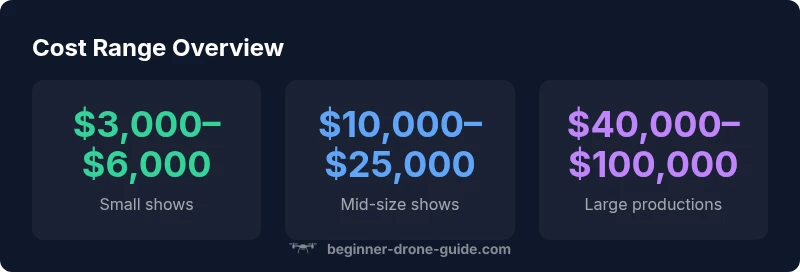
To give you a practical sense of range, consider three common scenarios. A small show (5 drones, 15–20 minutes) might cost roughly in the lower thousands, with most spend on equipment rental and a lean crew. A mid-size show (20–30 drones, 30–45 minutes) typically falls into a mid-range budget, driven by more drones, extended flight time, and enhanced safety protocols. A large production (40+ drones, 45–60 minutes) involves sophisticated choreography, multiple teams, extensive permits, insurance, and contingency planning, often resulting in a high five-figure or six-figure expenditure. These outlines show how scale drives cost, and why two shows with similar diameter can differ substantially based on safety, compliance, and storytelling complexity.
Practical Tips to Lower Costs Without Compromising Safety
Smart budgeting often means prioritizing safety and scalability. Consider batching rehearsals to reduce on-site waste, using pre-programmed routines to cut flight time, and selecting a drone fleet that balances performance with reliability. Reusing geofenced flight paths, light configurations, and show blocks across events can amortize setup costs. If you’re new, start with a smaller pilot show to validate concepts before expanding. Compare quotes from multiple providers to identify hidden fees and negotiate bundled services (permits, insurance, and tech support). Shortening the show duration or reducing the total drone count can yield meaningful savings without sacrificing audience impact.
Real-World Considerations: When a Drone Show Makes Sense
For beginners evaluating whether to invest in a drone show, align the project with clear objectives—branding, education, or entertainment—and assess audience reach. If the goal is outreach, consider the return on engagement, media coverage potential, and sponsorship opportunities that can offset costs. For private events, confirm venue compatibility and participant safety plans to avoid delays. If your aims are experimental or educational, a smaller, rehearsed display can deliver impact at a fraction of the cost of large-scale productions. The decision hinges on your goals, timeline, and risk tolerance, not just the sticker price.
Key cost drivers and typical ranges for drone shows
| Factor | Typical Range | Notes |
|---|---|---|
| Show length | 30–60 minutes | Includes setup/teardown time |
| Drone count | 5–40 | Higher counts increase cost and complexity |
| Crew size | 3–10 | Pilots, safety, tech support |
| Permits & insurance | Varies widely | Location- and duration-dependent |
Frequently Asked Questions
Are drone shows expensive for hobbyists?
Costs can be affordable for small, staged displays, especially if you use a compact drone fleet and pre-programmed routines. Budgets rise quickly with more drones, longer runtimes, and enhanced safety measures.
For hobbyists, small, pre-programmed shows are possible within a modest budget, but costs scale up with drone count and safety needs.
What drives the biggest cost in a drone show?
The largest costs usually come from staffing (pilots and safety crew), permits and insurance, and the drone fleet size. Complex choreography and longer run times also push totals upward.
Staffing, permits, and the number of drones typically drive most of the cost.
Do licensing or permits always add to the cost?
Not always, but local regulations often require permits and coordination with authorities, which adds time and money. Costs vary by location, venue, and flight duration.
Permits and coordination can add time and money, depending on where you fly.
How can beginners budget for a drone show?
Start with a clear objective, choose a modest drone count, and use pre-programmed routines. Get multiple quotes, and plan for permits and insurance early to avoid last-minute costs.
Begin with a simple concept, keep drones few, and compare quotes early.
Are there cheaper alternatives to full drone shows?
Yes—consider ground-based light shows, smaller drone displays, or hybrid formats with projections and light effects. These can deliver impact at a lower overall cost while preserving audience engagement.
Smaller or hybrid formats can still wow audiences at lower costs.
“Drone shows are not inherently expensive; costs reflect scale, safety, and required permits. With thoughtful planning, you can tailor a budget that meets your goals.”
Quick Summary
- Plan for scale to control costs
- Account for permitting and insurance early
- Leverage smaller fleets for budget-friendly shows
- Invest in clear objectives to maximize value
- Compare quotes across vendors to avoid surprises