How Much Does a Drone Show Cost in 2026? A Practical Guide
Explore drone show pricing: factors, typical ranges, and budgeting tips for beginners. Learn how duration, complexity, and location drive costs from micro displays to large-scale spectacles.


Drone show pricing varies widely by duration, choreography, drone count, location, licensing, and insurance. For a typical 3-5 minute show aimed at a local audience, prices commonly start in the low thousands. More complex, multi-song performances with hundreds of drones and detailed lighting can run into tens of thousands, while large, corporate-scale productions may exceed six figures.
What goes into drone show pricing
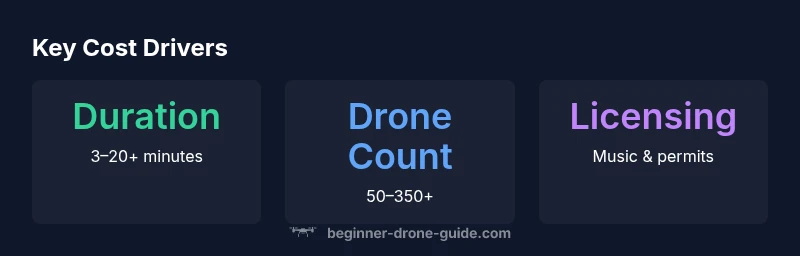
When someone asks, how much does a drone show cost, the answer depends on more than the drone count. A price tag reflects the entire production pipeline: pre-production planning, choreography, content rights, on-site pilots, safety observers, travel, setup and teardown, rehearsals, and post-event reporting. For many organizers, the bottom line includes licensing, insurance, and permits required by the venue and local authorities. The broad factors include the duration of the show, the number of drones, the complexity of formations, the required lighting and music synchronization, and the venue’s constraints. Location matters because travel time and accommodation for the crew add to the cost. If a content creator provides original choreography, there may be additional rights fees. Finally, contingency allowances are common for weather delays or tech issues. Across the industry, budgets swing widely, from a few thousand dollars for a simple local showcase to six-figure investments for large corporate events. Understanding these components helps beginners budget accurately and avoid sticker shock. According to Beginner Drone Guide analysis, a thoughtful, well-scoped brief with clear deliverables reduces cost inflation and accelerates quoting.
Price ranges by show scale
Rough, typical ranges as of 2026 help organizers budget before requesting formal proposals. Note that these figures depend on duration, drone count, choreography complexity, licensing, and venue logistics. For reference:
- Micro shows (3-5 minutes): roughly $2,000–$6,000
- Small shows (5-10 minutes): roughly $6,000–$20,000
- Mid-size shows (10-20 minutes): roughly $20,000–$60,000
- Large/Corporate shows (20+ minutes): roughly $60,000–$150,000+
The exact price will hinge on factors like the number of song changes, formation shapes, and whether pyrotechnic or lighting integrations are requested. These ranges come from industry conversations and the Beginner Drone Guide Analysis, 2026, and should be treated as directional guidance rather than firm quotes.
Add-ons and hidden costs to plan for
Budgeting for a drone show means looking beyond the base production fee. Add-ons frequently include music licensing or rights, venue permits, insurance (often a percentage of the show cost), travel and accommodation, rehearsals, content creation fees, crew per diems, and contingency funds for weather or equipment failures. Some productions require generators, transport of large drone fleets, or specialized ground lighting, which can add to the bottom line. It’s essential to confirm inclusions up front: is the show fully choreographed, who provides the music rights, and are there post-event deliverables? Clear scope documentation helps avoid surprise invoices at the end of the project.
How to estimate costs for your event
A practical estimation approach starts with a clear brief: goal, audience size, venue, date, and desired impact. Gather at least three quotes from reputable providers and compare not just price but inclusions. Ask for a written scope of work, proposed shot list, drone count, flight duration, rehearsals, and safety plan. Get a breakdown of travel, accommodations, permits, insurance, and any post-production work. If the event requires custom choreography, request a sample timeline and a rights clause. Use a simple budgeting template to map costs against contingency (typically 10–15%) and potential tax considerations. Finally, request references or case studies from similar shows to validate pricing expectations and service quality.
Tips for getting value and avoiding surprises
- Define success metrics early (e.g., estimated impressions, social reach, or client branding goals).
- Ask for a detailed line-item quote and written scope of work.
- Compare quotes from at least three providers to understand market rates.
- Clarify what is included (music rights, rehearsal time, content creation, rights to footage).
- Check venue rules and insurance requirements to avoid last-minute changes.
- Request a rehearsal schedule and a robust safety plan.
- Build a realistic timetable with a buffer for weather or gear issues.
- Seek references from past clients and review outcomes from similar events.
- Consider phased shows or shorter segments to test feasibility within budget.
- Plan for post-event deliverables (video edits, drone footage rights, and score sheets).
Real-world scenarios and budgeting templates
Scenario A: Local school or community event (3–5 minutes, ~50 drones, daylight)
- Estimated cost: roughly $3,500–$8,000 depending on location and permits.
- Inclusions: choreographed sequences, safety officers, basic insurance, and on-site crew.
Scenario B: Brand activation (10–15 minutes, 120–180 drones, evening show)
- Estimated cost: roughly $40,000–$120,000 depending on music rights and content complexity.
- Inclusions: original choreography, premium lighting synchronization, two rehearsals, and licensing.
Scenario C: Stadium-scale show (20+ minutes, 200–300 drones, multi-song)
- Estimated cost: roughly $70,000–$200,000+ depending on venue constraints, permitting, and logistically complex content.
- Inclusions: extensive safety staff, advanced choreography, licensing, and full production crew.
These scenarios illustrate how scope, scale, and venue shape the budget. Use them as starting templates, then adjust for your local market and the specifics of your event.
Licensing, permits, and insurance considerations
Licensing and permit costs vary by jurisdiction and venue. In many places, music rights must be secured for synchronized drone performances, especially for public or commercial events. Insurance is a standard cost to cover liability and property damage, typically calculated as a percentage of the show cost or a flat minimum. Permits may be required for large drone fleets or operations near airports or tall structures. In addition to upfront costs, it’s wise to budget for potential weather-related delays, which can trigger rescheduling fees. Knowing the regulatory environment of your event location helps prevent last-minute surprises and ensures a compliant, safe show.
Estimated cost ranges by show scale
| Show Type | Typical Duration | Drones Used | Estimated Price Range |
|---|---|---|---|
| Micro (3-5 min) | 3–5 minutes | 50–100 drones | $2,000–$6,000 |
| Small (5-10 min) | 5–10 minutes | 100–200 drones | $6,000–$20,000 |
| Mid-size (10-20 min) | 10–20 minutes | 200–350 drones | $20,000–$60,000 |
| Large (20+ min) | 20+ minutes | 350+ drones | $60,000–$150,000+ |
Frequently Asked Questions
What factors influence drone show pricing the most?
The leading price drivers are show duration, drone count, choreography complexity, venue-related permits, licensing for music, and insurance. Travel and crew costs also push prices higher for out-of-town locations.
The main price drivers are duration, drones, and choreography, plus permits and insurance. Travel adds to the total for distant venues.
Are there hidden costs besides the show fee?
Yes. Typical additions include music licensing, permits, insurance, rehearsals, travel, and on-site safety personnel. Ask for a line-item breakdown to see exactly what’s included.
Hidden costs often include licenses, permits, insurance, rehearsals, and travel. Get a clear line-item quote.
How far in advance should I book a drone show?
Beginner-friendly planning suggests booking at least 6–12 weeks ahead for smaller events and 3–6 months for large productions to secure crew and permits.
Book early—usually several weeks to months ahead, depending on show size.
Can a drone show be scaled for a small budget?
Yes. Scaling can mean reducing duration, drone count, and complexity. Focusing on a few dramatic formations often preserves impact while lowering costs.
You can scale by shortening the show, using fewer drones, and simplifying formations.
How does licensing affect pricing?
Music licensing is a common cost that can significantly affect the total. Some shows use royalty-free tracks to reduce costs, while others purchase synchronized music rights.
Music rights can be a big part of the bill; consider tracks with licensing options.
What is the typical lead time for a drone show?
Lead times vary, but planning 4–12 weeks for small shows and 3–6 months for larger productions helps ensure availability and permits.
Most shows need several weeks to months lead time depending on scale.
“Pricing for drone shows is driven by more than the drone count; it reflects choreography, safety compliance, licensing, and venue logistics. A well-scoped brief helps you achieve your goals without inflating costs.”
Quick Summary
- Costs vary widely by scale, duration, and location
- Budget for licensing, insurance, and permits
- Get multiple quotes to compare inclusions
- Ask for a clear scope of work to prevent surprises
- Plan for contingencies like weather and scheduling