How Drones Deliver Packages: A Beginner's Guide
Learn how drones deliver packages, covering core tech, flight planning, safety steps, and beginner-friendly workflows from planning to handoff. Practical tips for safe, legal practice and real-world testing.


How do drones make deliveries? This quick answer outlines the end-to-end delivery workflow, from mission planning to payload release. You’ll learn the essential components, safety steps, regulatory basics, and practical checks for safe, compliant small-scale deliveries in real-world environments. This is tailored for beginners, emphasizing safety, legality, and hands-on practice with simple payloads.
Key components that enable drone delivery
To understand how do drones make deliveries, we start with the core hardware and software that enable reliable, safe payload transport. A typical delivery drone combines a robust flight controller, propulsion system, and onboard sensors with a payload release mechanism. The flight controller processes GPS data, sensor inputs, and mission parameters to keep the drone stable, on course, and within safe operating limits. Batteries and power management govern endurance, while a communication link with the ground station ensures updates, commands, and emergency responses. Payload-related systems include secure payload bays and a release mechanism that can be triggered remotely or autonomously. Ground control software coordinates mission planning, weather checks, geofencing, and real-time telemetry. Mastery of these components helps beginners understand the feasibility and safety considerations of delivery flight.
Typical delivery workflow
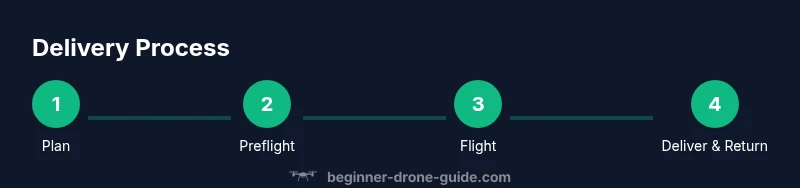
A standard delivery workflow starts with mission planning: defining the drop location, flight path, and return point. Before launch, pilots perform a preflight checklist that covers battery health, propeller condition, wind estimates, and airspace restrictions. Once cleared, the drone executes the planned route using GPS, obstacle avoidance, and geofencing to stay within permitted airspace. When the drone reaches the drop zone, the payload release is triggered in a controlled manner, and the drone returns to its base or a designated landing area. Post-flight data logging and inspection complete the cycle. Throughout, safety is paramount: keep clear of people, ensure line-of-sight where required, and comply with local laws.
Drones types and payload systems
Delivery drones vary from compact multi-rotors to more capable fixed-wing hybrids. Most beginner-friendly options are multi-rotors that can hover, hold a stable position, and maneuver in tight spaces. Payload systems range from simple hook-and-release mechanisms to secure cargo bays with tamper-evident features. Selecting a system depends on payload weight, balance, and release reliability. Beginners should start with lightweight, non-fragile payloads and gradually scale up as confidence and regulatory comfort grow. Safe handling of payloads includes secure packaging, proper weight distribution, and verification that the release mechanism operates smoothly under flight conditions.
Navigation, safety, and compliance
Navigation relies on GPS and on-board sensors to maintain a stable flight path. Advanced features like obstacle avoidance, geofencing, and BVLOS (beyond visual line of sight) considerations come into play as operations expand. Safety practices include maintaining a clear takeoff and landing zone, having a ground observer where required, and ensuring contingency plans for loss of signal or GPS. Compliance means knowing local airspace rules, pilot qualifications, and permit requirements. For beginners, start with Line-of-Sight (LOS) flights in open spaces and gradually work toward larger, legally compliant missions as experience grows.
Real-world constraints and beginner tips
Weather, battery life, wind, and payload size critically affect performance. Light wind (where legally permissible) improves stability and control, while heavier gusts demand tighter preflight checks or postponement. Battery capacity dictates how far and how long a mission can run; always carry spare batteries and plan for contingency landings. Payloads should be lightweight and securely packaged to maintain center of gravity and balance. Start with small, simple operations in controlled environments, gradually increasing mission complexity while documenting lessons learned for future flights.
Practical examples and starter projects
A practical starter project is a supervised indoor-to-outdoor test that includes a tiny payload, such as a lightweight water bottle, strapped securely in a stable bay. Document the mission: route, battery consumption, wind conditions, landing accuracy, and release timing. Another beginner-friendly activity is a simulated delivery trial using ground-based markers to mimic a drop zone. Use these projects to build a repeatable checklist that you can apply to real-world deliveries while staying within local rules and safety guidelines.
The future of drone delivery in practice
As technology evolves, more drones will feature autonomous planning, enhanced sensors, and smarter handoff methods. Practically, this means more predictable delivery times, safer routing, and easier compliance with long-range regulations. For beginners, the key is to master the basics: preflight checks, battery management, payload handling, and compliant flight planning. The trend toward BVLOS and urban integration will continue to expand, requiring ongoing education and safe practices.
Tools & Materials
- Delivery-capable multi-rotor drone(Quadcopter or similar with payload release option)
- Payload release mechanism(Secure, tested for controlled drops)
- Spare batteries(High-discharge LiPo or equivalent)
- Payload packaging materials(Lightweight, cushioned, labeled)
- Ground control software/app(Flight planning, telemetry, logs)
- GPS and GNSS connectivity(Reliable signal for navigation)
- Obstacle avoidance sensors(Proximity sensing for safety)
- Launch/landing area markers(Clearly defined zones)
- Personal protective equipment (PPE)(Gloves, eye protection for ground crew)
- Preflight checklist document(Standardized checks for every flight)
Steps
Estimated time: 60-120 minutes
- 1
Define mission and constraints
Identify objective, payload type, weight limits, and regulatory constraints. Establish a safe drop zone and return point. Verify weather and visibility before any flight.
Tip: Document all constraints before planning. - 2
Prepare the drone and payload
Inspect airframe, battery health, propellers, and release mechanism. Ensure payload is securely housed and balanced to avoid instability during flight.
Tip: Balance is key to precise drops. - 3
Plan the flight path
Create a GPS-based route with waypoints, altitude targets, and contingency landing options. Check airspace permissions and geofencing boundaries.
Tip: Keep the route within visual line of sight where required. - 4
Perform preflight checks
Test radio link, sensors, GPS lock, and return-to-home function. Verify that the drop mechanism functions on the ground.
Tip: Run a dry-run with no payload first. - 5
Execute the flight
Launch from a clear area, monitor telemetry, and ensure safe navigation. Maintain awareness of people and obstacles along the path.
Tip: Be ready to abort if winds increase. - 6
Release payload and return
Trigger the payload release within the designated zone and initiate the return sequence. Land smoothly and confirm payload delivery in logs.
Tip: Verify drop accuracy with ground markers. - 7
Post-flight review
Review flight data, battery usage, and any deviations. Update the checklist for future missions and file any required regulatory reports.
Tip: Note any weather or equipment issues for improvements.
Frequently Asked Questions
What safety measures are required for drone deliveries?
Effective drone deliveries require a formal safety plan, preflight checks, geofencing, and compliance with airspace rules. Use a ground observer when needed and have contingency procedures for loss of control or GPS signal. Always keep people clear of the drop zone.
Safety starts with a solid preflight check and compliant airspace use. Have a clear drop zone and contingency plans.
Do I need a license to operate delivery drones?
Licensing varies by country. Many regions require a remote pilot certificate or commercial operating permit for drone deliveries. Check local aviation authority requirements and obtain the recommended credentials before attempting deliveries.
Licensing depends on your country. Check with your aviation authority and get authorized before commercial work.
What payload limits apply to beginner drones?
Payload limits depend on the drone model and manufacturer recommendations. Start with very light payloads and gradually increase as you verify stability, battery life, and control reliability within legal limits.
Begin with light payloads and verify stability and battery life before increasing weight.
Can drones deliver beyond visual line of sight (BVLOS)?
BVLOS deliveries require special permissions, pilot training, and technology such as detect-and-avoid systems. For beginners, stay within visual line of sight and upgrade to compliant BVLOS operations as you gain experience and approvals.
BVLOS needs special permissions and safety systems. Start with line-of-sight flights.
What weather conditions are safe for drone deliveries?
Clear weather with good visibility is essential. Wind, rain, and extreme temperatures can affect stability, battery performance, and control accuracy. Plan flights for favorable conditions and postpone when conditions worsen.
Fly in clear, calm conditions and avoid bad weather.
What are common challenges when prototyping drone delivery?
Prototyping often faces payload balance, battery life, airspace restrictions, and reliability of the release mechanism. Tackle these by incremental testing, rigorous logging, and compliance checks before scaling up.
Expect balance, power, and regulatory hurdles; address with careful testing and documentation.
Watch Video
Quick Summary
- Plan missions thoroughly before flight.
- Choose appropriate payload methods for stability.
- Follow local rules and safety practices.
- Document flights and learn from each mission.