Drone Testing Near Me: A Practical Guide for Beginners
Find practical, beginner-friendly guidance on locating drone testing near me, what to expect, and how to compare local providers for safe, compliant flight evaluations.


Drone testing near me refers to locating local providers or certified practitioners who perform flight tests, safety evaluations, and calibration checks to verify airworthiness and safe operation. This quick answer helps beginners understand what to look for, how to assess credibility, and where to start the search for nearby testing options.
Understanding the landscape of drone testing near me
When you search for drone testing near me, you’re looking for local resources that can objectively assess your drone’s airworthiness, calibrate sensors, and validate flight performance in real-world conditions. The phrase encompasses both private testing facilities and aviation-safe community workshops that offer hands-on flight evaluations. The most valuable providers typically combine standardized checklists with transparent safety records. For beginners, this means focusing on providers with documented procedures, clear insurance coverage, and accessible educational materials. Understanding the local ecosystem helps you plan testing around your schedule and ensure you meet regional requirements while minimizing downtime between flights.
How to vet local testing providers
Finding credible drone testing near me starts with credible signs: verified certifications, reputable customer reviews, and a transparent scope of work. Look for providers that publish a safety policy, maintain equipment checklists, and offer a pre-test briefing. Ask about liability coverage, risk mitigation strategies, and whether the session includes post-test debriefs with written recommendations. Compare multiple options to balance price, availability, and demonstrated expertise. Remember to verify that the staff understand applicable airspace rules and can tailor tests to your drone type (multi-rotor, fixed-wing, or FPV).
What to expect during a typical testing session
A standard session under drone testing near me usually includes a pre-test briefing, battery and systems checks, and a controlled flight sequence to evaluate stability, control responsiveness, and sensor accuracy. Expect calibration steps for IMU, magnetometer, GPS lock, and compass alignment. The test will often have baseline tests for hover, pitch, roll, and yaw, followed by maneuver tests in a safe area. Documentation is common, with a debrief outlining recommended maintenance, firmware updates, and any required retests. Pack essential parts, like extra batteries, propellers, and a copy of your drone’s maintenance log.
Core tests you might encounter and why they matter
Core tests typically cover flight readiness, sensor calibration, and safety compliance. A flight readiness check ensures controls respond accurately, returns function correctly, and failsafes engage when required. Sensor calibration confirms GPS and compass accuracy, reducing drift during autonomous or assisted flight. Safety tests assess obstacle avoidance, geofence integrity, and emergency kill-switch reliability. Understanding these tests helps you anticipate what a test might measure and how to prepare, especially if you rely on your drone for mapping, photography, or surveying.
Logistics: scheduling, travel, and safety
When planning drone testing near me, consider travel time, parking access, and the testing venue’s safety rules. Schedule around weather windows that minimize wind and precipitation, which can affect outcomes. Bring your drone’s flight logs, firmware version, and a copy of your pilot certificate if applicable. Verify that the testing site has a safe, open area for flight and that observers remain at a safe distance. Confirm what you should bring (laptop for data, propeller guards, etc.) and whether the session includes a post-test written report or digital file sharing for your records.
Regulatory considerations when testing locally
Local testing often intersects with regulatory requirements. Ensure the provider is familiar with airspace restrictions, no-fly zones, and the need for waivers or permits for advanced maneuvers. Some sessions may discuss operational limitations, geofencing exceptions, or additional training prerequisites for complex missions. For beginners, it’s crucial to understand how testing outcomes translate into compliant, safe operations in your jurisdiction. A reputable provider will explain these rules in plain language and help you plan compliant test flights.
Real-world use cases and examples
Test sessions are frequently used before real projects, such as real estate photography flights, agricultural surveys, or inspection workflows. For a new pilot, nearby testing helps validate which safety practices reduce risk when your drone performs complex maneuvers over people or property. After a local test, you’ll have a documented record of performance, recommended maintenance, and a plan to improve reliability for upcoming assignments. This practical approach can shorten the learning curve and build confidence in your day-to-day operations.
Common local testing options and what to expect
| Test Type | Typical Duration | Notes |
|---|---|---|
| Flight readiness check | 60-120 minutes | Assesses controls, failsafes, and posture |
| Calibration and sensor test | 20-60 minutes | GPS, IMU, compass alignment |
| Safety and compliance review | 30-90 minutes | Geofence awareness, obstacle avoidance |
| Post-test debrief | 15-30 minutes | Recommendations and maintenance plan |
Frequently Asked Questions
What counts as drone testing near me?
Local testing usually involves flight evaluation, sensor calibration, and safety checks conducted in a controlled environment. It helps verify airworthiness, safety margins, and adherence to regulations before you fly in real missions.
Local testing means flight checks, sensor calibration, and safety reviews in a controlled space to confirm airworthiness before real flights.
How do I locate testing near me?
Start with certified flight schools, UAS clubs, or commercial testing facilities. Use search terms like drone testing near me and verify credentials on provider websites and professional associations.
Look for certified flight schools or testing facilities and verify credentials on their sites and with associations.
Are there licensing requirements tied to testing sessions?
Testing sessions often align with ongoing licensing or certification needs but do not replace required licenses. They provide practice, documentation, and a baseline for regulatory compliance.
Tests help with compliance, but they don’t replace required licenses; they prepare you and document your readiness.
How long does a typical testing session take?
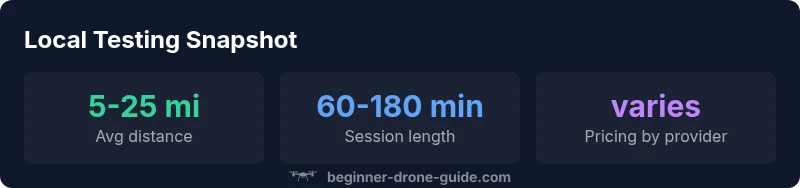
Most sessions run from 60 to 180 minutes depending on drone type, complexity, and the testing scope. Expect a briefing, multiple runs, and a post-test debrief.
Most tests last about an hour to a few hours, including briefing and debrief.
What should I bring to a testing session?
Bring your drone, spare parts, logs, firmware version, a safety checklist, and any pilots’ certifications. Some providers supply props, but it’s best to confirm beforehand.
Bring your drone, logs, firmware version, and safety checklist; confirm what the provider supplies.
“Reliable drone testing near me relies on standardized checklists, transparent safety records, and clear post-test guidance. When providers follow these practices, pilots gain real confidence in airborne operations.”
Quick Summary
- Plan ahead: research multiple providers before booking
- Check credentials, insurance, and safety policies
- Bring logs and maintenance records to the session
- Expect a written debrief with actionable steps