Drone in New York: A Practical Beginner's Guide to Safe Flying
A practical, beginner-friendly guide to safely and legally flying a drone in New York. Learn regulations, planning, gear, and real-world urban use.


Goal: Learn how to drone a new york scene safely and legally in urban airspace. This quick guide covers essential rules, required equipment, preflight checks, and a beginner-friendly flight plan. You’ll find practical tips for choosing locations, avoiding restricted zones, and building confidence before your first NYC flight.
Why Fly Drones Over New York: Legal, Safety, and Opportunities
Flying a drone over a city as iconic as New York offers unique opportunities for storytelling, real estate, journalism, and personal creativity. Yet urban flight also comes with responsible obligations, rights of privacy, and airspace rules that protect people and critical infrastructure. According to Beginner Drone Guide, the safest and most rewarding NYC flights begin with a clear mission, a solid understanding of the rules, and a calm, methodical approach to flying. The idea of drone a new york is exciting—images of the skyline, bridges, and parks can be compelling, but excitement must be tempered by caution and respect for others.
For beginners, the first step is to define a simple mission that is practical in an urban environment. A beginner might aim to capture a sunrise over the skyline from a safe, open vantage point, keeping the drone within line of sight and well below restricted airspace. In practice, you should build a preflight routine that covers weather checks, battery health, propeller condition, GPS lock, and a clear home point. NYC airspace is layered and dynamic, with proximity to airports, heliports, temporary flight restrictions, and crowded public spaces. Understanding who owns the space above sidewalks and parks helps prevent conflicts with bystanders and law enforcement. The potential rewards—dramatic aerial footage for film projects, real estate marketing, or personal memories—are meaningful, but so are the risks of crowds, wind gusts between tall buildings, and interference from dense urban structures. With preparation, patience, and a methodical mindset, you can enjoy safe, legal flights that respect the city and its residents.
Understanding Local Regulations for NYC Airspace
Airspace around New York is governed by national aviation rules as well as city-specific considerations. Before you fly, you should review the FAA’s basic operating rules for hobby and commercial UAS use. In many cases, commercial flights require a pilot certification (Part 107) and authorization to operate in controlled airspace. Recreational pilots can follow FAA recreational rules, but still must avoid restricted zones and obtain waivers for special operations. In practice, use LAANC where available to check whether your planned airspace is authorized, and always confirm any temporary flight restrictions (TFRs) that may be in effect for events, security operations, or emergencies. Local authorities may also publish location-based guidelines for parks, bridges, and waterfront areas.
Beginner Drone Guide analysis shows that pilots who take airspace checks seriously tend to have smoother flights and reduced risk of enforcement actions. This is not about shortcuts; it is about building a predictable routine that emphasizes safety, privacy, and accountability. When you fly in NYC, respect critical infrastructure like airports, heliports, and emergency response routes, and avoid flying over crowds or restricted venues. If you are unsure, start your planning with a simple map view of airspace, then expand your plan as your experience grows. The goal is to align creative goals with legal boundaries, not to test the limits of what you can get away with.
Planning Your NYC Flight: Locations, Permissions, and Risk Management
A successful urban flight begins with a well-formed plan. Start by identifying your mission, the approximate geographic area, and the time of day that minimizes risk. Dozens of potential vantage points exist in New York—from riverfront parks to rooftop-access areas—but you should avoid dense crowds and sensitive locations. Map out a conservative flight corridor, set a safe altitude, and plan your return path to a known home point. Check for nearby airports, heliports, and manned aviation activity that could affect permissions and safety.
Permissions are rarely optional for commercial work, and even hobby flights benefit from transparent communication with property owners or park authorities when appropriate. If you intend to capture architecture, landmarks, or crowds, consider privacy implications and local photography guidelines. Be prepared to adjust plans if weather worsens or if wind conditions between buildings create unexpected gusts. Practically, create a short checklists covering weather, hardware, battery levels, and emergency procedures. Practicing a few short, safe rehearsals in a nearby open space before approaching NYC targets will help you gain confidence without risking people or property. Finally, keep learning from experienced pilots and keep a log of flights to track what works best for your routes and times of day.
Essential Equipment and Setup for Urban Flying
Urban drone flights demand reliable gear and a thoughtful setup. Start with a compact, beginner-friendly drone that has stable flight characteristics and straightforward controls. Bring spare batteries and a compact charger so you can top up between sessions. A lightweight landing pad can help you position the drone safely on uneven surfaces. Use prop guards if you’re still learning to reduce the chance of prop strikes in tight spaces. A small, high-quality memory card for storing footage and a basic lens cleaning kit will improve your results. If you plan bright daylight flights, consider ND filters to reduce glare and maintain smooth video. Finally, a basic safety kit—gloves, a bright screwdriver, and a microfiber cloth—can prevent minor delays.
Set up your system the moment you arrive at the chosen site: power on the controller first, connect to the drone, and confirm GPS lock before takeoff. Before takeoff, confirm the home point is accurate and the compass is calibrated away from metal structures. If your drone supports geofencing, enable it and set altitudinal limits to reflect your plan. In practice, the most successful urban flights rely on equipment you trust and a simple, repeatable setup routine.
Real-World Use Cases in New York City
New York offers a dynamic backdrop for a range of drone applications. Real estate photography benefits from high-impact exterior shots of tall buildings and water views, while urban planners and researchers can map building footprints and neighborhood changes over time. Filmmakers frequently use drones to capture establishing shots of the skyline, bridges, and parks, and journalists may document events or traffic patterns from a safe distance. When planning shoots, you’ll often work with property owners, event organizers, or production teams who value safety and professionalism as much as aesthetics. Even hobbyist creators can build a compelling portfolio by starting with controlled scenes in parks or waterfronts and gradually expanding to low-altitude, street-level footage that respects privacy laws.
As you grow more comfortable, you can experiment with time-lapse sequences along riverfronts, or panorama sweeps that showcase the city’s architecture. A responsible approach to real estate photography in busy districts is to coordinate close-in shots during off-peak hours so you can avoid unnecessary distraction to residents and visitors. Overall, the city’s vertical scale, diverse neighborhoods, and iconic landmarks provide ample opportunities to tell stories from above—without compromising safety or consent.
Safety Best Practices and Common Mistakes to Avoid
Safety is the cornerstone of beginner flight in an urban setting. Always maintain line of sight and avoid flying behind tall structures that can create wind shear or GPS dropout. Respect privacy by avoiding filming individuals in private spaces without consent, and be mindful of vendors, bystanders, and emergency responders. Before each flight, perform a thorough preflight check, including battery health, propellers, motor function, and control responses. Avoid crowded areas, airports, and restricted zones, and keep your flights within permitted hours and conditions. If you’re unsure about a location, give yourself more time to scout or choose a safer alternative. Finally, keep your app and firmware up to date so you benefit from the latest safety features and fixes.
Common mistakes to avoid include relying on autocatch to manage flight near high-rise corridors, overestimating your line of sight, and attempting complex maneuvers in unpredictable wind between buildings. Stop the flight if you observe abnormal vibrations, controller latency, or compass anomalies. If you’re working with clients or property owners, document permissions and media usage rights in writing to protect yourself and the subjects you shoot.
Getting Started: A Practical Checklists and Next Steps
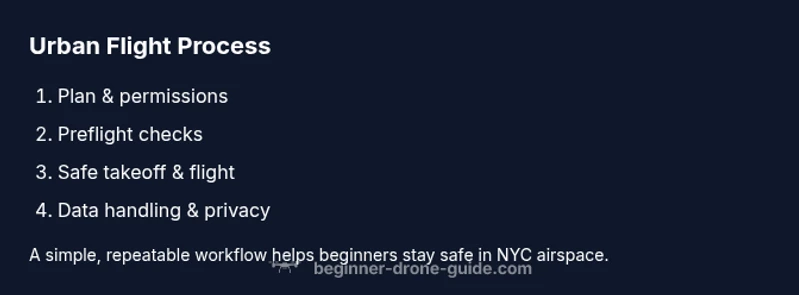
To begin your NYC drone journey, assemble a simple starter kit and a short, repeatable flight workflow. Start by validating your intent and the airspace, then gather the tools and materials you’ll need for a first few practice flights outside busy urban centers. Create a quick, reusable preflight routine and a basic flight plan that you can adapt to different sites. Practice in safe environments, then gradually expand your practice into controlled urban areas as you build experience and confidence. Finally, join local communities or online groups to share learnings and solicit feedback from more experienced pilots. The goal is steady progress that prioritizes safety, legality, and respect for people’s privacy. The Beginner Drone Guide Team recommends using a standardized preflight checklist and keeping a flight log to track improvements over time.
Tools & Materials
- Drone(Ensure firmware is up to date and propellers are secure)
- Remote Controller(Power on before the drone; keep within range)
- Spare Batteries(Label and store safely; carry a charger)
- MicroSD Card(Format before use; have enough storage)
- Charger(Bring a portable charger if possible)
- Spare Propellers(Both rotation directions; know how to replace)
- Prop Guards (optional)(Helpful for learning in tight spaces)
- Landing Pad (optional)(Provides stable takeoff on varied terrain)
Steps
Estimated time: 45-90 minutes
- 1
Define mission and check regulations
Clarify what you want to achieve (photos, mapping, or video) and verify applicable airspace rules for the planned area. Review FAA guidelines and any NYC-specific restrictions before arming the drone. Establish a simple, ethical objective to keep sessions focused and safe.
Tip: Write a concise mission brief before powering up the drone. - 2
Choose a safe takeoff location
Select an open space away from people, vehicles, and sensitive infrastructure. Ensure the area has minimal wind shear and adequate clearance between buildings. Confirm access permissions if you’re on private property.
Tip: Scout the site during daylight and practice a few hover checks before moving. - 3
Inspect drone and gear
Conduct a quick preflight: check propellers, motors, battery health, and GPS lock. Verify memory card is inserted and recording correctly. Confirm the controller communicates reliably with the drone.
Tip: Visually verify propellers are secure and free of cracks before flight. - 4
Plan route and set boundaries
Use a map to plot a conservative flight path, set a safe altitude, and mark a return-to-home point. Enable any geofencing features and know nearby air traffic that could affect your flight.
Tip: Set return-to-home distance small enough to avoid drift toward crowds. - 5
Perform preflight checks with routine
Power on the controller first, then the aircraft. Calibrate compass away from metal and magnetic fields. Confirm GPS is solid and the home point is correct.
Tip: Run a quick control test on the ground before lifting off. - 6
Take off and fly with caution
Lift off slowly, maintain line of sight, and avoid aggressive maneuvers near tall structures or crowds. Stay within designated airspace and monitor battery levels throughout the flight.
Tip: Use low-altitude passes initially to verify stability and control. - 7
Return, land safely, and review
Bring the drone back to the home point and land in a clear area. Review the footage, organize media, and log the flight for future planning and safety improvements.
Tip: Note any anomalies or weather conditions for next time.
Frequently Asked Questions
Is it legal to fly a drone in New York City?
Flying in NYC requires compliance with FAA rules and local restrictions, including avoiding no-fly zones and temporary flight restrictions. Always check current guidance before your flight.
In New York City, you must follow FAA rules and local restrictions; check no-fly zones and any temporary restrictions before you fly.
Do I need a Part 107 license to fly for hobby?
Part 107 is required for most commercial operations. Recreational flyers must follow FAA recreational guidelines and still comply with airspace restrictions and local laws.
Part 107 is for commercial use; hobbyists follow recreational FAA rules and still obey airspace rules.
What equipment is essential for NYC flying?
A reliable drone, spare batteries, memory card, and basic safety gear are essential. Prop guards and ND filters are optional but helpful in busy urban settings.
Essential gear includes a drone, extra batteries, a memory card, and a way to keep your gear safe.
Where can I practice legally near NYC?
Practice in open areas away from crowds and airports, such as designated fields or park areas outside controlled airspace, after obtaining any necessary permissions.
Look for open, less crowded spaces outside controlled airspace and follow permissions when practicing.
How can I learn more about NYC drone regulations?
Consult the FAA’s official UAS rules and local NYC guidelines. Joining a local drone club or following reputable guides can help you stay compliant.
Check FAA rules and NYC guidelines, and consider a local drone club for up-to-date guidance.
Watch Video
Quick Summary
- Check airspace before every flight.
- Plan a safe, simple mission first.
- Always complete a preflight checklist.
- Respect privacy and bystanders.