How Much Drone Camera Costs: A Beginner’s Guide
Discover how much drone cameras cost for beginners, including realistic price ranges, key drivers, and tips to buy smart without overpaying.


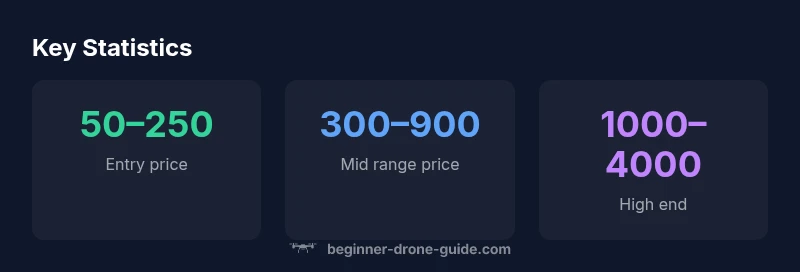
When you ask how much drone camera gear costs, the answer hinges on sensor size, stabilization, and integration. For beginners, entry-level gear sits in the low hundreds of USD, mid-range setups span a few hundred to around a thousand, and high-end professional cameras can exceed a thousand dollars depending on features. This snapshot helps you set a realistic budget fast.
What drives the cost of a drone camera?
If you’re asking how much drone camera gear costs, you’re really asking about which features and components define value. The core cost drivers are sensor size and image quality, stabilization capabilities, frame rate and video resolution, weight and power requirements, and how the camera is integrated with the drone (mounted module vs. built-in). A larger sensor typically delivers better low-light performance and dynamic range, but it also adds price, weight, and sometimes power demands. Stabilization is another major factor: a simple electronic stabilization system is cheaper than a robust 3-axis gimbal with mechanical stabilization. Finally, higher frame rates, higher resolution, and advanced color profiles tend to push prices upward as the production workflow becomes more demanding. For beginners, a balanced package often means choosing a camera that offers solid 1080p or 4K footage with reliable stabilization and reasonable weight, rather than chasing top-tier specs that add little practical value to everyday flights.
According to Beginner Drone Guide, the total value of a drone camera is not just the sticker price; it’s about how that camera performs in your typical flying conditions and how easy it is to use for your projects. This perspective helps avoid overspending on features you won’t use right away.
Price ranges: entry-level, mid-range, and professional
Price bands help buyers map expectations against actual needs. Entry-level cameras and modules are designed for hobbyists and casual shooters, offering basic 1080p to 1440p video and limited stabilization. Mid-range cameras usually introduce 4K video, better color science, more robust stabilization, and improved low-light performance. High-end professional kits push for ultra-clean 4K to 6K or higher resolutions, advanced color pipelines, larger sensors, and premium gimbals. While these ranges provide a helpful framework, real-world costs will vary with brand, compatibility, and bundled features.
In practice, your choice should align with your intended use. If you’re documenting local scenery on weekend flights, a mid-range setup often delivers the best balance of image quality, ease of use, and cost. If you’re pursuing professional real estate photography or cinematic work, the investment in a high-end camera system may justify the budget.
Sensor size, stabilization, and frame rate: how they influence price
Sensor size strongly affects image quality and low-light performance; larger sensors dramatically increase price and weight. Stabilization quality directly correlates with the cost of the gimbal and the control electronics; a basic electronic stabilization may suffice for casual footage, whereas a three-axis mechanical gimbal with advanced dampening adds cost but dramatically improves footage steadiness. Frame rate and resolution add both cost and complexity; shooting at high frame rates or in RAW formats increases storage requirements and processing needs. Beginners should prioritize reliable stabilization and decent 4K or 1080p quality with good dynamic range while keeping the camera’s weight compatible with their drone’s payload.
Integrated cameras vs. external camera modules
Many drones come with integrated cameras, bundled with the airframe. These systems are convenient and often cost-effective, but they limit upgrade options. External camera modules or add-on cameras—paired with a compatible drone—offer higher flexibility, better optics, and sometimes improved stabilization, at the expense of extra setup time and potential compatibility challenges. Weighing ease-of-use against upgrade potential is key for beginners who want a future-proof setup without getting bogged down in compatibility questions.
Budget-friendly buying strategies for beginners
To maximize value, consider these practical moves:
- Start with a reputable, documented setup that includes a stabilizing gimbal and a known sensor performance profile.
- Prioritize stabilization and low-light performance over sensational megapixel counts.
- Look for bundles that include memory cards, extra batteries, and a protective case—these add real value.
- Explore certified refurbishments or lightly used gear from trusted retailers with favorable return policies.
- Match your purchase to a realistic practice plan; a higher spec camera only helps if you’re ready to use it.
Hidden costs to plan for beyond the camera
The sticker price rarely tells the full story. Expect to budget for memory cards with fast write speeds, additional batteries, spares (filters, mounts, and spare props), ND filters for consistent exposure, charging gear, a protective case, and potentially software or flight-app subscriptions. Insurance or accidental-damage protection is another consideration for new pilots who are still refining their flight skills. These ongoing costs can significantly influence total ownership, so include them in your initial budgeting exercise.
How to compare options and verify price claims
Always verify specifications from multiple sources and check compatibility with your drone model. Compare official product pages, validated retailer listings, and user reviews to verify that the claimed features reflect real-world performance. Beware of unusually low prices that contradict published specs or lack essential warranties. A good practice is to assemble a short list of three to five viable options and test them in the same flight scenario whenever possible. This approach helps you translate marketing language into practical outcomes.
Practical purchasing checklist
- Define your mission scope and budget; 2) Confirm compatibility with your current drone; 3) Prioritize stabilization and sensor quality; 4) Check warranty and return policy; 5) Plan for essential accessories and storage.
Planning your first year with a drone camera
In the first year, focus on mastering basic flight skills and simple shoots that align with your camera’s strengths. Build a small library of sample footage under various lighting conditions to gauge real-world performance. As you gain confidence, you can translate your early experiments into more ambitious projects, knowing you’ve selected a camera system that scales with your skills. Remember, the best camera for beginners is the one that unlocks consistent practice and steady improvement.
Comparison of drone camera options by price
| Aspect | Low end | Mid range | High end |
|---|---|---|---|
| Camera resolution | 720p–1080p | 1080p–4K | 4K/60fps+ |
| Sensor size | 1/3"–1/2.3" | 1/2.3"–1" | 1"+ |
| Stabilization | Electronic only | 3-axis gimbal | Premium 3-axis + advanced dampening |
| Price range (camera) | $50–$250 | $300–$900 | $1000–$4000 |
Frequently Asked Questions
What is a typical price range for entry-level drone cameras?
Entry-level drone cameras generally sit at the lower end of the spectrum, offering reliable 1080p or basic 4K options with modest stabilization. Expect price ranges that reflect these modest capabilities, and look for bundles that include essential accessories to maximize value.
Entry-level options are affordable and solid for beginners; focus on stabilization and basic 4K if you can.
Do I need to buy a separate camera or can I use the built-in drone camera?
Many drones come with built-in cameras that are adequate for beginners. If you want higher image quality or improved stabilization, you can opt for external camera modules or upgrade the drone’s camera system if your model supports it.
Built-in cameras work for starters, but upgrades are possible if your model supports them.
Are used drone cameras worth buying as a beginner?
Used cameras can offer savings, but they come with risks like wear, reduced stabilization performance, and limited warranty. If you buy used, insist on a return window and verify key specs with hands-on testing.
Used gear can save money, but test carefully and beware limited warranties.
What features most affect price for drone cameras?
Key price drivers include sensor size, dynamic range, stabilization quality, color profiles, and whether the system supports higher frame rates or RAW capture. These features determine both image quality and editing workflow, which influences overall value.
Sensor size and stabilization drive price the most; higher frame rates and RAW can raise costs.
What hidden costs should I budget for beyond the camera?
Beyond the camera, plan for memory cards, extra batteries, ND filters, storage, protective cases, and possible software subscriptions. Insurance is also worth considering for new pilots.
Don’t forget memory, power, storage, and protection—these add up.
“Choosing a drone camera isn’t just about the sticker price; it’s about matching sensor quality, stabilization, and workflow to your real-world use.”
Quick Summary
- Define your budget before choosing features
- Balance sensor quality with stabilization for best value
- Expect price ranges, not fixed costs
- Plan for total ownership costs beyond the camera