How Much Is a Drone for Video? A Beginner's Price Guide
Learn realistic price ranges for video-capable drones in 2026, plus what drives costs, total ownership expenses, and practical buying tips for beginners.


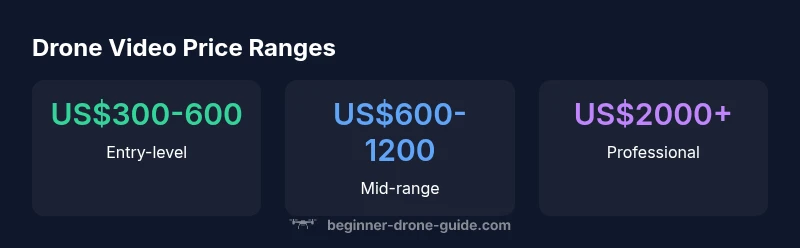
Drone video prices vary widely, but beginners can start filming with a basic model around $300–$600. Mid-range setups suitable for hobbyists typically range from $600–$1,200, while prosumer options generally fall between $1,200–$2,000. For true professional work with cinema-grade cameras and stabilized rigs, expect investments from $2,000 and up, plus potential costs for accessories and licenses. These ranges reflect typical market offerings in 2026, helping you budget with confidence.
What drives the price of a video drone
Prices for video-capable drones are driven by camera quality, stabilization, flight performance, and build quality. In practice, the biggest levers are sensor size and lens quality, gimbal sophistication, obstacle sensing, transmission range, and firmware support. According to Beginner Drone Guide, most beginners can expect to pay more for features that reduce post-production effort and increase reliability, rather than for shiny specs alone. If your goal is smooth 4K clips with minimal wobble, invest where stabilization matters most: a good gimbal, a responsive controller, and a camera with a modern sensor. Budget-conscious buyers should also consider total ownership costs, such as spare batteries, memory cards, and protective accessories. The aim is to map your project needs to price tiers: entry-level, mid-range, and professional. This framing helps you avoid overpaying for capabilities you won't use, and it keeps your shopping focused on features that directly impact video quality and workflow. According to Beginner Drone Guide, you should also factor licensing requirements in your region and plan for ongoing maintenance as part of the budget.
Entry-level options: what you get for $300-$600
Entry-level video drones in the $300–$600 range cover the basics. Expect compact designs, integrated cameras that shoot 2.7K–4K at modest frame rates, and basic gimbals. Flight times often hover around 20–25 minutes with consumer-grade motors, and obstacle avoidance is minimal. For beginners, these models are forgiving, easy to learn on, and come with beginner-safe flight modes. However, you may notice more rolling shutter, less color latitude, and limited dynamic range compared with pricier options. In short: you get essential video capability, built-in GPS, and straightforward app control, which makes this tier ideal for learning, practice runs, and light social media clips. Pros advise budgeting for extra batteries and memory cards because more air time translates directly to more practice opportunities.
Mid-range choices: more control and better video specs
Mid-range drones bring bigger sensors and better optics, often with 1” or 1/2.3” sensors, 4K at 60fps, and improved color science. You’ll typically see better dynamic range, longer flight times, and more capable obstacle sensing. These models also tend to offer smoother HDR video, higher bitrate codecs, and more robust transmission links for steady video in challenging conditions. For hobbyists, this tier represents a meaningful jump in production quality without a dramatic price leap. The buy-in still remains sensible: expect 10–20% growth in capabilities per price step, and remember that software updates and lens care matter as much as hardware.
Pro-level considerations: cinema-ready setups
Professional-level drones are designed for rigorous shooting schedules and demanding post-production workflows. They often pair with higher-end cameras or specialized cinema drones, deliver 4K-6K captures, 10-bit color, log profiles, and RAW options. These systems emphasize stability, precise color control, and robust gimbal performance under windy conditions. They also usually require more careful handling, heavier batteries, and sometimes certified pilots or flight permissions in certain airspaces. If your work involves paid gigs, client expectations, or high-quality reels, these investments can be justified, but ensure your shooting style genuinely benefits from cinema-grade capabilities before committing.
Total cost of ownership beyond the drone
The sticker price is only part of the story. Owners should budget for spare batteries (often multiple), accelerators/chargers, extra props, microSD cards with high write speeds, ND filters for outdoor shoots, carrying cases, and maintenance tools. Licensing, registration, and liability insurance can add ongoing costs depending on your location and usage. Don’t overlook ongoing software subscriptions for flight planning, editing, and color grading. A practical upfront budget should include a cushion for three frequent scenarios: practice days, a single short project, and a longer gig. Planning for these contingencies helps avoid mid-project budget stress. As Beginner Drone Guide notes, accumulating the right accessories early can save time and improve safety on shoots.
How to compare models quickly
Create a quick decision rubric: (1) camera quality and stabilization, (2) flight time and range, (3) obstacle sensing and safety features, (4) portability and ease of use, (5) ecosystem and after-sales support. Read user reviews focusing on reliability and camera performance, then verify the firmware supports the codecs and color profiles you need. Where possible, compare side-by-side specs on official product pages and trusted review sites. Finally, check the return policy and warranty terms—ferreting out small print here saves headaches later on.
Practical buying tips for beginners
- Define your typical use-case: casual 4K clips for social media, short-form videos, or longer shoots.
- Set a hard budget that includes at least two spare batteries and memory cards.
- Prioritize stabilization and a camera with good color handling over sheer megapixel counts.
- Consider buying from a shop with a generous return policy and robust after-sales support.
- Practice with indoor and outdoor courses to become fluent in controlling speed, altitude, and camera angle.
- Join local drone communities or online forums to learn about airspace rules and common buying mistakes.
- Test flight a few models in a store or at a local field before committing to a purchase.
- Keep up with regulations in your area; licensing requirements may affect your overall cost and workflow.
Real-world scenarios: what to expect on shoots
In daylight outdoor shoots, expect wind sensitivity to impact stability and battery life. Indoors, you’ll rely more on compact form factors and precise yaw control. For interview-style scenes, cheap drones can capture reliable wide establishing shots, but mid-range models often deliver cleaner color and more consistent exposure. When planning a paid gig, budget for a second operator or an extra drone to cover contingency diagonals and regulatory red tape. In short, your real-world results depend on choosing equipment that minimizes post: less stabilization work, better log profiles, and fewer re-shots.
Comparison of drone price bands by use-case
| Drone Type | Typical Price Range | Best For | Notes |
|---|---|---|---|
| Entry-level/Beginner | US$300-600 | Casual video, learning controls | Good value, basic features |
| Mid-range/Prosumer | US$600-1200 | Short films, social media | Better sensors, 4K/60fps options |
| Professional/Cinema-grade | US$2000+ | Commercial shoots | Highest quality, heavier rigs |
Frequently Asked Questions
What is the typical price range for drones suitable for video in 2026?
In 2026, video-capable drones generally fall into three broad bands: entry-level around US$300–$600, mid-range around US$600–$1,200, and professional-level from US$2,000 and up. The exact price depends on camera capability, stabilization, and ecosystem features. This framing helps beginners budget more accurately while leaving room for growth as needed.
Typically, entry-level drones are about three to six hundred dollars, mid-range around six hundred to twelve hundred, and professional setups start above two thousand dollars.
Do I need to spend more for higher resolution video like 4K or 6K?
Higher resolution adds retrieval flexibility in post and can improve cropping options, but it also increases file sizes and processing needs. For beginners, 4K at 30fps is often sufficient; 6K or higher is mostly reserved for professional projects with post-production pipelines that can handle the data load.
Yes, higher resolutions require more storage and processing, so only invest in those if your shoots need it and you have the workflow to handle it.
Are consumer drones with 4K cameras good enough for professional video?
Some consumer drones can deliver impressive 4K footage suitable for independent projects, but professional work often benefits from cinema-grade cameras, better sensors, and RAW or log formats. The decision hinges on the project’s expected quality, color grading needs, and client expectations.
They can be enough for indie projects, but for paid gigs, you’ll want more control and higher color fidelity.
What other costs should I plan for besides the drone itself?
Expect to budget for extra batteries, chargers, memory cards, ND filters, spare props, protective cases, insurance, licensing/registration, and potential maintenance. If you plan on editing, add software subscriptions and storage hardware. These costs accumulate quickly and affect your overall profitability.
Batteries, memory, and licensing are common extras; plan for them from the start.
Should beginners buy used drones to save money?
Buying used can save money, but it comes with higher risk of wear, unseen damage, and shorter battery life. If you go used, demand a recent test flight, intact accessories, and a return policy. For most beginners, starting with a new, entry-level model provides better reliability and safety.
Used gear can save money, but verify condition and get a warranty if possible.
How long does it take to become proficient with a video drone?
Proficiency depends on practice, but most beginners reach a comfortable level after 15–25 hours of flight time, including varied environments. Regular practice, plus learning basic cinematography and framing, speeds up progress. Consider structured practice days and a basic shooting plan to build consistency.
With steady practice, you’ll be proficient in a few dozen flights and a few weeks of focused practice.
“Video quality comes from a balanced mix of camera, stabilization, and workflow—not just the highest spec. Choose gear that fits your typical shoots and your ability to leverage it.”
Quick Summary
- Define your use-case before buying to match price bands
- Budget for accessories and ownership costs, not just the drone
- Prioritize stabilization and camera quality over sheer megapixels
- Consider licensing, insurance, and training as part of the total cost
- Test flights help avoid buyer’s remorse