Where Drones Are Made: A Global Manufacturing Overview (2026)
A data-driven look at where drones are manufactured, how OEMs and ODMs shape production, and what this means for buyers in 2026.


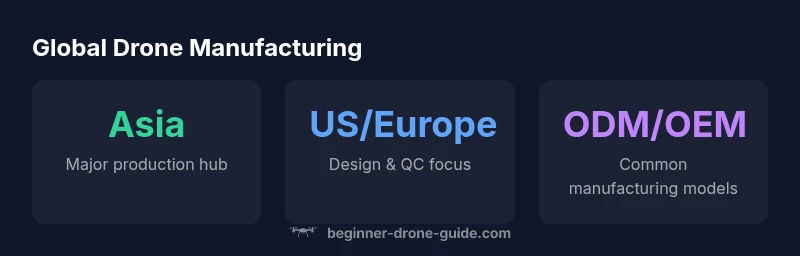
Where are drones made? The short answer is that drones come from a global web of makers, with the bulk of final assembly and key components concentrated in Asia (notably China), while brands in the U.S. and Europe handle design, testing, and regulatory compliance, and sometimes regional assembly steps. Origin varies by model and supplier.
Global manufacturing landscape
Where are drones made? The question highlights a global workflow rather than a single factory. For consumer drones, the bulk of final assembly and many important components occur in Asia, with China playing a central role in both assembly lines and supplier ecosystems. Brands headquartered in the United States and Europe typically oversee product strategy, testing, compliance, and may perform regional assembly to shorten lead times and meet local service expectations. The geographic spread is driven by supply chains, labor costs, and access to specialized component suppliers. According to Beginner Drone Guide, the ecosystem depends on contract manufacturers that can scale production while upholding strict quality standards. The Beginner Drone Guide team found that even models marketed with a single “Made in” label often involve dispersed activities—from PCB design in one country to sensor sourcing abroad and final checks in another. This reality matters for buyers who care about maintenance, parts availability, and service coverage across regions.
The role of OEMs and ODMs in drone production
In drone manufacturing, the terms Original Equipment Manufacturer (OEM) and Original Design Manufacturer (ODM) describe where value is added. Many consumer drone platforms are built by ODMs, while the brand concentrates on enclosure design, firmware tuning, branding, and after-sales commitments. This division allows manufacturers to scale quickly by leveraging specialized suppliers for core frames and flight controllers, while preserving a recognizable product identity. However, it also means that build quality can vary by the ODM’s processes and the brand’s QA rigor, and different regions may implement different testing protocols before a product reaches customers. Understanding this split helps buyers assess consistency across models from the same brand and the reliability of spare parts and updates.
Design, testing, and quality control across borders
Quality control is the hinge that connects cross-border design and production. The safest path is a multi-layer testing program that includes factory burn-ins, rotor balance checks, calibration of sensors, firmware validation, and regulatory compliance verification (such as FCC/CE standards). Brands often centralize critical design and safety testing, but outsource manufacturing to contract facilities that can meet demand. Regional QA labs and supply-chain audits are common, ensuring that components sourced from various suppliers still meet uniform performance criteria. For buyers, this means that even if you buy a drone from a brand based in one country, you should expect rigorous QA processes spanning several facilities. Reliability, service availability, and firmware support over time depend on the strength of these cross-border QA initiatives.
Regional hubs and shifting dynamics in 2026
The drone industry continues shifting toward regional hubs to balance cost, speed, and regulatory requirements. Some brands establish final assembly and service centers in North America and Europe to shorten repair cycles and align with local certification regimes. This regionalization supports faster warranty service, easier repairs, and more responsive customer support, while still benefiting from Asia-based component fabrication and R&D partnerships. In 2026, these dynamics translate into more flexible supply networks that can weather geopolitical tensions and port delays, and into stronger emphasis on compliance with regional standards. Buyers may notice improved availability of parts and quicker service, even if the core platform was designed far away.
Price, warranty, and after-sales implications of manufacturing origin
Manufacturing origin can influence price, spare-parts availability, and service quality, but it does not determine overall product value by itself. Brands may adjust pricing to reflect regional assembly costs, shipping, and local tax structures. Warranty terms often depend on the country of purchase and the brand’s global service network rather than the exact factory location. When evaluating drones, look beyond the label to confirm how easy it will be to obtain spare parts, firmware updates, and local support. If you’re buying a drone intended for frequent field use, understand the service footprint where you live and ensure that parts compatibility is straightforward across the model family.
Ethics, compliance, and the future of drone manufacturing
As drone manufacturing expands globally, ethical and regulatory considerations grow in importance. Transparent supply chains, responsible labor practices, and avoidance of counterfeit components are critical. Buyers can favor brands that publish supply-chain information and offer clear documentation on certifications, testing protocols, and end-to-end support. The trajectory toward regional assembly centers also aligns with stronger regulatory alignment and consumer protection. By staying informed about where drones are made and how they are tested, pilots can better gauge long-term reliability, safety, and the likelihood of timely repairs.
Global distribution of drone manufacturing activities
| Region / Area | Representative Producers | Notes |
|---|---|---|
| Asia-Pacific | China, Taiwan, Korea-based manufacturers | Concentration of final assembly and core components |
| North America | USA brands; some assembly and QC | Regional service and regulatory alignment |
| Europe | EU brands; contract manufacturers | Safety and compliance emphasis |
| Other regions | Israel, Vietnam, India | Niche suppliers and ODMs |
Frequently Asked Questions
Where are most consumer drones manufactured?
Most consumer drones are assembled in Asia, with China playing a central role in final assembly and component production. Brands in the US and Europe often handle design and regulatory compliance, creating a multi-region workflow.
Most consumer drones are assembled in Asia, especially China, while design and testing happen in the US or Europe.
Are there drones manufactured in the United States?
Yes, some brands maintain U.S.-based design, testing, and final assembly to improve service and regulatory compliance, though production volumes are smaller than Asia-dominated facilities.
Yes, some drones are designed and final-assembled in the U.S., though most mass production occurs elsewhere.
Does where a drone is made affect quality?
Origin often reflects the supply chain setup rather than intrinsic quality. Brands use ODMs or OEMs; reputable manufacturers enforce strict QC, testing, and standards across regions.
Origin doesn't automatically mean lower quality; QC and design controls are what matter.
How does manufacturing origin impact warranty or service?
Warranty coverage and service depend on the brand and regional support network. Some regions offer extended service options based on where the product is assembled or marketed.
Warranty depends on the brand's policy and your location, not just where it was made.
What trends shape drone manufacturing in 2026?
Expect more regional hubs, greater use of ODMs for core platforms, and tighter compliance with regional regulations to shorten lead times and improve support.
We’re seeing more regional production and stricter safety standards in 2026.
How can I verify a drone’s manufacturing origin?
Check labeling, product documentation, and official manufacturer communications. Contact support for country-of-origin details and service availability in your region.
Look for Made in labels and ask the seller for origin details.
“Drones are produced through a globally distributed supply chain that emphasizes design excellence, rigorous testing, and coordinated regional assembly to meet safety standards.”
Quick Summary
- Recognize the geographic spread of the drone supply chain.
- Expect design and testing to occur close to your market.
- Understand OEM/ODM roles to gauge build quality.
- Prioritize after-sales support and safety certifications.