How Much Is a DJI Drone? A Practical Price Guide for Beginners (2026)
Discover current price ranges for DJI drones, what drives cost (models, bundles, sensors), and practical tips for beginners to buy smart in 2026.


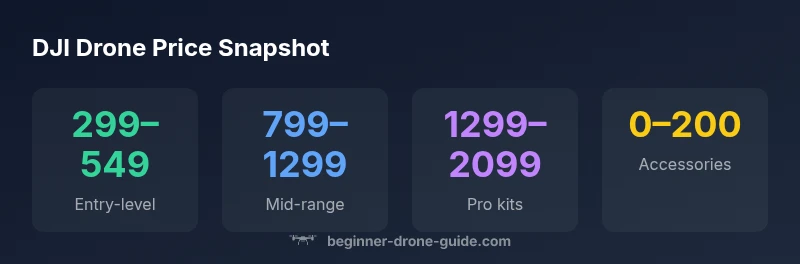
Prices for DJI drones span from entry-level models to advanced kits. If you're buying new, expect roughly $299–$2,099, depending on the model, bundle, and features such as camera quality and obstacle sensing. For many beginners, a used or refurbished unit can fall in the lower end of that range. Always compare current promos and bundles before buying.
Understanding the DJI Pricing Landscape
Prices for DJI drones are not a single number; they run a spectrum shaped by model, capabilities, and intended use. For beginners, the central question often starts with how much is a dji drone, which hinges on whether you want a compact mini, a capable mid-range flyer, or a premium system for aerial photography. DJI splits its lineup into three broad tiers: entry-level mini or SE options, mid-range Mavic-family drones with strong all-around performance, and pro-level kits with advanced sensors and longer flight times. In 2026, Beginner Drone Guide's analysis shows that the price gap remains wide, but there are compelling value choices at each level. A key insight is that cost correlates with features such as sensor size, obstacle detection, transmission range, and camera resolution. Importantly, buyers should also weigh ongoing costs like spare parts, batteries, and protective accessories. By clarifying your primary use—casual learning, travel vlogging, or professional filming—you can anchor your budget and avoid overpaying for capabilities you won't use. The goal is to buy smart, not just buy the most expensive. Across the board, the trick is to focus on what matters most to your flying goals and skill level, then map that to a realistic price range.
Price by Category: Entry-Level, Mid-Range, and Pro
Entry-Level: These are your most affordable options, often under $550, emphasizing portability and a forgiving learning curve. They typically include basic cameras, shorter flight times, and simpler controllers. They’re ideal for first flights, practice sessions, and casual videos. Mid-Range: Typically $800–$1,299, this tier offers better cameras, longer flight time, more precise stabilisation, and essential safety features like obstacle sensing. It’s a sweet spot for aspiring creators who want higher-quality footage without committing to a top-tier price. Pro: $1,299–$2,099+ cover professional-grade kits with premium sensors, higher bitrate video, longer range, and rugged builds. They’re intended for serious aerial work, real estate shoots, or film production. Remember that the final price includes bundles and add-ons; extra batteries, memory cards, ND filters, and protective cases can push the total well beyond the base model. Don’t forget to compare seasonal promos; retailers often bundle accessories at a discount, changing the effective cost by a meaningful amount.
What Influences the Price: Model, Bundles, and Sensors
Model generation and camera specs are the largest price drivers. Newer generations with larger sensors, higher video resolution, and improved image processing cost more upfront. Bundles—where the drone ships with extra batteries, chargers, or protective cases—can seem economical but require evaluating whether you actually need all items. Accessories like ND filters, spare propellers, and screen protectors add to the total, yet they improve long-term usability and protection. Regional taxes, shipping methods, and retailer markups also shape the final invoice. If you plan to travel, consider the portability trade-off: smaller drones tend to be cheaper and lighter, but may sacrifice some features. When balancing price and performance, prioritize features that reduce risk and enhance learning: return-to-home, GPS stabilization, and visual sensors that help keep the drone steady in windy conditions. For many buyers, the key is to identify “must-have” features for your intended use and then select a model that delivers them at a reasonable price.
New vs Refurbished: Budget-Friendly Ways to Get a DJI Drone
Buying new guarantees the latest firmware and full warranty. Refurbished models can offer substantial savings, but you should buy from reputable sellers who provide a warranty and clear condition reports. For beginners, a certified refurbished unit can be a solid compromise, especially if you pair it with a legitimate return window. Before purchasing, verify the battery health, camera integrity, and motor responsiveness. Check if the bundle includes essential items like spare props and a protective case. If you’re cautious, start with a refurbished unit from a trusted source, then upgrade later as your skills grow. Keep in mind that some regions restrict the sale or use of certain drones; always confirm local rules before buying.
How to Evaluate Value: Key Features to Compare
To assess value, compare specs across models you’re considering: flight time, camera resolution and frame rate, sensor size, obstacle sensing, and transmission range. A higher-resolution camera matters if you plan to crop or broadcast footage; however, it should be paired with stable flight performance and good wind resistance. Operational factors such as weight, portability, and ease of use influence daily costs, as heavier drones may require more robust batteries and travel considerations. The app ecosystem, support resources, and firmware update cadence affect the long-term value. Finally, consider post-purchase costs: extra batteries, memory cards, filters, and potential service plans. If you’re uncertain, prioritize models that offer a balance between essential features and a realistic price for your intended usage.
Buying Tips for Beginners: Timing, Bundles, and Warranties
Timing matters: price dips often follow new-model announcements or seasonal sales. Look for bundles that include needed items like extra batteries, a charging hub, and memory cards; these can drop the total cost per item. Warranties and damage protection plans are especially valuable for new pilots who will encounter occasional crashes. Start with a recommended starter kit that emphasizes safety features and easy flying modes. Compare retailers, as promotions vary by region and retailer; do not rush into a purchase when a better bundle appears a week later. Finally, set a budget and a short list of must-have features, then test the options in a local store or through a reputable demo before finalizing any purchase.
Real-World Costs: Common Purchase Scenarios
Scenario A: Travel-friendly learning drone with a modest camera and bundle costs around the lower end of the spectrum. Scenario B: A mid-range drone for hobbyist videography with extra batteries and filters may sit in the mid-price range. Scenario C: A pro-grade setup with premium sensors and accessories can exceed the mid-range by a comfortable margin. In all cases, don’t forget associated costs such as extra batteries, memory storage, ND filters, protective gear, taxes, and shipping. By mapping your intended use to a realistic price range, you’ll have a clearer path to buying confidently without overspending.
Budget Planning and Next Steps
Create a price plan that aligns with your objectives: learning-only, casual filming, or professional content. Start by picking 2–3 models in your target range, then monitor price fluctuations over several weeks to catch promotions. When you find a good deal, weigh the bundle contents against your needs and long-term costs. Finally, practice in safe environments and certify yourself in accordance with local regulations to maximize your investment and minimize risk.
DJI drone price ranges by category
| Category | Typical Price Range | Best Use | Notes |
|---|---|---|---|
| Entry-level | $299–$549 | Casual learning | Limited sensors |
| Mid-range | $799–$1,299 | Versatile photography | Balanced features |
| Pro/Advanced | $1,299–$2,099+ | Professional shoots | High-end sensors |
Frequently Asked Questions
What is the typical price range for a new DJI drone?
New DJI drones span from entry-level to pro kits; typical price ranges are in the hundreds to over a thousand dollars, depending on model and bundle. Expect higher costs for larger sensors and obstacle avoidance.
Prices vary by model and bundle; new drones range from a few hundred to over a thousand dollars.
Is buying refurbished or used DJI drones a good idea for beginners?
Refurbished units can save money but check seller reputation and warranty. Inspect battery health, camera integrity, and motor responsiveness before buying.
Refurbished can save money, but verify battery health and warranty.
Do promo bundles affect the total cost significantly?
Bundles with extra accessories can lower the effective price per item, but verify total cost and warranty coverage.
Bundles can boost value if you need the extras.
Should beginners invest in a higher-end model or start with an entry-level?
For most beginners, starting with an entry-level model is sensible to learn basics; upgrade as you outgrow features like camera quality and obstacle sensing.
Start with an entry-level and upgrade as you learn.
What additional costs should I budget beyond the drone itself?
Budget for accessories, spare props, memory cards, batteries, and insurance or protection plans.
Expect costs for extras and protection plans.
How often do prices drop for DJI drones?
Prices tend to dip around major holidays and after new model launches; watch major retailers for promos.
Prices drop during holidays and after new models release.
“Pricing is a reflection of a drone's capabilities and safety features, not just its camera megapixels. For beginners, the best value comes from choosing a model that matches your goals and learning pace.”
Quick Summary
- Set a budget based on your goals
- Consider bundles to maximize value
- Factor total cost: spare parts, filters, and insurance
- Compare promos across seasons