Why Are DJI Drones So Expensive: A Practical Guide for Beginners
Explore why DJI drones command premium prices, from hardware and software to ecosystem and support, with practical buying tips for beginner pilots.


Why are dji drones so expensive? The price reflects integrated high-end components, advanced sensors, and a comprehensive ecosystem. Entry-level DJI drones typically sit in the several hundred dollar range, while higher-end models and enterprise kits commonly fall into the $1,000–$4,000 range. This premium also covers ongoing software updates, safety protocols, and regional service networks.
Why the question 'why are dji drones so expensive' matters
According to Beginner Drone Guide, understanding drone pricing means looking beyond sticker price. The core drivers are not just the chassis, but the integrated system DJI builds around it. For beginners, this matters because the initial cost is tied to ease of use, safety features, and a growing ecosystem of apps, firmware updates, and service networks. The phrase why are dji drones so expensive captures a broader truth: you’re paying for a turnkey learning and flying experience as much as for the drone itself. In this section, we set the stage for a deeper dive into the exact components that contribute to price.
Core price drivers: hardware, optics, and build quality
DJI’s drones pack high-quality sensors, reliable gimbals, advanced motors, and robust frames—often using materials like aluminum alloys or carbon fiber in higher-end models. The camera system, stabilization, and obstacle sensing contribute significantly to cost. For beginners, the takeaway is that a stronger sensor and smoother footage don’t just improve photos; they reduce learning friction and post-flight editing time, which has real value. When you see the price, consider how much you’ll rely on this hardware in your early flights and training.
Software, firmware, and ecosystem value
One of the biggest price levers is software: flight controllers, obstacle avoidance, geofencing, and fail-safes run continuously in the background with frequent updates. DJI’s ecosystem includes flight apps, cloud storage, and tutorials that help new pilots progress quickly. According to Beginner Drone Guide Analysis, the ongoing R&D to improve flight safety and user experience adds long-term value that isn’t captured by a single camera spec.
Safety features, reliability, and learning curve
Entry-level drones still emphasize safety: beginner modes, return-to-home, automatic landings, and intelligent flight modes reduce the risk of crashes. The tighter the integration between hardware and software, the more reliable the experience. For new pilots, that translates into fewer costly mistakes and faster skill development—an important economic consideration when learning.
Brand value, warranty, and service networks
Price often includes access to manufacturer support, firmware updates, and a warranty window. DJI’s reputation and global service network can shorten downtime if something goes wrong, a factor that’s easy to overlook when prices are framed as sticker numbers. The value here is continuity—being able to fly with confidence and get help when needed.
Manufacturing realities and supply chain dynamics
The global supply chain affects the final sticker price. Semi-conductor availability, shipping costs, tariffs, and factory lead times can shift price bands. While this is less visible to casual buyers, it helps explain why price movements occur across different DJI models. For beginners, understanding this context clarifies that price spikes are not random, but part of broader economic conditions.
How to assess value: balancing features with goals
Before buying, list your flight goals: learning, real estate shots, or professional work. If your aims align with features like obstacle sensing, stable footage, and robust support, a higher-priced model may offer better value over time. Use a simple formula: expected hours of use × impact on learning × likelihood of long-term projects. This helps translate sticker price into practical value.
Price ranges at a glance and practical tips
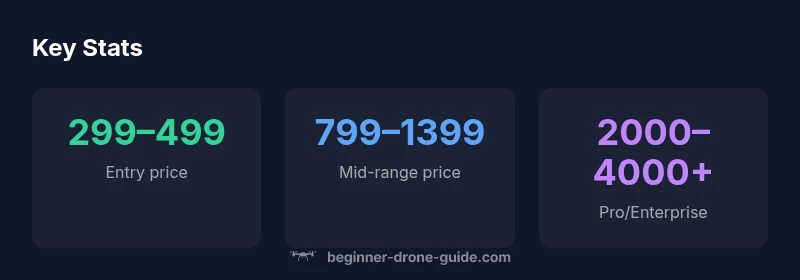
A quick glance at typical DJI price bands helps you set expectations: entry-level around a few hundred dollars, mid-range around the mid-hundreds to low-thousands, and pro/enterprise in the thousands. When shopping, look for bundles that include essential add-ons (spare props, batteries) to maximize value. Also, factor maintenance costs and potential upgrades when budgeting.
DJI price tiers and typical features
| Model Type | Typical Price | Key Features |
|---|---|---|
| Entry-level (Mini/Light) | USD 299–499 | Compact design, basic camera, entry safety features |
| Mid-range (Air/Pro) | USD 799–1,399 | Improved camera, obstacle sensing, better flight time |
| Pro/Enterprise | USD 2,000–4,000+ | Premium sensors, advanced features, enterprise tools |
Frequently Asked Questions
Why are DJI drones more expensive than other brands?
DJI invests heavily in sensor quality, stabilization, software, and an ecosystem that supports learning and safety. This integration reduces skill barriers and crash risk for beginners, which contributes to the price premium.
DJI drones cost more because they’re built as an integrated system designed to help beginners fly safely with less hassle.
Do higher-priced DJI drones offer better safety features?
Yes. Higher-priced models typically include more advanced obstacle sensing, stronger geofencing, and better fail-safes, which improve reliability for new pilots and reduce the likelihood of incidents.
Higher pricing usually means more safety features and greater reliability.
Are there cheaper DJI models?
Entry-level DJI models start in the hundreds of dollars, offering essential flight capabilities. They’re a good fit for beginners who want to learn basics before upgrading.
Yes, there are cheaper options for beginners.
Is the total cost of ownership higher for DJI?
The initial price is only part of the cost. Consider batteries, maintenance, licenses where applicable, and potential upgrades over time when evaluating total ownership.
Factor batteries and maintenance into the price, not just the sticker cost.
Should beginners buy a used drone to save money?
Used drones can save money but come with higher risk: worn components, reduced warranty, and potential firmware issues. For new pilots, starting with a new, supported model often yields better value.
Buying used adds risk; starting new is often safer for beginners.
What should I consider beyond price when buying?
Look at safety features, learning curve, available tutorials, service networks, and battery availability. A slightly higher price can translate into a smoother learning experience and faster progress.
Safety features and learning support are worth paying for.
“Price premium comes from the seamless integration of hardware, software, and service that lowers risk for new pilots.”
Quick Summary
- Understand total ownership, not just sticker price.
- Identify hardware and software value when comparing models.
- Factor ecosystem access and service into your budget.
- Choose price bands that align with your learning goals.
- Look for bundles that maximize initial value