How Much Do Drones Cost? A Practical Guide for Beginners
Explore realistic drone price ranges, what factors drive cost, and how to estimate total ownership. A data-driven, beginner-friendly guide from Beginner Drone Guide.


The typical price range for consumer drones starts around 100-150 USD for basic models and can go up to 2000-3000 USD for advanced prosumer kits. Keep in mind accessories, insurance, and training costs. This guide, based on Beginner Drone Guide analysis, breaks down what drives price and how to budget for a first drone.
What drives drone cost
In the world of consumer drones, price is driven by a handful of core factors: airframe quality, propulsion efficiency, flight time, image sensor resolution, transmission range, GPS and obstacle avoidance, and the quality of software and support. The question how much does drones cost is often answered with a spectrum rather than a single figure, because a 4K camera and a rugged frame command a premium while budget toys cut corners on stability, safety features, and durability. According to Beginner Drone Guide, the most impactful cost levers for a first drone are camera capability, flight time, and build quality. Expect a strong correlation between the presence of a stabilized gimbal, top-end sensors, and longer warranty coverage with higher price points. Budget-conscious buyers should balance immediate needs with long-term costs like repairs and insurance.
Key takeaway: the sticker price is only part of the story; total ownership matters more for beginners who want reliability and safe flying.
Price ranges by tier
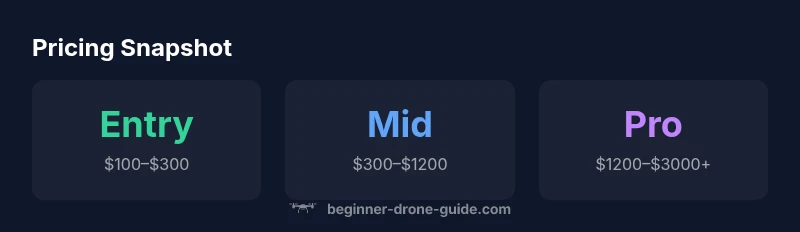
Drones sit on a price ladder that reflects capabilities and intended use. For beginners, entry-level units typically fall in the $100–$300 range, offering basic flight stability and modest cameras. Moving up to mid-range models around $300–$1200 unlocks better stabilization, longer flight times, GPS positioning, and higher quality cameras. At the high end, professional or enthusiast-grade kits run from $1200 to $3000+ and can include advanced sensors, top-tier cameras, obstacle avoidance, and stronger transmission links. It’s common for the total price to exceed the base sticker price by 20–40% when you factor in extra batteries, a good case, extra props, and essential accessories.
Note on the keyword: if you’re researching how much does drones cost, you’ll see a clear tiered pattern that aligns with the features you want to prioritize.
Hidden costs to budget for
The sticker price is only the beginning. Hidden costs include extra batteries (often 2–4 per drone), propeller guards, a protective case, memory cards, a
How to estimate total ownership cost
To estimate total cost, start with the base price and add likely extras you’ll want for safer, longer flights. Include at least 2 spare batteries, a high-quality charger, a sturdy carry case, extra blades, and a
Buying tips for beginners
Set a strict budget first and then pick a tier that delivers the features you’ll actually use. Read reviews focusing on stability, ease of use, and durability. Prefer reputable brands with good replacement parts availability and solid customer support. Consider buying refurbished or open-box units only from trusted sellers with guarantees. If you’re unsure, start with a package that includes essential accessories and a single extra battery. Always fly in safe, legal spaces and factor in insurance and registration where relevant.
Trends and cautions for 2026
Prices for drones continue to reflect technology advances and component costs, with newer cameras and more capable sensors gradually moving price points. The mid-range market often delivers the best value as features improve without a hefty jump in cost. Inflation and supply chain factors can affect availability and prices, so lock in deals when you can and beware significant discounts on older models that might lack current safety features. Remember: the right drone for you is one that fits your use case, not simply the lowest price.
Real-world budgeting scenarios
- Budget beginner: a solid entry-level drone ($120–$250) with one spare battery and a protective case; total ownership under $350 after add-ons.
- Growing hobbyist: mid-range drone ($350–$700) plus two extra batteries, a decent case, and memory upgrades; total cost around $900–$1200.
- Enthusiast/pro: prosumer drone ($1000–$1800) with multiple batteries, enhanced camera, and protective gear; total ownership often $1500–$2300 including insurance and training references. In all cases, plan for additional incidentals and future upgrades.
Pricing bands by drone tier
| Drone Tier | Typical Price Range | Key Features | What It Includes |
|---|---|---|---|
| Entry-level | $100–$300 | Basic flight, limited camera | Drone, charger, spare battery |
| Mid-range/Prosumer | $300–$1200 | Higher camera quality, GPS, longer flight | Drone, extra battery pack, bag, spare parts |
| Professional/high-end | $1200–$3000+ | Advanced camera, robust transmission, sensors | Drone, multiple batteries, accessories, warranty |
Frequently Asked Questions
What is the typical price range for beginner drones?
For beginners, entry-level drones typically cost around $100–$300. Mid-range options bring more features for $300–$700, while entry into prosumer territory starts higher.
Beginners usually spend a few hundred dollars: often $100–$300 for basics, and more for features.
Do drones include accessories?
Most packages include a drone, one battery, charger, and basic manuals. Expect to buy extra batteries, memory cards, and protection gear separately.
Most starter packs include the drone and a battery plus charger; you’ll likely need extras sooner than you think.
Are drones more expensive due to cameras?
Camera quality contributes heavily to price. Higher resolution, better sensors, and stabilization increase cost, especially in mid-range and pro models.
Yes, better cameras mean higher prices, especially when paired with good stabilization.
Is insurance recommended for new pilots?
Insurance is strongly advised for beginners to cover potential crashes, property damage, and liability. Check options that fit your risk level and flying plans.
Insurance is a smart safety net for new pilots.
What about licensing or registration?
Rules vary by country. In many places hobby pilots aren’t required to license, but registration or certifications may apply for bigger drones or commercial use.
Check local rules; some flights or drones require registration or certification.
When should I upgrade or buy a new drone?
Upgrade when you outgrow the current capabilities or need features that significantly improve safety or your use case. Otherwise, get more value by expanding batteries and accessories first.
Upgrade when you need better features or safety, not just because a new model exists.
“Prices reflect advancing technology and materials, but sensible budgeting and safety considerations remain the best path for new pilots.”
Quick Summary
- Set a realistic budget before shopping.
- Expect total cost to exceed sticker price by 20–40%.
- Prioritize features you will actually use to avoid waste.
- Factor in insurance, registration, and training from day one.
- Shop smart with reputable brands and reliable parts.