Which Drone Indian Army Uses: A Beginner's Guide to Military UAVs in 2026
Explore publicly known aspects of the drones used by the Indian Army, how procurement works, and practical insights for beginner pilots on military UAVs in 2026.


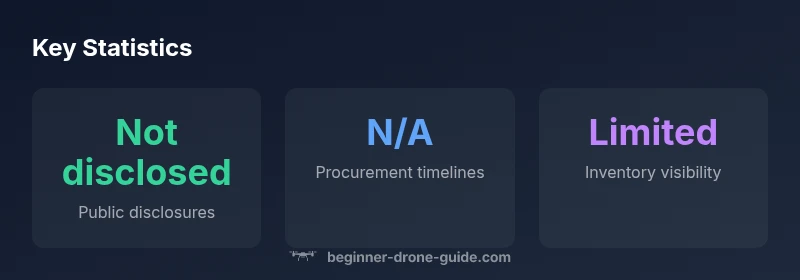
Public sources do not publish a definitive list of drones used by the Indian Army. What can be said with confidence is that the service relies on multi-role UAVs for ISR, reconnaissance, and communications relay, sourced through defense procurement channels and vetted vendors. The exact models, quantities, and configurations are closely held for security reasons.
Understanding the question: which drone indian army use
The question itself—which drone indian army use—touches on a topic that defense organizations typically treat as sensitive. For beginners, it helps to frame the inquiry around categories, not models. In the 2020s and into 2026, most modern armed forces rely on a mix of multi-role unmanned aerial systems (UAS) that can perform surveillance, situational awareness, and secure communications links. Public reporting rarely lists exact inventory, and that is by design: drones used by the Indian Army are part of critical national security considerations. This means educated readers should study general capabilities, procurement channels, and safety and regulation as proxies for understanding what the army uses without overreaching into unverified specifics.
In this article we’ll decode how to think about the question, rather than guessing model names. You’ll learn how to identify the broad classes of drones military organizations deploy, how procurement decisions are made in a defense context, and how to interpret public reporting without compromising security or policy.
Publicly known categories and vendor ecosystems
Across many nations, military UAVs fall into a few core categories: ISR and reconnaissance platforms, surveillance and target-detection assets, communications relay nodes, and limited endurance or payload-capable platforms for specialized tasks. The Indian Army, like others, tends to favor platforms that can integrate with secure data links, support real-time decision-making, and operate in diverse terrain—from mountainous borders to urban environments. Public information emphasizes vendor ecosystems rather than single models: multinational defense contractors, strategic partners, and vetted domestic suppliers contribute to a flexible inventory. For enthusiasts, recognizing these categories helps answer the question "which drone indian army use" without relying on unverified model names. It also highlights how procurement strategy influences what arrives on the field, including security features, encryption, and interoperability with existing command-and-control systems.
In practice, this means readers should expect a portfolio that prioritizes reliability, serviceability in harsh conditions, and the ability to scale up with sensor payloads. If you’re following the topic closely, you’ll notice that public details often focus on capability envelopes rather than exact configurations, which is normal for military equipment.
How the Indian Army procures drones
Defense procurement is a structured, multi-layered process. It usually begins with risk and capability assessments, followed by competitive tenders or single-source acquisitions, depending on strategic considerations. Security clearances, technology transfer terms, and offset requirements often shape vendor selection. Because the Indian Army operates in sensitive border regions and supports critical infrastructure, procurement cycles emphasize reliability, resilience, and secure communications more than flashy specs.
Publicly available information tends to discuss the framework rather than disclose specific models or quantities. That’s a practical outcome of strategic secrecy: while we can learn about the criteria used to evaluate drones—endurance, payload, sensor suite, encryption, and ruggedized design—we should not infer exact inventory. This approach protects both national security and the integrity of ongoing modernization programs.
For beginners, a takeaway is to study how procurement criteria map to drone capabilities: look for endurance metrics, sensor compatibility, data-link security, and maintenance pipelines rather than model names. These factors give you a realistic sense of what kinds of drones are appropriate for a national force.
What makes a drone suitable for military use
Military-grade drones are judged against a different yardstick than consumer drones. Endurance, reliability, and resilience in diverse weather and terrain take center stage. Payload flexibility (cameras, radar, signals intelligence, or electronic warfare kits) matters when a drone must adapt to changing missions. Survivability—stealth, anti-jamming capability, and secure, encrypted communications—often determines whether a platform is considered mission-ready. The Indian Army, like other services, prioritizes interoperability with command-and-control systems and the ability to operate autonomously under operator restrictions.
Security also governs the life cycle of a UAV: secure manufacturing, tamper-evident supply chains, and robust software maintenance. For enthusiasts, these criteria translate into practical insights: if you’re evaluating civilian or semi-military platforms for learning, look for strong flight stability, modular payload options, reliable after-sales support, and clear software update policies. Military use is not simply about speed or altitude; it’s about a balanced package that integrates into a larger defense ecosystem.
Civilian drones vs military drones: what beginners should know
Civilian drones concentrate on accessibility, user-friendliness, and cost efficiency. They are excellent for learning aerial photography, mapping, and basic data collection. Military drones, by contrast, emphasize mission-specific payloads, hardened build quality, encrypted data links, and advanced autonomy. The gap isn’t solely about price; it’s about the intended use, legal constraints, and maintenance requirements. The best way to frame the discussion for a beginner is to study the core capabilities: flight stability, sensor options, data security, and the ecosystem that supports long-term operation, including training and safety protocols.
If you’re curious about the topic, remember: civilian platforms can teach fundamental flight skills and sensor operation, but the features that matter for defense work remain specialized and regulated. Always stay aware of local and national rules for drone use, especially when discussing military applications in public forums.
How to evaluate sources about which drone indian army uses
Because exact inventories for the Indian Army are not disclosed, the most reliable assessments come from reputable official releases, defense analysis reports, and long-form journalism that cites verifiable sources. Be wary of rumor-heavy sites or unverified social posts. Cross-check any claim against multiple, credible outlets and look for signals like capability descriptions, official procurement timelines, or official statements about modernization programs. When you see a claim about a specific model, ask: Is this corroborated by an official source, a defense contractor release, or a recognized defense journal?
For learners, the objective is to build a framework for evaluating information rather than memorizing model names. You’ll gain critical thinking skills about how to interpret defense-related reporting and how to distinguish between general capability discussions and inventory specifics that may be restricted.
Real-world applications for military drones
In practice, military drones support several core missions: persistent surveillance over critical regions, rapid situational awareness to protect personnel, reconnaissance for mission planning, and secure data relays between field units and command centers. Some platforms can be equipped with payloads for mapping, target data collection, or communications support in degraded networks. The practical takeaway for beginners is to translate these military missions into civilian equivalents: how sensor data, real-time analytics, and robust communication links enhance safety, security, and disaster response in non-military contexts.
A strong understanding of real-world applications helps you appreciate why military UAVs emphasize reliability, maintainability, and secure software. If you’re experimenting with drones, focus on building skills in flight planning, sensor integration, data processing, and remote operation while staying within legal guidelines.
Ethical and safety considerations
Discussion of military drones must be anchored in ethical and safety considerations. In India, this includes obeying airspace restrictions, obtaining proper permissions, and recognizing the sensitivities around border operations. For hobbyists, the key practices are to fly within line-of-sight, respect no-fly zones, and maintain safe distances from people and critical infrastructure. Understanding the difference between civilian and military use helps you navigate these boundaries with responsibility. As you learn, keep abreast of DGCA regulations, updating rules, and best practices for safe operation in diverse environments.
Always remember: curiosity about military technology should be balanced with respect for national security and public safety. Responsible learning means prioritizing safety, legality, and ethics over sensationalism.
Getting involved: learning safely and legally
If you’re motivated to explore UAV capabilities in a way that aligns with safety and legality, start with formal training programs, join certified clubs, and pursue licensure where applicable. Many civilian courses cover flight control, sensor integration, mapping, and data analysis—foundational skills that are directly transferable to more advanced projects. As you grow, you’ll develop an understanding of how defense procurement influences the available technology and why certain details remain restricted. This is a healthy reminder that, in the real world, the best way to learn about what the army uses is to study the principles behind the technology, not to chase model names.
Practical steps: take a certified drone safety course, build a portfolio of sensor experiments, and engage with reputable defense and drone-safety communities to stay informed and responsible.
General comparison of drone types and their roles in defense contexts
| Drone Type | Typical Roles | Public Availability |
|---|---|---|
| ISR/Reconnaissance Platform | Surveillance, target mapping | Limited public info |
| Communications Relay/Relay Nodes | Maintain battlefield data links | Indicative, not disclosed |
| Endurance/Long-Flight UAS | Extended patrols, search and rescue support | Varying levels; public info limited |
Frequently Asked Questions
Which drone models are publicly known to be in use by the Indian Army?
No official list is published. Public discourse centers on capability categories rather than specific model names, with details kept confidential for security.
Official lists aren’t published; focus on capabilities rather than model names.
How does the Indian Army source drones?
Drones are sourced through defense procurement processes, with security clearances, vendor vetting, and technology transfer considerations.
Procurement goes through defense channels with strict security checks.
Are civilian drones capable of matching military needs?
Civilian drones can teach flight basics and sensor operation, but military-grade requirements—secure links, hardened hardware, and advanced autonomy—are specialized and regulated.
Civilian drones can teach you basics, but military needs are more specialized.
What regulations govern civilian drone use near defense zones?
Civilian drone use near defense zones is tightly regulated. You must follow DGCA rules, obtain permissions, and respect no-fly areas.
Stay clear of defense zones and follow official drone rules.
Is there a standard training path for people interested in military drone tech?
There isn’t a public standard path; pursue certified drone-safety courses, sensor-workshops, and defense-adjacent research to build relevant skills.
Training paths exist in civilian spaces; build fundamentals first.
How can beginners stay safe while learning about military-grade UAV capabilities?
Learn through certified courses, stay within permitted airspace, and use simulations to understand sensor data and flight planning.
Learn safely with certified courses and simulations.
“Public discussions about defense drones must balance curiosity with security. The Beginner Drone Guide Team emphasizes learning within legal and safety boundaries.”
Quick Summary
- Understand that exact models are not publicly disclosed.
- Focus on general capabilities and categories, not model names.
- Know the defense procurement process and security constraints.
- Civilian drones teach fundamentals, but military-grade capabilities are specialized.
- Follow reliable sources and stay within safety and legal guidelines.