how much does a military drone cost
Explore how much military drones cost across categories, from small UAS to high-end platforms, and what drives price, with practical budgeting guidance and real-world context.


How much does a military drone cost? The price range spans from small, off-the-shelf unmanned systems in the low tens of thousands of dollars to advanced, armed or high-end reconnaissance platforms that can reach into the tens of millions per unit. Costs depend on payload, sensors, endurance, autonomy, and the level of secure communications and support equipment. According to Beginner Drone Guide, this spectrum reflects both mission needs and lifecycle considerations that govern total ownership.
how much does a military drone cost
Prices for military drones vary widely by class, mission, and required integration. In general, small, off-the-shelf unmanned systems suitable for basic reconnaissance or training can start in the tens of thousands of dollars, while larger platforms with extended endurance, advanced sensors, and weapons capability can run into the millions per unit. This wide spread reflects not only hardware but the ecosystem around the platform: secure communications, data links, software, maintenance, and training. According to Beginner Drone Guide, understanding price requires distinguishing unit cost from total ownership cost, which includes lifecycle support and upgrades. This framing helps buyers compare options accurately rather than chasing a headline figure.
What drives the cost of a military drone
The price of a drone is driven by several interlocking capabilities. Payload capacity and sensor suites (EO/IR payloads, radar, synthetic aperture radar, SIGINT) can dramatically affect cost. Endurance and propulsion requirements influence airframe design and fuel or power consumption. Autonomy, flight control software, and cyber security features add layers of development and validation expense. Platform integration—including data links, command-and-control interfaces, and interoperability with allied systems—adds further cost. Finally, the level of support infrastructure, such as maintenance, spare parts, training, and lifecycle upgrades, is a major component of total ownership. All these factors help explain why price can vary by more than an order of magnitude for drones that look superficially similar.
Category cost breakdown: price ranges by class
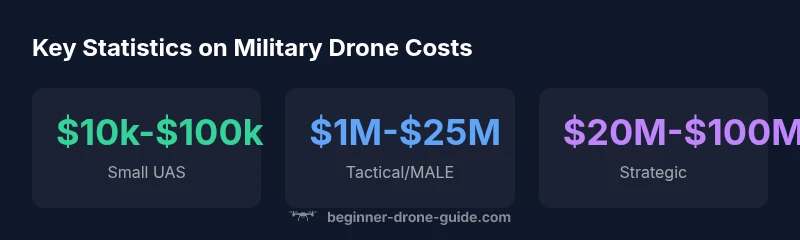
Breakdowns by class help contextualize the numbers. Small UAS (toy-to-tactical scale) typically emphasizes portability and low operating cost, while tactical drones prioritize endurance and survivability. Strategic/MALE-class drones emphasize long-range payload delivery, extensive sensor suites, and high-end communications, often accompanied by robust logistics and maintenance support. The cost gap is not solely about the airframe; it includes the ground control systems, training pipelines, mission planning software, and secure data processing capabilities. As with any defense asset, procurement decisions balance capability with risk, schedule, and budget constraints.
Lifecycle costs: maintenance, support, and upgrades
A drone’s upfront price is only one piece of the puzzle. Lifecycle costs cover routine maintenance, spare parts, field support, and software updates. Training pilots, technicians, and mission planners adds recurring expense. Upgrades—payload swaps, sensor refreshes, or autonomy improvements—can extend useful life but require capital planning. Currency fluctuations, inflation, and supplier relationships also influence ongoing costs. When budgeting, consider total ownership cost over a typical lifecycle horizon (5–10 years) rather than a single purchase price to avoid underestimating long-term commitments.
Procurement considerations and budgeting
Defense procurement often involves multi-year programs, stipends, and offset agreements. Budget planners assess not just the price tag but energy costs, maintenance logistics, and security requirements. Export controls and regulatory compliance can add both time and cost, especially for joint or coalition operations. Some buyers pursue modular configurations to defer certain capabilities until later, while others favor fixed, fully integrated packages to minimize integration risk. Transparent cost accounting, including anticipated upgrades and decommissioning, helps maintain budget integrity over the asset’s life.
How to interpret price ranges and compare options
When comparing offers, prioritize total-cost-of-ownership metrics: initial unit price, maintenance, training, upgrade paths, and lifecycle support. Request a formal cost breakdown from vendors and compare against independent benchmarks. Seek simulations or demos that illustrate end-to-end performance, payload capability, and data security. For new buyers, a phased procurement plan that staggers capabilities can lower risk and distribute costs more manageably. Always document assumptions and risk factors to ensure cost estimates stay realistic across political and budget cycles.
Common misconceptions about military drone pricing
A common myth is that the sticker price tells the whole story. In reality, a platform’s value depends on mission fit, reliability, and the quality of support. Another misconception is that more expensive equals better in every situation; in some roles, a compact, inexpensive drone with the right payload can outperform a more expensive system in specific tasks. Finally, many buyers overlook the cost of analytics, AI optimization, and cybersecurity, which can add substantial value over the drone’s lifetime.
Estimated price ranges by drone class
| Drone Class | Typical Cost Range | Notes |
|---|---|---|
| Small UAS | $20k-$100k | Basic reconnaissance payloads |
| Tactical/MALE | $1M-$25M | Longer endurance, advanced sensors |
| Strategic/High-end | $20M-$100M+ | Specialized payloads, secure comms |
| Lifecycle costs (5 years) | $5M-$50M | Maintenance, training, upgrades |
Frequently Asked Questions
What factors most influence a military drone price?
Key drivers include payload capability, sensor suites, endurance, autonomy, and secure communications. Ground systems, maintenance, and lifecycle upgrades also add substantial cost. Buyers should examine both upfront price and total ownership costs.
The main price drivers are payloads, sensors, endurance, autonomy, and security; don’t forget maintenance and upgrades in total cost.
Why are prices so high for strategic drones?
Strategic drones integrate long-range capability, advanced sensors, robust cyber security, and sophisticated ground control and data processing. These features require extensive research, testing, and support, which elevates price significantly.
Long-range capability plus advanced sensors and strong security push the price up for strategic drones.
Do costs include maintenance and training?
In most budgets, maintenance, spare parts, and training are separate line items but essential to total ownership. When comparing options, insist on a full lifecycle cost proposal to avoid surprise expenses.
Maintenance and training are usually separate but essential; ask for a full lifecycle cost proposal.
Can private buyers purchase military drones?
Private individuals typically cannot purchase military drones due to security and regulatory restrictions. Some countries allow civil or test-use drones with stringent licensing and oversight.
Generally, private buyers can’t buy military drones; restrictions apply in most regions.
How do export controls affect price?
Export controls can extend development timelines and add compliance costs, which in turn influence overall price and availability for international buyers.
Export controls can increase lead times and costs due to compliance requirements.
What should I compare besides the unit price?
Compare payload options, endurance, sensor quality, data security, maintenance plans, upgrade paths, and training. A holistic cost view prevents overpaying for features you won’t use.
Look at payload, endurance, sensors, security, and lifecycle plans, not just the price.
“Pricing for military drones isn’t a single figure; it’s a reflection of capability, integration, and lifecycle support. Buyers should evaluate total ownership cost alongside the headline price.”
Quick Summary
- Assess total ownership cost, not just unit price
- Prices scale with mission complexity and payloads
- Budget for maintenance, training, and upgrades
- Consider phased procurement to reduce risk
- Use transparent cost breakdowns when comparing offers