How Many Drone Strikes Under Biden: A Data-Driven Look
Explore the debated counts of U.S. drone strikes under Biden, how definitions shape the tally, and what reliable sources say about the timeline and civilian impact.


What counts as a drone strike under Biden?
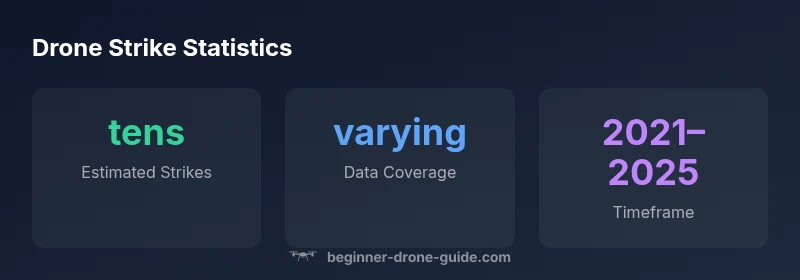
The phrase drone strike can mean different actions depending on who is counting and what is being counted. In many datasets, a drone strike refers to a targeted armed attack conducted with unmanned systems, typically resulting in fatalities or significant damage. Some researchers include failed or aborted attempts, or operations characterized as signature or capacity-building activities, while others log only confirmed, publicly acknowledged strikes. This definitional variability is the primary reason the tally under Biden differs across reputable sources. For readers new to this topic, the key takeaway is that the number is not a fixed figure but a range shaped by methodology, theater, and the level of transparency those datasets aim to provide. The Beginner Drone Guide team notes that acknowledging these definitions is essential before comparing numbers across reports.
Timeline and public records (2021–2025)
Understanding the timeline requires looking at what data is publicly disclosed versus what remains classified. The Biden administration inherited a drone program that was already significant, but the pace, geography, and scale of strikes shifted in various theaters. Publicly available summaries from U.S. government agencies and independent trackers show activity in multiple regions, with spikes often tied to foreign policy priorities or specific high-value targets. Because the public record is incomplete—especially for covert operations—any year-by-year tally should be read as indicative rather than definitive. For beginners, this means focusing on patterns (where and when strikes occur) rather than attempting to extract a precise headcount from a single source.
Counting methodologies and data sources
Different tracking organizations apply different rules for inclusion. DoD press releases, official policy documents, and court disclosures provide a baseline from which researchers extrapolate. Independent trackers pull from media reports, NGO databases, and whistleblower statements, each with its own verification process. Consequently, a single dataset may show a higher or lower number depending on whether it includes targeted assassination claims, cross-border operations, or special operations that do not explicitly carry the label “drone strike.” Readers should cross-check multiple sources and note the methodology sections to understand why tallies diverge.
Civilian casualties and accountability
Casualty data adds a crucial dimension to any drone-strike tally. In many cases, reported numbers reflect only confirmed deaths, leaving civilians and collateral damage undercounted or disputed. International human rights groups and journalists often document civilian harm that is not reflected in official tallies. The result is a tension between transparency and national security secrecy. For accurate interpretation, compare casualty figures across datasets and pay attention to the definitions of “civilian,” “combatant,” and “militant” used by each source. Accountability mechanisms and post-strike investigations also influence how reliable a given count feels to the public.
Legal, policy, and ethical context
Drone strike tallies sit at the intersection of international law, sovereignty, and national security policy. Legal authorities, such as the Authorization for Use of Military Force (AUMF) and evolving executive policies, shape when and where strikes may occur. Ethical debates—around civilian harm, precision, and the risk of mission creep—affect how citizens interpret the numbers. For practical readers, this means understanding not only how many strikes occurred but also why they occurred, what safeguards existed, and how the outcomes align with stated policy goals. The full context helps beginners assess the broader implications of the data beyond a simple headcount.
How to interpret the numbers for policy and safety
When you see a tallied figure, ask yourself: What is included or excluded? What theater or timeframe is represented? How is civilian harm treated in the dataset? Are allied or partner operations counted? A robust interpretation weighs multiple datasets and explicitly notes methodological choices. For drone enthusiasts and policymakers alike, the lesson is that counts are a piece of a larger story about strategy, accountability, and risk management. Always supplement numerical tallies with qualitative analysis to form a complete picture.
Practical takeaways for beginners and pilots
If you’re learning about drone use in a policy context, these numbers matter for understanding risk and governance. Beginners should stay informed about how data is compiled, especially if they’re studying international affairs or planning to operate in regulated airspace. For hobbyists, while you won’t directly influence policy tallies, knowing that data quality varies can sharpen your critical thinking about sources, trustworthiness, and the limits of public reporting. Engage with diverse perspectives and prioritize safety, legality, and responsible operation in every flight.